
RAID 10 vs. RAID 0 – Key Differences, Performance, and Data Protection
In this article, we delve into the contrasts between RAID 10 vs RAID 0, two prominent RAID levels. RAID 0, known for its impressive speed and efficiency, pairs well with applications prioritizing performance. On the other hand, RAID 10 offers a harmonious blend of speed and data protection, making it a favorite for those who cannot compromise on data integrity. As we explore their unique characteristics, we'll uncover how each holds its ground in terms of performance, speed, and data protection, guiding you toward making an informed decision for your storage needs.
This article will explore:
- 📊 Performance differences — how RAID 0 achieves raw speed while RAID 10 balances speed with redundancy
- 💾 Storage efficiency trade-offs — capacity utilization in each setup
- 🔐 Data protection strategies — what happens during drive failures and how recovery differs
- 🏢 Best-fit use cases — from high-performance applications to mission-critical environments
By understanding the contrasts between RAID 0 and RAID 10, you’ll be equipped to make an informed decision that aligns with your operational priorities—whether that means chasing maximum speed or ensuring your data remains safe in the event of hardware failure.
Understanding RAID 10 vs RAID 0
What Is RAID 10?
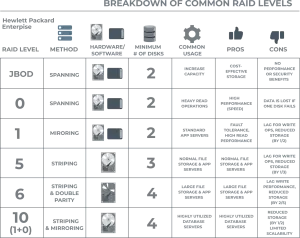
What is a RAID 10 configuration? Also known as RAID 1+0, it is a powerful configuration that combines the benefits of both mirroring and striping. By mirroring data across two sets of disks and then striping it, RAID 10 delivers improved performance while ensuring redundancy. This setup provides an excellent balance between speed and data protection, making it ideal for environments that require both. A key advantage of RAID 10 is its ability to maintain system functionality even if one disk in each mirrored pair fails. Typically, RAID 10 requires a minimum of four disks, allowing for robust performance and redundancy. What is a RAID hard drive? Learn more about how to set up your RAID properly.
What Is RAID 0?
RAID 0 is all about speed, using striping to distribute data across multiple disks, resulting in a significant performance boost for read and write operations. This configuration maximizes storage capacity and throughput, making it perfect for tasks that demand high-speed access. However, RAID 0 lacks redundancy, meaning that if a single disk fails, all data is lost. As such, it's a suitable choice for non-critical applications where performance outweighs data protection concerns. RAID 0 can be implemented with a minimum of two disks, providing a cost-effective way to enhance system performance.
Tip: what is RAID controller?How RAID 10 vs RAID 0 Work – A Technical Overview
To better understand the mechanics of RAID 0 vs RAID 10, consider the way each arrangement distributes data. In RAID 10, data is mirrored and then striped, ensuring that each piece of information exists on two separate disks, offering both redundancy and performance. In contrast, RAID 0 stripes data across all disks without any redundancy, emphasizing speed over protection. This fundamental difference significantly impacts how each setup handles read and write operations: RAID 10 supports faster data recovery and continuous operation after a disk failure, while RAID 0 excels in delivering rapid access times when all disks are functioning. A diagram illustrating these data distributions and operational impacts can further clarify the unique characteristics of these configurations.
| Aspect | RAID 10 | RAID 0 |
| Data Distribution | Mirroring and Striping | Striping |
| Performance | High | Highest |
| Data Protection | Yes (Redundant) | No |
| Minimum Disks Required | 4 Disks | 2 Disks |
| Use Cases | High-performance and data critical applications | High-speed, non-critical applications |
| Risk of Data Loss | Low (Double Disk Failure) | High (Single Disk Failure) |
Need to Verify Your RAID Setup?
Use our RAID Calculator to quickly understand your array configuration and find the best recovery approach. It’s simple, accurate, and can save you valuable time before starting data recovery.
RAID 10 vs. RAID 0 – Performance and Speed Comparison
RAID 0 and RAID 10 provide distinct benefits and drawbacks related to speed, capacity, and redundancy. RAID 0, known as disk striping, enhances speed and capacity by spreading data across several drives, but it lacks redundancy, making the entire data vulnerable if one drive fails. On the other hand, RAID 10 combines mirrored striping to offer a balance of speed and redundancy, ensuring data protection and fault tolerance along with solid performance.
RAID 0 (Striping)
Advantages:
- Offers high read and write speeds through data striping.
- Maximizes capacity by using multiple drives.
Disadvantages:
- Total data loss occurs if any drive fails.
- Lacks redundancy and fault tolerance.
RAID 10 (Mirrored Striping)
Advantages:
- Delivers higher read and write speeds than individual drives.
- Provides enhanced redundancy and data safety via mirroring.
- Can survive the failure of one drive in each mirrored pair.
Disadvantages:
- Requires at least four drives (two mirrored pairs).
- Reduces usable capacity compared to RAID 0 and RAID 1 because of mirroring.
Key Differences:
- Redundancy: RAID 0 does not provide redundancy, whereas RAID 10 uses mirroring for protection.
- Performance: RAID 0 offers superior speeds, while RAID 10 strikes a balance between speed and redundancy.
- Capacity: RAID 0 maximizes usable capacity, whereas RAID 10 limits it due to mirroring.
- Cost: RAID 10 tends to be costlier due to its higher drive requirement and redundancy.
Read and Write Speeds – Which One Is Faster?
When it comes to raw speed, RAID 0 holds the advantage due to its use of striping, which distributes data across multiple disks, enhancing read and write speeds. It's ideal for tasks that demand lightning-fast access to data, such as gaming and video editing. However, RAID 10 offers a balance by combining speed with redundancy. It provides fast access while ensuring data protection, making it suitable for environments where data integrity is crucial. In performance benchmarks, RAID 0 typically outperforms RAID 10 in pure speed, yet RAID 10 shines in scenarios where continued operation after disk failure is vital.
Tip: RAID 5 vs RAID 0Latency and Real-World Workloads
In real-world workloads, RAID 0 excels in applications such as gaming and video editing, where low latency and high throughput are critical. It allows for seamless transitions and rapid loading times, enhancing the overall experience. Conversely, RAID 10's efficiency comes to the fore in database and server applications, where a balance between speed and fault tolerance can significantly enhance performance and reliability.
RAID 10 vs. RAID 0 Performance in Different Use Cases
While RAID 0 is often favored for gaming and content creation due to its speed, RAID 10 is better suited for enterprise storage and virtualization, where data protection is paramount. RAID 10 also provides notable advantages for personal storage solutions, offering both speed and security, a critical factor for those handling important personal data.
| Aspect | RAID 10 | RAID 0 |
| Speed | High (with redundancy) | Highest (no redundancy) |
| Read/Write Latency | Moderate | Low |
| Application Suitability | Databases, Servers, Enterprise Solutions | Gaming, Video Editing, Content Creation |
| Performance Under Load | Stable with Fault Tolerance | Fluctuates with Disk Failures |
| Ideal Use Cases | Enterprise Virtualization, Critical Applications | Personal and Non-critical Applications |
RAID 10 vs. RAID 0 – Data Protection and Failure Risk

What Happens When a Drive Fails?
In the event of a drive failure, the consequences differ significantly between RAID 10 vs RAID 0. For RAID 0, the risk is severe; a failure of even a single drive leads to complete data loss across the array because data is split without redundancy. Conversely, RAID 10 offers robust fault tolerance. Through its combination of mirroring and striping, a RAID 10 setup can survive the failure of one drive per mirrored pair, thereby providing a layer of security against data loss and allowing for quick recovery processes.
Redundancy vs. Risk – Which One Is Safer?
The trade-off between redundancy and risk is stark. RAID 0 is notably susceptible to failure due to the lack of any built-in redundancy, where the failure of a single drive results in the loss of all data. This makes RAID 0 inherently riskier for data safety. On the other hand, RAID 10's architecture supports redundancy, allowing it to endure multiple drive failures (one per mirrored pair) without losing data, making it a far safer choice for those who prioritize data integrity.
Data Recovery Options for RAID 0 vs RAID 10
When it comes to data recovery, RAID 0 presents complex challenges. The absence of redundancy implies that if a disk fails, data recovery can be intricate and the possibility of permanent data loss is high. Recovery solutions for RAID 0 often involve specialized software or professional services. In contrast, RAID 10 allows for easier recovery with minimal downtime due to its mirrored setup, which preserves data even after a drive fails. Tools like DiskInternals RAID Recovery™ assist in recovering lost RAID data by reconstructing the array and retrieving files efficiently, providing a safety net for both RAID types, but vastly improving recovery prospects for RAID 10 users. Learn more about RAID server data disaster recovery and the best techniques to keep your files safe.
Note: RAID 10 vs RAID 1+0 recoveryReady to get your data back?
To recover data from a RAID drive, press the FREE DOWNLOAD button to get the latest version of DiskInternals RAID Recovery® and begin the step-by-step recovery process. You can preview all recovered files absolutely for free. To check the current prices, please press the Get Prices button. If you need any assistance, please feel free to contact Technical Support. The team is here to help you to rebuild RAID array without losing data!
RAID 10 vs. RAID 0 – Which One Should You Choose?

When to Choose RAID 0
Opt for RAID 0 when your primary need is for high-speed performance without concerns about redundancy. This configuration is ideal for workloads that demand rapid data access, such as temporary storage or situations where data can be easily recreated or is non-critical, like gaming environments or media editing projects. The advantage lies in maximizing the speed and efficiency of data handling processes.
When to Choose RAID 10
RAID 10 is the go-to choice for business-critical applications where both speed and data protection are paramount. It excels in server environments that require high uptime and reliability, ensuring that operations continue smoothly even in the event of hardware failures. By combing mirroring and striping, RAID 10 strikes a keen balance, offering robust performance alongside data integrity.
Cost and Hardware Considerations
One key consideration when choosing between RAID 10 vs RAID 0 is the cost and hardware requirements. RAID 10 necessitates a higher number of disks due to its mirrored setup, which can be more costly in terms of both hardware and the associated power consumption. On the other hand, RAID 0's simplicity makes it more cost-effective, as it requires fewer disks and provides maximum storage capacity and performance efficiency without the added expense of redundancy safeguards.
| Criterion | RAID 10 | RAID 0 |
| Best Use Cases | Business-critical Applications, Servers with High Uptime Needs | High-speed Workloads, Temporary Data Storage |
| Speed vs. Protection | Balance of Speed and Data Protection | Pure Speed with No Data Protection |
| Cost/Hardware Requirements | Higher Cost, More Disks Required | Cost-effective, Fewer Disks Needed |
| Data Loss Risk | Low with Redundancy | High with No Redundancy |
| Ideal for | Reliable Long-term Data Storage | Short-term Speed Demanding Tasks |
Conclusion – RAID 10 vs. RAID 0, Which Is Right for You?
In deciding between RAID 10 vs RAID 0, the choice ultimately hinges on balancing speed with the need for data protection. RAID 0 offers unparalleled raw speed, making it ideal for scenarios where rapid access is crucial and data redundancy is a secondary concern. However, this performance boost comes with a heightened risk of complete data loss should even a single drive fail.
On the other hand, RAID 10 provides a compelling blend of performance and data redundancy, making it suitable for applications where both speed and data integrity are critical. Its robust structure allows for continued operation even in the face of hardware failures, offering peace of mind in high-stakes environments.
Before making your decision, consider your long-term data security requirements and assess the specific needs of your use case. Whether it's the blazing speed of RAID 0 or the balanced reliability of RAID 10, choosing the right RAID configuration will depend on your unique priorities and infrastructure demands.
FAQ
-
RAID 10, also known as RAID 1+0, is a RAID configuration that combines disk mirroring and disk striping to protect data. It requires a minimum of four disks and stripes data across mirrored pairs.
-
RAID 0 is better than RAID 10 if your primary goal is maximizing speed and capacity, as it excels in both areas by spreading data across multiple drives without redundancy. However, this comes at the cost of increased risk, since a single drive failure in RAID 0 results in complete data loss. RAID 10, on the other hand, balances performance with redundancy, providing enhanced data protection through mirroring, which allows it to withstand individual drive failures. While RAID 10 requires more drives and offers lower usable capacity due to its redundancy, it is often considered superior for applications where data integrity and uptime are critical. Ultimately, the choice between RAID 0 and RAID 10 depends on your specific needs for speed, capacity, cost, and data security.
Related articles
- Features
- DiskInternals RAID Recovery vs ReclaiMe: Comprehensive RAID Recovery Solutions Compared
- Best FREE RAID Data Recovery Software (2026)
- SSD benefits for RAID array
- Mdadm RAID 1 not activating a spare disk Linux⠀
- Minimum disks for RAID 10⠀
- How to check RAID status? 4 different methods!
- Can RAID array have snapshots?
- RAID Array Metadata: What Is Inside?
- How Does RAID 5 on Windows 10 Work?
- What is FakeRAID?
- Hyper-V: Generation 1 vs Generation 2
- Bootable RAID Recovery Software: Complete Guide for RAID 0, 1, 5, 10 Recovery
- How to Rebuild RAID array
- What is Synology Hybrid RAID? What is the difference between SHR and RAID Drives?
- Btrfs vs. EXT4: A Comprehensive Comparison of File Systems in Linux (2025)
- RAID vs JBOD: performance and cost comparison⠀
- Complete Guide to RAID Controller Failure and Recovery: Expert Tips
- Comprehensive Guide to RAID in Cyber Security: Levels, Recovery, and Best Practices
- Raid Recovery Qnap⠀
- Best RAID for MySQL: RAID Configuration & RAID Setup for MySQL Databases
- Understanding Hardware RAID: Comprehensive Guide to RAID Levels and Benefits
- What Is a RAID Controller and What Are the Benefits of It?
- RAID Foreign Disk: Causes, Solutions, and Best Practices
- RAID 3 Explained: Benefits, Limitations, and Data Recovery Guide
- How to Resize RAID Partitions: Step-by-Step Guide for RAID 1, 5, 6 & 10
- Windows 7 RAID Recovery: How to Recover Data from RAID 1, RAID 5, and RAID 10 Arrays
- RAID Array Rebuild: How to Rebuild a RAID Array Safely and Recover Lost Data
- How to Check Which RAID Is Configured: A Complete Guide for Windows and Linux
- RAID 10 vs RAID 6: Which Better?
- What is software RAID? - Comprehensive Guide
- What is a RAID? RAID Systems Explained & How to Recover RAID Arrays with Professional Tools
- Best PCIe RAID Controller: Top Hardware PCI Express RAID Cards Compared
- Adaptec RAID Recovery: Restore Data from Failed Arrays with DiskInternals RAID Recovery™
- How to Rebuild RAID 0 Without Losing Data
- How to rebuild RAID 1 without losing data
- Raid Drive Array Recovery
- Best RAID Data Recovery Software for Linux
- How to Rebuild RAID Without Losing Data
- Forensic RAID Recovery
- AHCI vs. RAID: Pros, Cons & Differences
- Recovering RAID 5 After Controller Failure
- Best NAS hard drive recovery in 2026 | Top RAID network-attached storage Hard Drives
- RAID 50 vs RAID 10 - What is the difference
- What Is RAID Redundancy? | RAID Redundancy Explained for Data Protection
- Difference & Comparison: RAID vs. non-RAID System
- RAID Drives Explained: Learn How RAID Storage Enhances Performance
- Optimize RAID for Redundancy and Performance - Expert Guide
- RAID Level 4: What Is RAID 4, How It Works
- RAID 0 vs RAID 5: Speed, Performance & Key Differences (2026)
- How to Set Up and Configure RAID 10: Step-by-Step Guide
- SATA RAID Controller for ESXi: VMware ESXi Compatible SATA RAID Options
- RAID 10: How Many Disks Are Needed and How to Set It Up
- RAID 5 Rebuild Failure Probability: Risks, Factors, and Solutions in 2025
- SAN RAID Data Recovery: Recover RAID Arrays with Professional SAN Recovery Solutions
- RAID 6 with 6 Drives: Performance, Redundancy, and Best Use Cases
- RAID 5 Two-Disk Failure Recovery: Parity Recovery Beyond Tolerance
- ZFS Recovery software - How to recover deleted ZFS files
- How Many Drives for RAID 6?
- RAID 1 Speeds: Read, Write & Disk Performance | Speed Up RAID 1 Guide
- RAID 0 Data Recovery
- RAID Disaster Data Recovery: Techniques and Strategies for Handling Catastrophic Events
- RAID-1 vs RAID-5: Performance, Cost, and Data Protection Compared
- RAID Data Recovery evaluation. What is RAID data recovery?
- RAID 50 vs. RAID 6 – Key Differences
- Back up Active Directory Guide - Step-by-step Instructions⠀
- RAID Hard Drives Explained: What Is RAID for HDDs and External Drives
- Synology RAID 5 Recovery: Recover Your RAID Array with Expert Tools and Tips
- Windows Storage Spaces vs RAID: Performance, Speed, and Data Protection Comparison
- RAID Recovery Services
- RAID 50 vs. RAID 60 – Key Differences
- RAID 0 vs Single Drive Reliability — Failure Risk, SSD Comparison & Recovery
- Using SSD in RAID Array
- RAID 1 with 3 Drives: Everything You Need to Know
- How to Read RAID Drives & Recover RAID Arrays on Windows: A Guide
- Difference and Comparison - RAID 1 and RAID 2
- What is RAID in Linux? Learn About Software RAID & Recover RAID Arrays Easily
- Configuring RAID 5: Step-by-Step Guide on How to Configure RAID 5 for Performance
- ZFS Minimum Drives — How Many Disks You Need for RAIDZ1, RAIDZ2, RAIDZ3
- Differences Between Software RAID and Hardware RAID
- Recover Data from RAID 5 on mdadm (Linux)
- RAID 2 Array Explained: What Is RAID Level 2, Setup, and Performance Comparison
- RAID 5 VS RAID 6 - advantages and disadvantages
- How to Clone RAID 0, 1, 5 Disk
- RAID vs. backup - differences and benefits (RAID is not a Backup)
- Top 10 RAID Recovery Services: Best Solutions for Data Recovery
- RAID 0 vs RAID 1: Performance, Redundancy & Use Cases
- Recover Data from RAID on Linux
- How to recover data from a corrupted RAID?
- How Many Drives Are Needed for RAID 5? Minimum & Maximum Explained
- RAID 5 vs RAID 0+1: Key Differences Explained
- How to Set Up RAID in Windows 11: A Step-by-Step Guide
- Best RAID for 6 Disks: Compare RAID 0, 5, 6, 10, 50 & 60 for Performance & Redundancy
- Recover Data from Broken/Failed RAID Set
- What Is RAID 6? Definition, function
- ZFS vs Btrfs vs RAID: Comprehensive Storage Comparison for Performance, Reliability, and Scalability
- How to Recover RAID Array Configuration
- RAID Rebuild Time: What is and How to Optimize It?
- Understanding RAID 0: Benefits, Risks, and Applications
- QNAP RAID 5 Recovery Failed? Safe Data Recovery Steps for NAS Users
- SQL Server Database in Recovery Pending - How to fix it (2025)
- What is RAID 5? Overview and Key Functions
- Raid Rebuild Vs. Raid Recovery
- Guide to Recovering a Failed RAID Array | Step-by-Step Recovery Process
- RAID 50 vs. RAID 5 – Performance, Speed, and Data Protection Comparison
- RAID 0 vs. JBOD – Key Differences, Performance, and Speed Comparison
- RAID 1 Recovery: all you can do yourself
- How to Setup Raid 0 Windows 10 (11)?
- Ultimate Guide to RAID Data Recovery: Tips & Techniques
- RAID 1: How Many Drives Are Needed for Data Redundancy?
- ZFS Mirror vs RAIDZ — Performance, Capacity & Recovery Guide
- RAID Calculator Online – Usable Space & Disk Size Calculator for RAID
- The Truth about Recovering RAID 5 with 2 Failed Disks
- RAID Configuration Explained: Types, Setup, and Best Practices
- How to set up RAID 1 on Windows 10 and Linux
- How Many Disks Can Fail in RAID 5?
- Is RAID 0 Worth It in 2026? Risk, Performance, SSD & NVMe Guidance
- Recover Data from RAID 1 on mdadm (Linux)
- DiskInternals RAID Recovery vs EaseUS Data Recovery Wizard | Comprehensive Comparison
- RAID 0 failure - How to Fix Failed Raid 0 Array
- RAID Server Data Recovery
- BTRFS Restore File: How to Undelete Files and Restore Deleted Data Easily
- Recover Data from a RAID Array: Effective Solutions for Fast and Secure Data Retrieval
- RAID 7 — What It Is? Origins, Risks & Recovery Options
- What is RAID 1? RAID Mirroring
- SAS RAID Controller for VMware ESXi: Best Hardware RAID Options
- RAID 10: How Many Drives Can Fail? | Comprehensive Guide to Failure Tolerance
- Recover Striped RAID: Professional RAID 0 Data Recovery with DiskInternals RAID Recovery™
- How to Add a Disk to mdadm RAID 5: Step-by-Step Guide
- Configure RAID on Ubuntu – Step-by-Step Guide for RAID 0, 1, 5, and 10
- ZFS Recovery Tools — Data Recovery ZFS Guide & Best Software
- RAID 0 for Gaming — Is RAID 0 Good for Gaming? Performance & Risk Guide
- How to Remove software RAID device using mdadm
- NAS vs SAN storage - Detailed Comparison⠀
- Effective Btrfs File Recovery: Complete Guide to Btrfs Data Recovery
- RAID Hard Disk Data Recovery Software (2025)
- Rapid RAID Recovery Software
- What is Synology Hybrid RAID (SHR). How to Recover Data from Synology Hybrid RAID
- How to Recover RAID Crash Data
- RAID 0, 1, 3, 5, 10 data recovery software for Windows 10
- Hyper-V Server Core installation vs GUI - let's compare⠀
- RAID 6 Data Recovery
- What to do if RAID array doesn't reassemble after reboot
- How to Rebuild RAID 5 Without Losing Your Data
- The best NAS RAID: how to choose⠀
- What are RAID 01, RAID 1+0 and RAID 0+1⠀
- What is Microsoft SQL Server and How Can You Use it Safely?
- Make Sure Your Data is Safe While Using Microsoft Storage
- What is nutanix ahv?⠀
- RAID 10 Recovery
- RAID levels 0, 1, 5, 6, and 10
- RAID 0: How Many Drives Are Needed?
- RAID Server Data Recovery: Recover and Restore RAID Arrays Fast with Professional Tools
- RAID Data Recovery for Deleted Arrays: Recover RAID Array Safely & Effectively
- RAID 0, 1, 5, 10 Explained: Performance, Redundancy & Best RAID Configurations
- How to Recover Data from a Broken RAID 1 Set – Step-by-Step Guide
- RAID 6 Drive Failure Tolerance: How Many Drives Can Fail?
- RAID 50: Drive Failure Tolerance and Data Recovery Solutions
- 15 Best External Hard Drives for RAID in 2026
- RAID 0 vs RAID 1 vs RAID 5 vs RAID 10 — Performance, Capacity & Recovery
- Best RAID for OLTP: RAID Configuration for OLTP Workloads & Transactional Databases
- Best RAID for NVMeoF: NVMe RAID Configuration & NVMe over Fabrics RAID Setup
- RAID 0 Backed by Versioned Backup: Is RAID 0 Safe with Versioned Backups?
- How to set up RAID in Windows 10 in 2025
- How About RAID 1 Reliability?
- RAID 5: How Big Should an Array Be?
- What Are Some Common Symptoms of RAID Array Failures?⠀
- Hyper-V Virtual Machine Replication⠀
- Difference Between Type 1 and Type 2 Hypervisor?⠀
- RAID 4 Data Recovery: How to Perform It⠀
- How to Recover RAID partition - step by step guide⠀
- Hyper-V Manager - what is it?⠀
- How to Run Linux on a Hyper-V VM in 2025
- What to do if you get Microsoft SQL Server error 18456?
- What Is a Hot Spare? Peculiarities of Usage
- What is JBOD?
- RAID Recovery Software
- RAID 3 vs RAID 5: which one would you prefer?
- Basic Disks vs Dynamic: What is the Difference
- Global Hot Spare vs Dedicated Hot Spare: Find the Difference
- How to downsize hardware RAID partition and protect data
- RAID 6: Replace Two Dead Drives
- Perform Hyper-V Data Recovery Today
- How to Install Hyper-V in Your Environment in 2025
- Hyper-V Live Migration - what is it?⠀
- Hyper-V Snapshot Merge
- What is System Center Virtual Machine Manager⠀
- Guide: Linux Raid and Disk Data Safety
- Is it worth using RAID 5E/5EE?
- Let's compare: Synology vs QNAP
- What is RAID Connectivity? Essential Guide to RAID Array Setup
- RAID recovery software for Mac⠀
- Understanding RAID 6 Performance: A Comprehensive Guide
- What is a RAID Volume? Understanding RAID Volumes and Recovery Solutions
- Recover Data from Old RAID Drives | Best Methods & Software for RAID Recovery
- Encrypting RAID Arrays — RAID with Full Disk Encryption & Secure Setup
- RAID 10 with 8 Disks — Configuration, Performance, Rebuilds & Best Practices
- RAID 6 Double Parity Calculation Explained – Data Protection Insights
- A Comprehensive Review of RAID Recovery Software: Choosing the Right Tool
- What is RAID Data Recovery? | Recover RAID Arrays with RAID Recovery Software
- ZFS RAID Expansion: How to Expand RAIDZ and ZFS Pools Safely
- RAID 5 with 3 Disks: Configuration, Benefits, and Performance Insights
- How to Create RAID 5 with 6 Disks: Complete Setup Guide and Performance Tips
- How to Fix Degraded RAID 1: Step-by-Step Guide to Restore RAID 1 Degraded Arrays
- Why RAID 1 Is Not a Good Substitute for a Backup
- Cannot Format Old RAID Drive? Effective RAID Data Recovery Solutions
- Fault Tolerance in NVMe-oF RAID — Rebuild Time, Data Protection & Redundancy
- Best Practices for RAID over NVMe-oF — Tuning, Monitoring & DR
- RAID 0 vs Single Drive — SSD, NVMe & HDD Comparison (Performance vs Risk)
- RAID 0 for 4K Editing — Is RAID 0 Good for 4K Video Editing?
- RAID 0 for Large File Workloads: Scratch Disks, NVMe, When It Makes Sense
- RAID 0 vs. SSD Performance: PCIe 4.0, PCIe 5.0 Speed Compared
- RAID 0 Redundancy vs No Redundancy — Does RAID 0 Have Redundancy?
- Does RAID 0 Increase FPS? — RAID 0 vs Single Drive FPS Guide
- RAID 5 Interrupted Rebuild Recovery: Fix Stopped or Aborted Rebuilds
- RAID 0 Failure Probability with N Disks Explained
- RAID 1 Corrupted Mirror Recovery: How to Recover a Damaged RAID 1 Mirror
- When RAID 0 Is Acceptable: Use Cases, Risks, and When You Should Use RAID 0
- RAID Best Practices for VMware: Best RAID Configuration for VMware ESXi
- RAID 10 Best for VMware: Why RAID 10 Is the Recommended RAID for ESXi
- Best RAID Controller Guide: Hardware RAID Cards Compared for Servers and SSDs
- RAID Controller for ESXi: VMware ESXi RAID Controller Recommendations
- RAID Controller for Linux: Best Linux-Compatible Hardware RAID Controllers
- Dell RAID 1 Recovery: How to Recover Data from RAID 1 on Dell Servers Safely
- Dell RAID 5 Recovery - Safely and Fast
- RAID 5 vs RAID 10 comparison: Which one is better for you?⠀
- HDD Raid Vs SSD Raid Storage Systems - How to move⠀
- Benefits of RAID arrays - what are the advantages of RAID?⠀
- RAID 10 vs RAID 01: Is There Any Difference?
- Perform RAID 50 Data Recovery Today!
- RAID Consistency Check: Ensure Data Integrity & Recover Lost Data
- RAID status degraded - fix it⠀
- RAID Array Growing: How to Perform It
- How To Create RAID Arrays with mdadm on Ubuntu (22.04)
- What is RAID-Z? Its Difference Between RAID-Z2 vs RAID-Z3
- Do You Need to Defragment RAID?
- Does chunk size influence the speed of RAID?
- RAID 0, 5, 6, 10 Performance
- Which RAID is Better to Use for 4 Drives
- RAID Array for Video Editing: How to Choose
- About Hyper-V clusters
- Hyper-V network adapters⠀
- Set Up and Use Microsoft SQL Server Management Studio
- Microsoft SQL Server Express Guide
- Use Microsoft Windows Server Safely
- Microsoft Storage Spaces
- Xserve RAID data safety
- Apple RAID Card Data Recovery
- Here is Everything You Need to Know About RAID-Z Technology
- RAID Redundancy - best performance solutions⠀
- Here is How to Backup RAID in 2025
- No hard drive detected or disk controller not supported in RAID
- Issue with the RAID after the BIOS update
- Synology RAID Set That Is Broken or Crashed? RAID data recovery
- Here is How to add drive to RAID 5 in 2025
- Buffalo Data Recovery
- NAS as a File Server: NAS vs. File Server Comparison for Storage and Sharing
- RAIDZ1 vs RAID 5 — Performance, Integrity & Recovery Comparison
- Difference between RAID 2 and RAID 3
- Difference between RAID 4 and RAID 5
- Difference between RAID 3 and RAID 4
- RAID Data Recovery Cost: Affordable Solutions for RAID 0, RAID 1, RAID 5, and RAID 10 Failures
- ZFS vs mdadm RAID — Why choose ZFS instead of RAID
- X-RAID Recovery: Expert Guide to Netgear X-RAID and ReadyNAS Data Recovery
- XFS RAID Recovery Guide & Best XFS RAID Recovery Software
- What Is RAID 1E? Performance RAID 10 1E vs RAID-1E Guide for Power Users
- SCSI RAID Recovery Software: Effective Solutions for SCSI RAID Data Recovery
- ReiserFS RAID Recovery: How to Restore Data from Failed RAID Arrays
- RAID in Cloud Storage Systems — SDS, Virtual RAID & Erasure Coding Guide
- RAID Degraded — What to Do | Warning Fixes & Rebuild Failed Steps
- RAID 5 RAID 6 RAID 10 - Key Differences and Performance Comparison
- RAID 1E vs RAID 5: Performance, Capacity and Failure Risk Compared
- RAID 1E vs RAID 10: Performance, Capacity, Cost & Failure Risk Guide
- RAID 1 vs RAID 5 vs RAID 10 Performance Management, Speed & Capacity Guide
- Open Source RAID Recovery Software Explained and Comparison
- MDADM RAID 0 Recovery: Expert Guide to Fix and Recover Your RAID Array
- Intel RAID 0 Recovery & RAID 1 Recovery: Solutions for Data Loss & Recovery Tools
- Is RAID 0 Obsolete? RAID 0 with SSD and NVMe — Still Worth It?
- Intel Matrix RAID Recovery: Restore RAID 0, 1, 5, 10 with Reliable Solutions
- Ext3 RAID Recovery Guide - Data Recovery RAID Ext3
- ASUS RAID Recovery Guide - Fix Failed ASUS RAID
- RAID 5 Data Recovery Step by Step
- NAS vs External Hard Drive: Comprehensive Guide to Choosing the Best Data Storage Solution
- NTFS RAID Recovery: Comprehensive Guide to Data Retrieval
- What is Xserve RAID? Comprehensive Guide and Overview
- Understanding RAID 60: Architecture, Advantages, and Data Recovery
- Understanding RAID Striping: A Comprehensive Guide to Disk Striping and Its Variants
- ZFS RAID Setup Guide: Configuration, Management & Expansion
- Comprehensive Guide to ZFS RAID Levels, Types, and Configurations
- ZFS vs RAID: Comprehensive Comparison of Performance, Reliability, and Features
- RAID 1 Minimum Drive Requirement: How Many Drives Do You Need?
- HP RAID Recovery Tool | How to Recover Data with DiskInternals RAID Recovery Software
- Best RAID Software for Mac | Top Free & Paid RAID Tools for macOS 2026
- RAID System Recovery: Essential Steps & Best Software for Safe Data and File Restoration
- RAID Recovery Volume: Effective RAID Array Recovery Solutions for Data Loss Prevention
- Synology RAID 1 Recovery: Recover RAID Array with Trusted Tools and Expert Solutions
- Interim Recovery RAID 5: Expert Guide to Data Recovery and RAID Array Repair
- Change log for RAID Recovery™
- RAID Restorer – Recover Data from Failed RAID Arrays with Reliable Software
- ZFS RAID with Different Size Drives – Setup, Limitations, and Best Practices
- RAID 6 with 5 Drives: Configuration, Performance, and Data Protection
- RAID 6 with 8 Drives: Configuration, Failures, and Performance Explained
- RAID 5 with 5 Drives: Configuration, Performance & Recovery | RAID 5 5 Drives Guide
- RAID Reconstructor on Broken RAID Arrays
- How to Repair a Failed RAID?
- HDD RAID vs SSD RAID and Combining Both: Everything You Need to Know
- Recovering Data from RAID Drives: Step-by-Step Guide to RAID Recovery
- NAS Data Recovery Software & Tools for RAID Recovery
- RAID Calculator For Geeks – Estimate Usable Space & Drive Size