
Forensic RAID Recovery
In the realm of digital forensics, the recovery of data from RAID (Redundant Array of Independent Disks) configurations presents a unique and challenging task. Forensic RAID Recovery is a critical process used in investigations where data retrieval from damaged or compromised RAID arrays is essential.
This article delves into the complexities of RAID systems, the importance of RAID recovery in forensic investigations, and the sophisticated methods employed by experts to extract, reconstruct, and analyze data from various RAID configurations.
From understanding RAID fundamentals to exploring advanced recovery techniques, we provide a comprehensive guide to the art and science of forensic RAID recovery, making it an invaluable resource for IT professionals, forensic analysts, and anyone interested in the intersection of technology and law enforcement.
What is the forensic data recovery process?
Forensic data recovery is a meticulous process used in digital forensics to retrieve data from digital storage devices that may be damaged, corrupted, or intentionally manipulated. The goal is to extract and preserve digital evidence in a manner that maintains its integrity and allows it to be admissible in legal proceedings. Here's an overview of the typical steps involved in the forensic data recovery process:
- Identification: This initial step involves identifying the relevant data sources. These can include hard drives, SSDs, mobile devices, cloud storage, or any other digital storage mediums.
- Preservation: Once the data sources are identified, the next step is to ensure that the data is preserved in its current state. This often involves creating a bit-by-bit copy (or image) of the storage device. Tools like write blockers are used to prevent any alterations to the original data.
- Acquisition: This step involves capturing the data from the device. Data acquisition must be done in a way that avoids altering the data. This is typically achieved through forensic imaging, which creates an exact sector-by-sector copy of the storage medium.
- Analysis: During analysis, forensic experts use various tools and techniques to examine the recovered data. This can include recovering deleted files, decrypting encrypted files, and analyzing file structures and remnants of data to piece together what happened.
- Documentation and Reporting: Every action taken during the recovery process is documented in detail. This includes how the evidence was discovered, how it was preserved, and the methods used in the recovery process. The findings are then compiled into a report which is often used in legal settings.
- Presentation: In some cases, forensic experts may be required to present their findings in court. This involves explaining the technical process in a manner that is understandable to the layperson and defending their methods and findings under cross-examination.
- Disposition: After the case is closed, the data must be handled according to legal requirements and organizational policies. This may involve securely storing the data for a certain period or permanently destroying it.
The forensic data recovery process is guided by the principles of maintaining the authenticity, reliability, and integrity of the data. It's essential that the process is conducted in a manner that is legally compliant and methodologically sound to ensure the data can be used as reliable evidence in legal proceedings.
Forensic RAID data recovery - How it works
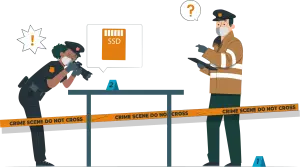
Forensic RAID data recovery is a specialized process used in digital forensics to recover data from RAID (Redundant Array of Independent Disks) systems. RAID systems are commonly used in enterprise environments for data redundancy and performance improvement. The forensic recovery of data from RAID arrays is a complex task due to the unique way in which data is distributed and stored across multiple disks. Here's an overview of how forensic RAID data recovery works:
Understanding RAID Configurations
First, it's essential to understand the specific RAID configuration (e.g., RAID 0, RAID 1, RAID 5, RAID 6, etc.), as each type has a different method of data storage and redundancy. This influences the approach to data recovery.
1. Identification and Preservation
- Identify RAID Level: The forensic team identifies the RAID level and the number of drives in the array.
- Preserve Original Drives: The drives are carefully handled to avoid further data loss. Forensic imaging/cloning of each drive in the RAID array is done to preserve the original state.
2. Acquisition
- Imaging: Each drive is imaged separately. This step creates exact bit-by-bit copies of each drive, ensuring that the original data remains unaltered.
- Reconstruct RAID Array: Using specialized software, forensic experts virtually reconstruct the RAID array using the images of the individual drives. This step is crucial as it requires an understanding of the RAID algorithm and parameters.
3. Analysis
- Data Recovery: Tools are used to recover data from the reconstructed RAID array. This may include retrieving deleted files, extracting latent data, and piecing together fragmented data.
- File System Analysis: The file system (NTFS, FAT, ext, etc.) is analyzed to recover file structures and metadata.
4. Documentation and Reporting
- Detailed Documentation: Every step of the recovery process is documented in detail. This includes the methods used to reconstruct the RAID array and the data recovery techniques employed.
- Reporting: A comprehensive report is prepared that outlines the findings, the process used for recovery, and any challenges encountered during the process.
5. Legal Admissibility
- Chain of Custody: Maintaining a clear chain of custody is crucial to ensure the admissibility of the recovered data in legal proceedings.
- Integrity and Authenticity: The integrity and authenticity of the data are preserved throughout the process, ensuring that it remains reliable and court-admissible.
Special Considerations
- Encryption: If the RAID drives are encrypted, additional steps are required to decrypt the data.
- Damaged Drives: In cases of physically damaged drives, special hardware and techniques are required to recover the data.
- RAID Controller Metadata: Sometimes, metadata stored on the RAID controller is crucial for reconstruction.
Forensic RAID data recovery requires a blend of technical expertise in RAID architectures, experience with various file systems, and a meticulous approach to ensure the integrity of the recovered data. The complexity of the process can vary greatly depending on the RAID level, the condition of the drives, and the specifics of the case.
How do I recover from RAID failure?

Recovering from a RAID failure can be a challenging task, depending on the RAID level, the nature of the failure, and whether you have a recent backup. The process typically involves several steps, focusing on minimizing data loss and restoring system functionality. Here's a general guide on how to recover from RAID failure:
1. Assess the Situation
- Identify RAID Level: Determine the RAID level (e.g., RAID 0, RAID 1, RAID 5, etc.) as recovery steps differ for each.
- Diagnose the Failure: Determine whether the failure is due to hardware (disk failure) or software (corruption, controller issues).
2. Backup Data (If Possible)
- If the RAID array is still partially accessible, attempt to back up important data immediately.
- Do not write new data to the RAID array, as this can overwrite recoverable data.
3. Check for Physical Damage
- Inspect the drives for physical damage.
- If a drive is physically damaged (e.g., making unusual noises), turn off the system immediately to prevent further damage and consider professional recovery services.
4. Replace Faulty Hardware
- If a specific drive has failed, replace it with a new one of the same size and speed.
- If the failure is due to a RAID controller or other hardware component, replace it carefully.
5. Rebuild the RAID Array
- Most RAID levels (except RAID 0) support rebuilding the array with the replacement of a failed drive.
- Initiate the rebuild process either through the RAID controller's software or BIOS settings.
6. Data Recovery Software
- If the RAID array cannot be rebuilt or if data is still missing after a rebuild, consider using DiskInternals RAID Recovery software.
- Select software compatible with your RAID level and file system.
- These tools can help reconstruct RAID parameters and recover data.
7. Monitor the Rebuild Process
- RAID rebuilds can take a long time, especially for large arrays. Monitor the process to ensure it completes successfully.
8. Verify Data Integrity
- Once the rebuild is complete, check the data integrity.
- Ensure that important files and applications are functioning correctly.
9. Implement Preventive Measures
- Regularly back up your data to avoid data loss in future failures.
- Consider implementing a more fault-tolerant RAID level if applicable.
Important Considerations
- RAID 0: If you're using RAID 0 and a drive fails, data recovery becomes more complex, as RAID 0 offers no redundancy.
- Time-Sensitive Data: If the data is critical and time-sensitive, it’s often best to go straight to professional recovery services.
Remember, the specific steps and their feasibility can vary greatly depending on the RAID configuration and the nature of the failure. Always prioritize the safety and integrity of your data.
How to recover data from RAID using DiskInternals RAID Recovery
Recovering data from a RAID array using DiskInternals RAID Recovery involves a series of steps. DiskInternals RAID Recovery is designed to reconstruct RAID arrays and recover data from them. Here's a general guide on how to use this software for RAID data recovery:
Pre-Recovery Preparations
- 1. Download and Install DiskInternals RAID Recovery: Ensure you have the latest version of the software. It's available on the DiskInternals website.
- 2. Prepare Your Computer: If possible, it's advisable to perform the recovery process on a computer other than the one where the RAID failure occurred, to avoid potential overwriting of data.
- 3. Connect the RAID Drives: Connect the RAID drives to the computer where you will perform the recovery. If using an external dock or enclosure, ensure all drives are correctly connected and recognized by the system.
Data Recovery Process
- 1. Launch DiskInternals RAID Recovery: Open the software on your computer.
- 2. Select the RAID Type: The software should recognize the RAID type automatically. If not, manually select the RAID type (e.g., RAID 0, RAID 1, RAID 5, etc.) that matches your configuration.
3. Automatic or Manual Mode:
- Automatic Mode: This mode is suitable for users who are not sure about the RAID parameters. The software will attempt to detect and reconstruct the RAID array automatically.
- Manual Mode: Choose this mode if you know the exact parameters of your RAID configuration. You'll need to input parameters like the order of disks, stripe size, etc.
- 4. Scan for Data: Once the RAID configuration is identified or set, start the scanning process. This process can take some time, depending on the size of the drives and the extent of the damage.
- 5. Preview Recoverable Files: After the scan, DiskInternals RAID Recovery will display a list of recoverable files. You can preview these files before recovery to ensure they are the ones you need.
- 6. Select and Recover Files: Choose the files or directories you want to recover. Select a safe location to save the recovered data – preferably on a different drive than the RAID array to avoid data overwriting.
- 7. Save Recovered Data: Once you've selected the files, proceed with the recovery. The software will save the recovered files to the location you specified.
Post-Recovery
- Verify Recovered Data: Check the recovered data for integrity and completeness.
- Backup: It's a good practice to back up your data regularly to prevent future data loss.
Important Tips
- Trial Version: DiskInternals RAID Recovery offers a trial version. Use this to see if your data can be recovered before purchasing the full version.
- Avoid Data Overwrite: Do not install the software on the drive where data loss occurred, and do not recover files to the same drive.
- Professional Help: If the data is extremely important or if the recovery process is not yielding results, consider seeking professional data recovery services.
Remember, the success of the recovery process can depend on the extent of the RAID failure and the condition of the drives. If the drives are physically damaged, software-based recovery might not be sufficient.
Related articles
- RAID Array for Video Editing: How to Choose
- How to set up RAID 1 on Windows 10 and Linux
- Configuring RAID 5: Step-by-Step Guide on How to Configure RAID 5 for Performance
- How to Rebuild RAID 5 Without Losing Your Data
- RAID 1 Recovery: all you can do yourself
- RAID 5 Data Recovery Step by Step
- RAID Recovery Services
- RAID Recovery Software
- RAID 4 Data Recovery: How to Perform It⠀
- RAID 0 vs RAID 1: Performance, Redundancy & Use Cases
- RAID 5 vs RAID 10 comparison: Which one is better for you?⠀
- How to set up RAID in Windows 10 in 2025
- RAID 5 VS RAID 6 - advantages and disadvantages
- The best NAS RAID: how to choose⠀
- HDD Raid Vs SSD Raid Storage Systems - How to move⠀
- NAS vs External Hard Drive: Comprehensive Guide to Choosing the Best Data Storage Solution
- RAID-1 vs RAID-5: Performance, Cost, and Data Protection Compared
- RAID 10 vs RAID 01: Is There Any Difference?
- RAID vs JBOD: performance and cost comparison⠀
- NAS vs SAN storage - Detailed Comparison⠀
- Perform RAID 50 Data Recovery Today!
- Basic Disks vs Dynamic: What is the Difference
- What Is a Hot Spare? Peculiarities of Usage
- Differences Between Software RAID and Hardware RAID
- How to check RAID status? 4 different methods!
- RAID Array Growing: How to Perform It
- How To Create RAID Arrays with mdadm on Ubuntu (22.04)
- How About RAID 1 Reliability?
- Can RAID array have snapshots?
- RAID Array Metadata: What Is Inside?
- RAID 5: How Big Should an Array Be?
- How Does RAID 5 on Windows 10 Work?
- What is FakeRAID?
- Which RAID is Better to Use for 4 Drives
- Hyper-V Manager - what is it?⠀
- Hyper-V: Generation 1 vs Generation 2
- Hyper-V Live Migration - what is it?⠀
- Hyper-V Snapshot Merge
- About Hyper-V clusters
- Hyper-V network adapters⠀
- Back up Active Directory Guide - Step-by-step Instructions⠀
- Effective Btrfs File Recovery: Complete Guide to Btrfs Data Recovery
- Make Sure Your Data is Safe While Using Microsoft Storage
- Set Up and Use Microsoft SQL Server Management Studio
- Guide: Linux Raid and Disk Data Safety
- Btrfs vs. EXT4: A Comprehensive Comparison of File Systems in Linux (2025)
- RAID Redundancy - best performance solutions⠀
- No hard drive detected or disk controller not supported in RAID
- Issue with the RAID after the BIOS update
- Using SSD in RAID Array
- ZFS Recovery software - How to recover deleted ZFS files
- Raid Recovery Qnap⠀
- RAID recovery software for Mac⠀
- How to Recover RAID Array Configuration
- How to Rebuild RAID Without Losing Data
- How to rebuild RAID 1 without losing data
- How to Rebuild RAID 0 Without Losing Data
- Difference and Comparison - RAID 1 and RAID 2
- Difference between RAID 2 and RAID 3
- Difference between RAID 4 and RAID 5
- What is Synology Hybrid RAID (SHR). How to Recover Data from Synology Hybrid RAID
- Recover Data from RAID on Linux
- RAID Foreign Disk: Causes, Solutions, and Best Practices
- RAID Data Recovery evaluation. What is RAID data recovery?
- What Is a RAID Controller and What Are the Benefits of It?
- Recover Data from Broken/Failed RAID Set
- How to Clone RAID 0, 1, 5 Disk
- Raid Rebuild Vs. Raid Recovery
- RAID vs. backup - differences and benefits (RAID is not a Backup)
- How to Rebuild RAID array
- What is Synology Hybrid RAID? What is the difference between SHR and RAID Drives?
- Recover Data from RAID 5 on mdadm (Linux)
- RAID Rebuild Time: What is and How to Optimize It?
- RAID Disaster Data Recovery: Techniques and Strategies for Handling Catastrophic Events
- How to Repair a Failed RAID?
- How to Set Up RAID in Windows 11: A Step-by-Step Guide
- RAID 50 vs. RAID 60 – Key Differences
- How to Set Up and Configure RAID 10: Step-by-Step Guide
- What Is RAID 6? Definition, function
- RAID 10 vs RAID 6: Which Better?
- RAID 10: How Many Disks Are Needed and How to Set It Up
- How to recover data from a corrupted RAID?
- RAID 1 with 3 Drives: Everything You Need to Know
- NTFS RAID Recovery: Comprehensive Guide to Data Retrieval
- Comprehensive Guide to RAID in Cyber Security: Levels, Recovery, and Best Practices
- What is software RAID? - Comprehensive Guide
- Understanding RAID 0: Benefits, Risks, and Applications
- RAID 3 Explained: Benefits, Limitations, and Data Recovery Guide
- How Many Drives Are Needed for RAID 5? Minimum & Maximum Explained
- Understanding RAID Striping: A Comprehensive Guide to Disk Striping and Its Variants
- ZFS vs Btrfs vs RAID: Comprehensive Storage Comparison for Performance, Reliability, and Scalability
- How to Resize RAID Partitions: Step-by-Step Guide for RAID 1, 5, 6 & 10
- RAID 1 Minimum Drive Requirement: How Many Drives Do You Need?
- Bootable RAID Recovery Software: Complete Guide for RAID 0, 1, 5, 10 Recovery
- RAID Hard Drives Explained: What Is RAID for HDDs and External Drives
- RAID 5 Rebuild Failure Probability: Risks, Factors, and Solutions in 2025
- Understanding RAID 6 Performance: A Comprehensive Guide
- Recovering Data from RAID Drives: Step-by-Step Guide to RAID Recovery
- Adaptec RAID Recovery: Restore Data from Failed Arrays with DiskInternals RAID Recovery™
- SAN RAID Data Recovery: Recover RAID Arrays with Professional SAN Recovery Solutions
- What is a RAID? RAID Systems Explained & How to Recover RAID Arrays with Professional Tools
- Top 10 RAID Recovery Services: Best Solutions for Data Recovery
- RAID Server Data Recovery: Recover and Restore RAID Arrays Fast with Professional Tools
- RAID System Recovery: Essential Steps & Best Software for Safe Data and File Restoration
- What is RAID Connectivity? Essential Guide to RAID Array Setup
- How Many Drives for RAID 6?
- How to Read RAID Drives & Recover RAID Arrays on Windows: A Guide
- Synology RAID 5 Recovery: Recover Your RAID Array with Expert Tools and Tips
- X-RAID Recovery: Expert Guide to Netgear X-RAID and ReadyNAS Data Recovery
- SCSI RAID Recovery Software: Effective Solutions for SCSI RAID Data Recovery
- RAID Data Recovery for Deleted Arrays: Recover RAID Array Safely & Effectively
- What is RAID in Linux? Learn About Software RAID & Recover RAID Arrays Easily
- Change log for RAID Recovery™
- Intel Matrix RAID Recovery: Restore RAID 0, 1, 5, 10 with Reliable Solutions
- ZFS RAID Expansion: How to Expand RAIDZ and ZFS Pools Safely
- RAID 6 Drive Failure Tolerance: How Many Drives Can Fail?
- Windows Storage Spaces vs RAID: Performance, Speed, and Data Protection Comparison
- RAID 2 Array Explained: What Is RAID Level 2, Setup, and Performance Comparison
- RAID 5 RAID 6 RAID 10 - Key Differences and Performance Comparison
- How to Fix Degraded RAID 1: Step-by-Step Guide to Restore RAID 1 Degraded Arrays
- RAID 5 vs RAID 0+1: Key Differences Explained
- Why RAID 1 Is Not a Good Substitute for a Backup
- How to Check Which RAID Is Configured: A Complete Guide for Windows and Linux
- RAID 50 vs. RAID 6 – Key Differences
- Cannot Format Old RAID Drive? Effective RAID Data Recovery Solutions
- RAID 6 with 5 Drives: Configuration, Performance, and Data Protection
- Best RAID for 6 Disks: Compare RAID 0, 5, 6, 10, 50 & 60 for Performance & Redundancy
- RAID 6 with 8 Drives: Configuration, Failures, and Performance Explained
- RAID 6 with 6 Drives: Performance, Redundancy, and Best Use Cases
- RAID 5 with 5 Drives: Configuration, Performance & Recovery | RAID 5 5 Drives Guide
- 15 Best External Hard Drives for RAID in 2026
- Dell RAID 1 Recovery: How to Recover Data from RAID 1 on Dell Servers Safely
- What Is RAID 1E? Performance RAID 10 1E vs RAID-1E Guide for Power Users
- RAID 1E vs RAID 5: Performance, Capacity and Failure Risk Compared
- RAID 1 Speeds: Read, Write & Disk Performance | Speed Up RAID 1 Guide
- XFS RAID Recovery Guide & Best XFS RAID Recovery Software
- RAID Data Recovery Cost: Affordable Solutions for RAID 0, RAID 1, RAID 5, and RAID 10 Failures
- NAS as a File Server: NAS vs. File Server Comparison for Storage and Sharing
- QNAP RAID 5 Recovery Failed? Safe Data Recovery Steps for NAS Users
- ReiserFS RAID Recovery: How to Restore Data from Failed RAID Arrays
- RAID Calculator For Geeks – Estimate Usable Space & Drive Size
- RAID 0 vs RAID 1 vs RAID 5 vs RAID 10 — Performance, Capacity & Recovery
- RAID 1 vs RAID 5 vs RAID 10 Performance Management, Speed & Capacity Guide
- ZFS Minimum Drives — How Many Disks You Need for RAIDZ1, RAIDZ2, RAIDZ3
- ZFS vs mdadm RAID — Why choose ZFS instead of RAID
- Encrypting RAID Arrays — RAID with Full Disk Encryption & Secure Setup
- Best RAID for OLTP: RAID Configuration for OLTP Workloads & Transactional Databases
- Best RAID for MySQL: RAID Configuration & RAID Setup for MySQL Databases
- Best RAID for NVMeoF: NVMe RAID Configuration & NVMe over Fabrics RAID Setup
- Fault Tolerance in NVMe-oF RAID — Rebuild Time, Data Protection & Redundancy
- RAID 0 vs Single Drive — SSD, NVMe & HDD Comparison (Performance vs Risk)
- RAID 0 vs Single Drive Reliability — Failure Risk, SSD Comparison & Recovery
- RAID 0 vs. SSD Performance: PCIe 4.0, PCIe 5.0 Speed Compared
- Does RAID 0 Increase FPS? — RAID 0 vs Single Drive FPS Guide
- RAID 5 Two-Disk Failure Recovery: Parity Recovery Beyond Tolerance
- Best RAID Controller Guide: Hardware RAID Cards Compared for Servers and SSDs
- RAID Controller for ESXi: VMware ESXi RAID Controller Recommendations
- RAID Controller for Linux: Best Linux-Compatible Hardware RAID Controllers
- SATA RAID Controller for ESXi: VMware ESXi Compatible SATA RAID Options
- RAID Calculator Online – Usable Space & Disk Size Calculator for RAID
- NAS Data Recovery Software & Tools for RAID Recovery
- Features
- RAID 0 Data Recovery
- RAID 10 Recovery
- RAID 6 Data Recovery
- RAID 0, 1, 3, 5, 10 data recovery software for Windows 10
- RAID Reconstructor on Broken RAID Arrays
- The Truth about Recovering RAID 5 with 2 Failed Disks
- SSD benefits for RAID array
- RAID 0 failure - How to Fix Failed Raid 0 Array
- Benefits of RAID arrays - what are the advantages of RAID?⠀
- RAID 3 vs RAID 5: which one would you prefer?
- What are RAID 01, RAID 1+0 and RAID 0+1⠀
- Mdadm RAID 1 not activating a spare disk Linux⠀
- What to do if RAID array doesn't reassemble after reboot
- RAID levels 0, 1, 5, 6, and 10
- Minimum disks for RAID 10⠀
- RAID Consistency Check: Ensure Data Integrity & Recover Lost Data
- Global Hot Spare vs Dedicated Hot Spare: Find the Difference
- What Are Some Common Symptoms of RAID Array Failures?⠀
- RAID status degraded - fix it⠀
- RAID 50 vs RAID 10 - What is the difference
- How to downsize hardware RAID partition and protect data
- What is RAID-Z? Its Difference Between RAID-Z2 vs RAID-Z3
- RAID 6: Replace Two Dead Drives
- Do You Need to Defragment RAID?
- How to Recover RAID partition - step by step guide⠀
- Does chunk size influence the speed of RAID?
- RAID 0, 5, 6, 10 Performance
- RAID Configuration Explained: Types, Setup, and Best Practices
- What Is RAID Redundancy? | RAID Redundancy Explained for Data Protection
- Perform Hyper-V Data Recovery Today
- How to Install Hyper-V in Your Environment in 2025
- Hyper-V Virtual Machine Replication⠀
- Difference Between Type 1 and Type 2 Hypervisor?⠀
- Hyper-V Server Core installation vs GUI - let's compare⠀
- How to Run Linux on a Hyper-V VM in 2025
- What is nutanix ahv?⠀
- What is System Center Virtual Machine Manager⠀
- What is Microsoft SQL Server and How Can You Use it Safely?
- Microsoft SQL Server Express Guide
- Use Microsoft Windows Server Safely
- What to do if you get Microsoft SQL Server error 18456?
- Microsoft Storage Spaces
- Xserve RAID data safety
- Apple RAID Card Data Recovery
- Here is Everything You Need to Know About RAID-Z Technology
- What is JBOD?
- Is it worth using RAID 5E/5EE?
- Let's compare: Synology vs QNAP
- Here is How to Backup RAID in 2025
- Synology RAID Set That Is Broken or Crashed? RAID data recovery
- Here is How to add drive to RAID 5 in 2025
- Best NAS hard drive recovery in 2026 | Top RAID network-attached storage Hard Drives
- SQL Server Database in Recovery Pending - How to fix it (2025)
- RAID Hard Disk Data Recovery Software (2025)
- Best RAID Data Recovery Software for Linux
- Difference between RAID 3 and RAID 4
- Buffalo Data Recovery
- Rapid RAID Recovery Software
- RAID Server Data Recovery
- How to Recover RAID Crash Data
- Raid Drive Array Recovery
- How to Setup Raid 0 Windows 10 (11)?
- How Many Disks Can Fail in RAID 5?
- What is RAID 5? Overview and Key Functions
- How to Remove software RAID device using mdadm
- AHCI vs. RAID: Pros, Cons & Differences
- Recover Data from RAID 1 on mdadm (Linux)
- Difference & Comparison: RAID vs. non-RAID System
- Ultimate Guide to RAID Data Recovery: Tips & Techniques
- Guide to Recovering a Failed RAID Array | Step-by-Step Recovery Process
- Open Source RAID Recovery Software Explained and Comparison
- HDD RAID vs SSD RAID and Combining Both: Everything You Need to Know
- RAID 0: How Many Drives Are Needed?
- RAID 1: How Many Drives Are Needed for Data Redundancy?
- What is RAID 1? RAID Mirroring
- Recovering RAID 5 After Controller Failure
- What is Xserve RAID? Comprehensive Guide and Overview
- Complete Guide to RAID Controller Failure and Recovery: Expert Tips
- Understanding Hardware RAID: Comprehensive Guide to RAID Levels and Benefits
- Understanding RAID 60: Architecture, Advantages, and Data Recovery
- RAID 10: How Many Drives Can Fail? | Comprehensive Guide to Failure Tolerance
- ZFS RAID Setup Guide: Configuration, Management & Expansion
- A Comprehensive Review of RAID Recovery Software: Choosing the Right Tool
- DiskInternals RAID Recovery vs EaseUS Data Recovery Wizard | Comprehensive Comparison
- Comprehensive Guide to ZFS RAID Levels, Types, and Configurations
- ZFS vs RAID: Comprehensive Comparison of Performance, Reliability, and Features
- RAID Drives Explained: Learn How RAID Storage Enhances Performance
- HP RAID Recovery Tool | How to Recover Data with DiskInternals RAID Recovery Software
- Recover Striped RAID: Professional RAID 0 Data Recovery with DiskInternals RAID Recovery™
- BTRFS Restore File: How to Undelete Files and Restore Deleted Data Easily
- Recover Data from a RAID Array: Effective Solutions for Fast and Secure Data Retrieval
- Windows 7 RAID Recovery: How to Recover Data from RAID 1, RAID 5, and RAID 10 Arrays
- What is RAID Data Recovery? | Recover RAID Arrays with RAID Recovery Software
- What is a RAID Volume? Understanding RAID Volumes and Recovery Solutions
- Best RAID Software for Mac | Top Free & Paid RAID Tools for macOS 2026
- RAID Recovery Volume: Effective RAID Array Recovery Solutions for Data Loss Prevention
- Intel RAID 0 Recovery & RAID 1 Recovery: Solutions for Data Loss & Recovery Tools
- Optimize RAID for Redundancy and Performance - Expert Guide
- RAID 0 vs RAID 5: Speed, Performance & Key Differences (2026)
- Synology RAID 1 Recovery: Recover RAID Array with Trusted Tools and Expert Solutions
- Interim Recovery RAID 5: Expert Guide to Data Recovery and RAID Array Repair
- MDADM RAID 0 Recovery: Expert Guide to Fix and Recover Your RAID Array
- RAID Level 4: What Is RAID 4, How It Works
- RAID Restorer – Recover Data from Failed RAID Arrays with Reliable Software
- ZFS RAID with Different Size Drives – Setup, Limitations, and Best Practices
- RAID 0, 1, 5, 10 Explained: Performance, Redundancy & Best RAID Configurations
- How to Recover Data from a Broken RAID 1 Set – Step-by-Step Guide
- RAID 50: Drive Failure Tolerance and Data Recovery Solutions
- RAID 5 with 3 Disks: Configuration, Benefits, and Performance Insights
- How to Create RAID 5 with 6 Disks: Complete Setup Guide and Performance Tips
- RAID 6 Double Parity Calculation Explained – Data Protection Insights
- How to Add a Disk to mdadm RAID 5: Step-by-Step Guide
- RAID 0 vs RAID 10 and RAID 10 vs RAID 0 Performance Comparison
- RAID 50 vs. RAID 5 – Performance, Speed, and Data Protection Comparison
- Configure RAID on Ubuntu – Step-by-Step Guide for RAID 0, 1, 5, and 10
- RAID 0 vs. JBOD – Key Differences, Performance, and Speed Comparison
- RAID Array Rebuild: How to Rebuild a RAID Array Safely and Recover Lost Data
- Recover Data from Old RAID Drives | Best Methods & Software for RAID Recovery
- Dell RAID 5 Recovery - Safely and Fast
- RAID 1E vs RAID 10: Performance, Capacity, Cost & Failure Risk Guide
- Ext3 RAID Recovery Guide - Data Recovery RAID Ext3
- ASUS RAID Recovery Guide - Fix Failed ASUS RAID
- ZFS Recovery Tools — Data Recovery ZFS Guide & Best Software
- RAIDZ1 vs RAID 5 — Performance, Integrity & Recovery Comparison
- ZFS Mirror vs RAIDZ — Performance, Capacity & Recovery Guide
- RAID Degraded: What to Do | Warning Fixes and Steps After a Failed Rebuild
- RAID 7 — What It Is? Origins, Risks & Recovery Options
- RAID in Cloud Storage Systems — SDS, Virtual RAID & Erasure Coding Guide
- RAID 10 with 8 Disks — Configuration, Performance, Rebuilds & Best Practices
- Is RAID 0 Worth It in 2026? Risk, Performance, SSD & NVMe Guidance
- Best Practices for RAID over NVMe-oF — Tuning, Monitoring & DR
- RAID 0 for Gaming — Is RAID 0 Good for Gaming? Performance & Risk Guide
- RAID 0 for 4K Editing — Is RAID 0 Good for 4K Video Editing?
- RAID 0 for Large File Workloads: Scratch Disks, NVMe, When It Makes Sense
- Is RAID 0 Obsolete? RAID 0 with SSD and NVMe — Still Worth It?
- RAID 0 Redundancy vs No Redundancy — Does RAID 0 Have Redundancy?
- RAID 5 Interrupted Rebuild Recovery: Fix Stopped or Aborted Rebuilds
- RAID 0 Failure Probability with N Disks Explained
- RAID 1 Corrupted Mirror Recovery: How to Recover a Damaged RAID 1 Mirror
- When RAID 0 Is Acceptable: Use Cases, Risks, and When You Should Use RAID 0
- RAID Best Practices for VMware: Best RAID Configuration for VMware ESXi
- RAID 0 Backed by Versioned Backup: Is RAID 0 Safe with Versioned Backups?
- RAID 10 Best for VMware: Why RAID 10 Is the Recommended RAID for ESXi
- Best PCIe RAID Controller: Top Hardware PCI Express RAID Cards Compared
- SAS RAID Controller for VMware ESXi: Best Hardware RAID Options
- Best FREE RAID Data Recovery Software (2026)
- DiskInternals RAID Recovery vs ReclaiMe: Comprehensive RAID Recovery Solutions Compared