
DiskInternals RAID Recovery vs EaseUS Data Recovery Wizard
Although RAID levels may offer high fault tolerance and redundancy, server admins, IT experts, and regular home users still encounter failed RAID scenarios. This happens and often gets them off-guard (when a backup has not ensued). That is why having a handy RAID recovery solution is one of the best practices for running RAID storage.
As RAID storage continues to grow in adoption, the need for professional RAID recovery solutions is now paramount. These programs would help to recover various file types and data from failed RAID arrays.
When dealing with data recovery from RAID arrays, choosing the right software can make all the difference in successful restoration. Two popular options in the data recovery market are DiskInternals RAID Recovery and EaseUS Data Recovery Wizard. Both of these tools offer powerful features, but they cater to different user needs.
While the DiskInternals RAID Recovery is purpose-built for RAID recovery, the EaseUS Data Recovery Wizard is more of an all-in-one data recovery tool. DiskInternals is known for its advanced capabilities specifically tailored for RAID recovery, while EaseUS focuses more on user-friendly data recovery across various storage devices.
In this comprehensive comparison, we will delve into the strengths and weaknesses of each software, helping you decide which is better suited for your RAID recovery tasks.
Key Features Comparison
EaseUS Data Recovery Wizard: Overview
EaseUS Data Recovery Wizard is a user-friendly and versatile tool designed to recover lost files across a wide range of devices, including hard drives, SSDs, and even RAID arrays. Its simple interface makes it accessible for users of all experience levels. The software supports file recovery from accidental deletions, formatted partitions, and lost partitions.
However, when it comes to RAID, EaseUS supports only basic RAID levels like RAID 0 and RAID 1, limiting its effectiveness for more complex configurations. While it’s a solid choice for general data recovery, its RAID-specific capabilities are not as advanced, which could be a drawback for users dealing with more intricate RAID setups.
DiskInternals RAID Recovery: Overview
DiskInternals RAID Recovery, on the other hand, is a specialized tool designed for complex RAID data recovery tasks. It supports a wide range of RAID levels, including RAID 0, 1, 5, 6, 10, and even more advanced or hybrid configurations like RAID 01 and RAID 60.
One of its key features is the ability to automatically detect RAID parameters and reconstruct arrays even when RAID metadata is lost or corrupted. Additionally, DiskInternals provides extensive support for various RAID controllers, making it compatible with both hardware and software RAID systems.
For users needing advanced RAID recovery options, DiskInternals offers a robust set of tools designed specifically for recovering data from damaged or failed RAID arrays.
EaseUS Data Recovery Wizard Review
One of the key strengths of EaseUS Data Recovery Wizard is its highly intuitive, user-friendly interface. The software is designed for users who may not have a deep technical background but still need an effective tool for recovering lost or deleted data. Its clean and simple layout guides users through the recovery process step by step, making it accessible even for beginners. The software is capable of recovering lost data from a variety of sources, including internal and external hard drives, USB drives, memory cards, SSDs, and even basic RAID arrays like RAID 0 and RAID 1. Additionally, EaseUS supports recovery from accidental deletions, formatted drives, and corrupted file systems, providing versatility for a wide range of data loss scenarios.
Another strength is its quick scanning options, which allow users to retrieve recently deleted files or scan deeply for data that may have been lost due to more complex issues. EaseUS also offers a preview feature, enabling users to view recoverable files before committing to a full restoration, which saves time and effort during the recovery process.
Despite its ease of use, EaseUS Data Recovery Wizard has some significant weaknesses, particularly when dealing with more advanced RAID setups. Its limited support for RAID configurations beyond RAID 0 and RAID 1 is a notable drawback for users who rely on more complex RAID systems, such as RAID 5, RAID 6, or hybrid setups. This limitation can be a dealbreaker for those who manage larger, enterprise-level systems or more advanced RAID arrays, where data recovery becomes much more challenging.
Another critical limitation is the lack of manual RAID reconstruction options. In cases where RAID parameters, such as striping size, block size, or disk order, are lost or corrupted, EaseUS does not provide the tools to manually input these parameters and reconstruct the RAID array. This is a significant disadvantage when compared to specialized RAID recovery tools, as it limits the software’s ability to recover data in more severe RAID failures. For example, if the RAID controller fails or the array is degraded beyond the software's ability to automatically detect the configuration, EaseUS may not be able to assist in the recovery process.
Moreover, EaseUS's performance in deep RAID analysis and reconstruction lags behind dedicated RAID recovery tools. It does not support rebuilding RAID arrays from incomplete sets of drives or recovering from scenarios where the RAID metadata is damaged. In short, while EaseUS Data Recovery Wizard shines as a general-purpose file recovery tool for common data loss cases, its lack of advanced RAID recovery features makes it less suitable for more demanding RAID environments.
DiskInternals RAID Recovery Features
DiskInternals RAID Recovery excels in areas where many data recovery tools fall short, particularly with its support for advanced RAID levels. Unlike many competitors, it can handle a wide variety of RAID configurations, including RAID 0, 1, 5, 6, 10, RAID 01, and even hybrid setups like RAID 50 and RAID 60. This makes it an ideal choice for users managing complex RAID environments, whether it's for personal use or enterprise-level storage systems.
One of the standout features is its ability to perform manual RAID reconstruction. In cases where RAID metadata is lost or corrupted, DiskInternals allows users to manually input RAID parameters such as stripe size, block order, and disk sequence. This feature is invaluable in situations where the RAID controller has failed, or where the RAID configuration cannot be automatically detected. It gives users a much higher chance of recovering data from degraded or failed RAID arrays, something most general-purpose recovery tools cannot offer.
Another major strength is its detailed file preview functionality. DiskInternals provides a thorough preview of recoverable files before the actual restoration process begins, allowing users to confirm that the data they need can indeed be recovered. This feature adds a layer of confidence, especially when dealing with critical data.
Additionally, DiskInternals offers guided services for users who need more assistance during the recovery process. This includes access to technical support and expert guidance, which is particularly helpful for less experienced users who may be overwhelmed by the manual recovery options. These services ensure that even complex recovery scenarios can be navigated with professional help if necessary.
While DiskInternals RAID Recovery is powerful, it does come with some drawbacks. One of the most notable is its higher cost compared to more general recovery tools. This price point reflects the software's advanced features and specialized RAID recovery capabilities, but it can be a barrier for casual users or those with simpler recovery needs who may not require such extensive RAID support.
Another potential weakness is the steeper learning curve, especially for beginners. Due to its focus on advanced RAID recovery, DiskInternals is naturally more complex than simpler, more automated recovery tools like EaseUS Data Recovery Wizard. The manual RAID reconstruction feature, while a strength for advanced users, could be intimidating for those who are not familiar with RAID architecture or recovery processes. Although the software offers guided services, the overall user experience may still feel challenging for individuals who are not well-versed in RAID technology or technical troubleshooting.
DiskInternals RAID Recovery on Windows 10
Being a Windows OS software, the DiskInternals RAID Recovery software runs smoothly on all Windows OS versions, starting from Windows 7 to the newest Windows 11; it also runs on all Windows Server editions. So, irrespective of the Windows OS edition or version on your PC, this software will install and run smoothly; it also uses minimal resources so you won’t notice any performance slag during the recovery process.
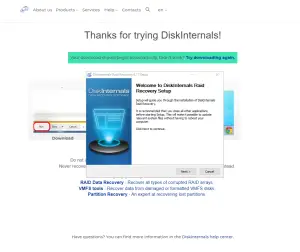
Nevertheless, for Windows 10 users, it is advisable to install DiskInternals RAID Recovery from the official website, or reliable third-party software download websites. Run the online installer package and wait for the program to successfully install on your Windows PC. After installation, here’s how to use the DiskInternals RAID Recovery to recover RAID data on a Windows 10 computer.
Guide:
- 1. Connect the RAID system or individual drive(s) to your Windows 10 PC where DiskInternals RAID Recovery is installed, then launch the program.
- 2. The step-by-step wizard will launch automatically when you launch the software, if you want to perform the RAID recovery manually, close the wizard prompt.
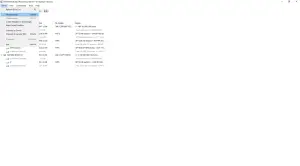
- 3. Choose your RAID recovery disk type or skip to the “Constructor” and select the number of disks in your RAID array.
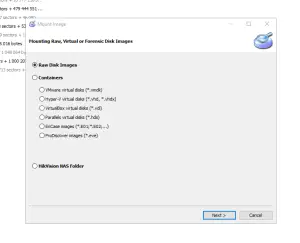
- 4. Choose your RAID parameters to ensure a more efficient recovery process
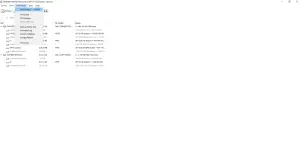
- 5. Now, choose a Scan Mode; it is best to choose Full Recovery – although it may take very long to complete, it is the only scanning mode that guarantees a higher successful recovery rate.
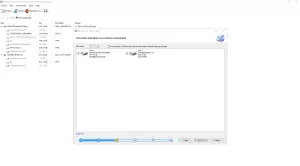
- 6. Wait for the scanning to run completely; you can minimize the program while it’s scanning and continue to use the system for other things – then come back at random to check the scan progress.
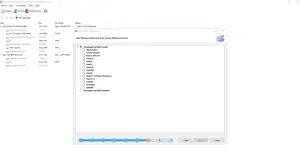
- 7. Once the scan is completed, you will be able to preview most of the recovered files before saving them to another storage to complete the recovery. You will actually need a paid license to complete the recovery; all the while – until this final step – DiskInternals RAID Recovery works entirely free.
Expert Tip: When you’re unable to recover your RAID data using the DiskInternals RAID Recovery software, as a paid license user, you can request Guided Repair to have DiskInternals data recovery experts to step in and offer professional assistance. This will ensure your files are retrieved successfully.
EaseUS Data Recovery Wizard vs DiskInternals RAID Recovery
Comparison of Key Aspects:
Ease of Use
When it comes to ease of use, EaseUS Data Recovery Wizard stands out as the more user-friendly option. Its interface is designed for simplicity, providing an intuitive step-by-step recovery process that makes it accessible even for beginners. Users can easily navigate through its menus to recover files without much technical knowledge. This simplicity makes it ideal for those looking for a quick, straightforward data recovery solution.
On the other hand, DiskInternals RAID Recovery is designed with more advanced users in mind. While the interface is still clear, the software offers a range of technical options, including manual RAID reconstruction, which can be daunting for less experienced users. The learning curve is steeper, especially for those unfamiliar with RAID configurations. However, the guided services offered by DiskInternals can provide assistance when needed, helping users navigate its more complex features.
RAID Recovery Capabilities
In terms of RAID recovery capabilities, DiskInternals RAID Recovery is the superior choice. It supports a wide range of RAID levels, including RAID 0, 1, 5, 6, 10, RAID 01, RAID 50, and RAID 60, making it suitable for even the most complex RAID configurations. The ability to perform manual RAID reconstruction gives it an edge in recovering data from degraded or failed RAID arrays where parameters are lost. DiskInternals can also automatically detect RAID parameters, a critical feature for users dealing with serious RAID failures.
EaseUS Data Recovery Wizard, on the other hand, provides only basic RAID support, covering RAID 0 and RAID 1. It lacks the advanced RAID reconstruction features necessary for more complex or hybrid RAID arrays. While it performs well for standard file recovery, its RAID-specific capabilities are limited, making it less suitable for users dealing with intricate RAID configurations or severe RAID failures.
Pricing
In terms of pricing, EaseUS Data Recovery Wizard is the more affordable option, making it attractive for casual users or those who only need to recover data from basic RAID setups or other storage devices. Its lower price point reflects its more general data recovery capabilities and is suited for users looking for a budget-friendly solution.
DiskInternals RAID Recovery, with its specialized RAID recovery features, comes at a higher price. This is justified by its advanced capabilities, particularly for users managing more complex RAID systems. The investment is worthwhile for IT professionals, system administrators, or users dealing with critical RAID data loss. However, for those who only require basic data recovery, the higher cost might be seen as a disadvantage.
Support
Both tools offer customer support, but DiskInternals RAID Recovery provides a more tailored support experience, especially with its guided services for users who need help navigating RAID recovery. This technical assistance can be crucial for users dealing with complicated recovery scenarios. The support team can provide expert guidance, which adds value to the software, particularly for professional users.
EaseUS Data Recovery Wizard also offers customer support, but it is generally more suited to resolving issues related to file recovery rather than complex RAID configurations. EaseUS focuses on providing clear documentation and guides to help users recover data independently. For basic support needs, EaseUS is sufficient, but for intricate RAID recovery assistance, DiskInternals offers more robust options.
Conclusion
When comparing EaseUS Data Recovery Wizard and DiskInternals RAID Recovery, the best choice depends on your specific needs and technical expertise.
EaseUS Data Recovery Wizard is better suited for users looking for a simple, budget-friendly data recovery solution. Its user-friendly interface and basic RAID support make it an excellent choice for individuals or small businesses needing to recover files from standard storage devices or basic RAID arrays like RAID 0 and RAID 1. If ease of use and affordability are your primary concerns, and your RAID setup is not complex, EaseUS offers a solid solution.
On the other hand, DiskInternals RAID Recovery is designed for more advanced use cases. Its ability to recover data from complex RAID arrays, including RAID 5, 6, 10, and hybrid RAID configurations, as well as the option for manual RAID reconstruction, makes it a far more powerful tool for professionals and businesses managing critical RAID systems. DiskInternals is particularly valuable in situations where RAID metadata is lost or the RAID controller fails, offering the depth and precision needed for successful recovery in these challenging scenarios. While it comes at a higher cost and is more complex to use, it’s the better option for users who require robust RAID recovery capabilities.
FAQ
-
DiskInternals RAID Recovery is better suited for complex RAID arrays. It supports advanced RAID levels, including RAID 5, 6, 10, 01, 50, and 60, and offers manual RAID reconstruction options, making it ideal for recovering data from more sophisticated RAID setups or RAID failures.
-
Yes, EaseUS Data Recovery Wizard can recover data from basic RAID arrays, such as RAID 0 and RAID 1. However, it does not support advanced RAID configurations, and it lacks manual RAID reconstruction features for recovering from more severe RAID failures.
-
DiskInternals RAID Recovery is more complex compared to general recovery tools like EaseUS due to its advanced features. However, it is designed for users who are familiar with RAID systems, and the software provides guided services for those who need assistance with more technical recovery tasks.
-
Yes, DiskInternals RAID Recovery supports both hardware and software RAID systems, making it a versatile tool for recovering data across various RAID setups, regardless of the RAID controller used.
-
Both EaseUS Data Recovery Wizard and DiskInternals RAID Recovery offer free versions or trial versions with limited capabilities. EaseUS allows users to recover a small amount of data for free, while DiskInternals offers a free trial that includes file preview but requires a paid version for full recovery functionality.
-
DiskInternals RAID Recovery offers more in-depth customer support, including guided recovery services, which are particularly helpful for handling complex RAID recovery cases. EaseUS provides general customer support and documentation but lacks the advanced support options that DiskInternals offers for RAID recovery.
Related articles
- RAID Array for Video Editing: How to Choose
- How to set up RAID 1 on Windows 10 and Linux
- Configuring RAID 5: Step-by-Step Guide on How to Configure RAID 5 for Performance
- How to Rebuild RAID 5 Without Losing Your Data
- RAID 1 Recovery: all you can do yourself
- RAID 5 Data Recovery Step by Step
- RAID Recovery Services
- RAID Recovery Software
- RAID 4 Data Recovery: How to Perform It⠀
- RAID 0 vs RAID 1: Performance, Redundancy & Use Cases
- RAID 5 vs RAID 10 comparison: Which one is better for you?⠀
- How to set up RAID in Windows 10 in 2025
- RAID 5 VS RAID 6 - advantages and disadvantages
- The best NAS RAID: how to choose⠀
- HDD Raid Vs SSD Raid Storage Systems - How to move⠀
- NAS vs External Hard Drive: Comprehensive Guide to Choosing the Best Data Storage Solution
- RAID-1 vs RAID-5: Performance, Cost, and Data Protection Compared
- RAID 10 vs RAID 01: Is There Any Difference?
- RAID vs JBOD: performance and cost comparison⠀
- NAS vs SAN storage - Detailed Comparison⠀
- Perform RAID 50 Data Recovery Today!
- Basic Disks vs Dynamic: What is the Difference
- What Is a Hot Spare? Peculiarities of Usage
- Differences Between Software RAID and Hardware RAID
- How to check RAID status? 4 different methods!
- RAID Array Growing: How to Perform It
- How To Create RAID Arrays with mdadm on Ubuntu (22.04)
- How About RAID 1 Reliability?
- Can RAID array have snapshots?
- RAID Array Metadata: What Is Inside?
- RAID 5: How Big Should an Array Be?
- How Does RAID 5 on Windows 10 Work?
- What is FakeRAID?
- Which RAID is Better to Use for 4 Drives
- Hyper-V Manager - what is it?⠀
- Hyper-V: Generation 1 vs Generation 2
- Hyper-V Live Migration - what is it?⠀
- Hyper-V Snapshot Merge
- About Hyper-V clusters
- Hyper-V network adapters⠀
- Back up Active Directory Guide - Step-by-step Instructions⠀
- Effective Btrfs File Recovery: Complete Guide to Btrfs Data Recovery
- Make Sure Your Data is Safe While Using Microsoft Storage
- Set Up and Use Microsoft SQL Server Management Studio
- Guide: Linux Raid and Disk Data Safety
- Btrfs vs. EXT4: A Comprehensive Comparison of File Systems in Linux (2025)
- RAID Redundancy - best performance solutions⠀
- No hard drive detected or disk controller not supported in RAID
- Issue with the RAID after the BIOS update
- Using SSD in RAID Array
- ZFS Recovery software - How to recover deleted ZFS files
- Raid Recovery Qnap⠀
- RAID recovery software for Mac⠀
- How to Recover RAID Array Configuration
- How to Rebuild RAID Without Losing Data
- How to rebuild RAID 1 without losing data
- How to Rebuild RAID 0 Without Losing Data
- Difference and Comparison - RAID 1 and RAID 2
- Difference between RAID 2 and RAID 3
- Difference between RAID 4 and RAID 5
- What is Synology Hybrid RAID (SHR). How to Recover Data from Synology Hybrid RAID
- Recover Data from RAID on Linux
- RAID Foreign Disk: Causes, Solutions, and Best Practices
- Forensic RAID Recovery
- RAID Data Recovery evaluation. What is RAID data recovery?
- What Is a RAID Controller and What Are the Benefits of It?
- Recover Data from Broken/Failed RAID Set
- How to Clone RAID 0, 1, 5 Disk
- Raid Rebuild Vs. Raid Recovery
- RAID vs. backup - differences and benefits (RAID is not a Backup)
- How to Rebuild RAID array
- What is Synology Hybrid RAID? What is the difference between SHR and RAID Drives?
- Recover Data from RAID 5 on mdadm (Linux)
- RAID Rebuild Time: What is and How to Optimize It?
- RAID Disaster Data Recovery: Techniques and Strategies for Handling Catastrophic Events
- How to Repair a Failed RAID?
- How to Set Up RAID in Windows 11: A Step-by-Step Guide
- RAID 50 vs. RAID 60 – Key Differences
- How to Set Up and Configure RAID 10: Step-by-Step Guide
- What Is RAID 6? Definition, function
- RAID 10 vs RAID 6: Which Better?
- RAID 10: How Many Disks Are Needed and How to Set It Up
- How to recover data from a corrupted RAID?
- RAID 1 with 3 Drives: Everything You Need to Know
- NTFS RAID Recovery: Comprehensive Guide to Data Retrieval
- Comprehensive Guide to RAID in Cyber Security: Levels, Recovery, and Best Practices
- What is software RAID? - Comprehensive Guide
- Understanding RAID 0: Benefits, Risks, and Applications
- RAID 3 Explained: Benefits, Limitations, and Data Recovery Guide
- How Many Drives Are Needed for RAID 5? Minimum & Maximum Explained
- Understanding RAID Striping: A Comprehensive Guide to Disk Striping and Its Variants
- ZFS vs Btrfs vs RAID: Comprehensive Storage Comparison for Performance, Reliability, and Scalability
- How to Resize RAID Partitions: Step-by-Step Guide for RAID 1, 5, 6 & 10
- RAID 1 Minimum Drive Requirement: How Many Drives Do You Need?
- Bootable RAID Recovery Software: Complete Guide for RAID 0, 1, 5, 10 Recovery
- RAID Hard Drives Explained: What Is RAID for HDDs and External Drives
- RAID 5 Rebuild Failure Probability: Risks, Factors, and Solutions in 2025
- Understanding RAID 6 Performance: A Comprehensive Guide
- Recovering Data from RAID Drives: Step-by-Step Guide to RAID Recovery
- Adaptec RAID Recovery: Restore Data from Failed Arrays with DiskInternals RAID Recovery™
- SAN RAID Data Recovery: Recover RAID Arrays with Professional SAN Recovery Solutions
- What is a RAID? RAID Systems Explained & How to Recover RAID Arrays with Professional Tools
- Top 10 RAID Recovery Services: Best Solutions for Data Recovery
- RAID Server Data Recovery: Recover and Restore RAID Arrays Fast with Professional Tools
- RAID System Recovery: Essential Steps & Best Software for Safe Data and File Restoration
- What is RAID Connectivity? Essential Guide to RAID Array Setup
- How Many Drives for RAID 6?
- How to Read RAID Drives & Recover RAID Arrays on Windows: A Guide
- Synology RAID 5 Recovery: Recover Your RAID Array with Expert Tools and Tips
- X-RAID Recovery: Expert Guide to Netgear X-RAID and ReadyNAS Data Recovery
- SCSI RAID Recovery Software: Effective Solutions for SCSI RAID Data Recovery
- RAID Data Recovery for Deleted Arrays: Recover RAID Array Safely & Effectively
- What is RAID in Linux? Learn About Software RAID & Recover RAID Arrays Easily
- Change log for RAID Recovery™
- Intel Matrix RAID Recovery: Restore RAID 0, 1, 5, 10 with Reliable Solutions
- ZFS RAID Expansion: How to Expand RAIDZ and ZFS Pools Safely
- RAID 6 Drive Failure Tolerance: How Many Drives Can Fail?
- Windows Storage Spaces vs RAID: Performance, Speed, and Data Protection Comparison
- RAID 2 Array Explained: What Is RAID Level 2, Setup, and Performance Comparison
- RAID 5 RAID 6 RAID 10 - Key Differences and Performance Comparison
- How to Fix Degraded RAID 1: Step-by-Step Guide to Restore RAID 1 Degraded Arrays
- RAID 5 vs RAID 0+1: Key Differences Explained
- Why RAID 1 Is Not a Good Substitute for a Backup
- How to Check Which RAID Is Configured: A Complete Guide for Windows and Linux
- RAID 50 vs. RAID 6 – Key Differences
- Cannot Format Old RAID Drive? Effective RAID Data Recovery Solutions
- RAID 6 with 5 Drives: Configuration, Performance, and Data Protection
- Best RAID for 6 Disks: Compare RAID 0, 5, 6, 10, 50 & 60 for Performance & Redundancy
- RAID 6 with 8 Drives: Configuration, Failures, and Performance Explained
- RAID 6 with 6 Drives: Performance, Redundancy, and Best Use Cases
- RAID 5 with 5 Drives: Configuration, Performance & Recovery | RAID 5 5 Drives Guide
- 15 Best External Hard Drives for RAID in 2026
- Dell RAID 1 Recovery: How to Recover Data from RAID 1 on Dell Servers Safely
- What Is RAID 1E? Performance RAID 10 1E vs RAID-1E Guide for Power Users
- RAID 1E vs RAID 5: Performance, Capacity and Failure Risk Compared
- RAID 1 Speeds: Read, Write & Disk Performance | Speed Up RAID 1 Guide
- XFS RAID Recovery Guide & Best XFS RAID Recovery Software
- RAID Data Recovery Cost: Affordable Solutions for RAID 0, RAID 1, RAID 5, and RAID 10 Failures
- NAS as a File Server: NAS vs. File Server Comparison for Storage and Sharing
- QNAP RAID 5 Recovery Failed? Safe Data Recovery Steps for NAS Users
- ReiserFS RAID Recovery: How to Restore Data from Failed RAID Arrays
- RAID Calculator For Geeks – Estimate Usable Space & Drive Size
- RAID 0 vs RAID 1 vs RAID 5 vs RAID 10 — Performance, Capacity & Recovery
- RAID 1 vs RAID 5 vs RAID 10 Performance Management, Speed & Capacity Guide
- ZFS Minimum Drives — How Many Disks You Need for RAIDZ1, RAIDZ2, RAIDZ3
- ZFS vs mdadm RAID — Why choose ZFS instead of RAID
- Encrypting RAID Arrays — RAID with Full Disk Encryption & Secure Setup
- Best RAID for OLTP: RAID Configuration for OLTP Workloads & Transactional Databases
- Best RAID for MySQL: RAID Configuration & RAID Setup for MySQL Databases
- Best RAID for NVMeoF: NVMe RAID Configuration & NVMe over Fabrics RAID Setup
- Fault Tolerance in NVMe-oF RAID — Rebuild Time, Data Protection & Redundancy
- RAID 0 vs Single Drive — SSD, NVMe & HDD Comparison (Performance vs Risk)
- RAID 0 vs Single Drive Reliability — Failure Risk, SSD Comparison & Recovery
- RAID 0 vs. SSD Performance: PCIe 4.0, PCIe 5.0 Speed Compared
- Does RAID 0 Increase FPS? — RAID 0 vs Single Drive FPS Guide
- RAID 5 Two-Disk Failure Recovery: Parity Recovery Beyond Tolerance
- Best RAID Controller Guide: Hardware RAID Cards Compared for Servers and SSDs
- RAID Controller for ESXi: VMware ESXi RAID Controller Recommendations
- RAID Controller for Linux: Best Linux-Compatible Hardware RAID Controllers
- SATA RAID Controller for ESXi: VMware ESXi Compatible SATA RAID Options
- RAID Calculator Online – Usable Space & Disk Size Calculator for RAID
- NAS Data Recovery Software & Tools for RAID Recovery
- Features
- RAID 0 Data Recovery
- RAID 10 Recovery
- RAID 6 Data Recovery
- RAID 0, 1, 3, 5, 10 data recovery software for Windows 10
- RAID Reconstructor on Broken RAID Arrays
- The Truth about Recovering RAID 5 with 2 Failed Disks
- SSD benefits for RAID array
- RAID 0 failure - How to Fix Failed Raid 0 Array
- Benefits of RAID arrays - what are the advantages of RAID?⠀
- RAID 3 vs RAID 5: which one would you prefer?
- What are RAID 01, RAID 1+0 and RAID 0+1⠀
- Mdadm RAID 1 not activating a spare disk Linux⠀
- What to do if RAID array doesn't reassemble after reboot
- RAID levels 0, 1, 5, 6, and 10
- Minimum disks for RAID 10⠀
- RAID Consistency Check: Ensure Data Integrity & Recover Lost Data
- Global Hot Spare vs Dedicated Hot Spare: Find the Difference
- What Are Some Common Symptoms of RAID Array Failures?⠀
- RAID status degraded - fix it⠀
- RAID 50 vs RAID 10 - What is the difference
- How to downsize hardware RAID partition and protect data
- What is RAID-Z? Its Difference Between RAID-Z2 vs RAID-Z3
- RAID 6: Replace Two Dead Drives
- Do You Need to Defragment RAID?
- How to Recover RAID partition - step by step guide⠀
- Does chunk size influence the speed of RAID?
- RAID 0, 5, 6, 10 Performance
- RAID Configuration Explained: Types, Setup, and Best Practices
- What Is RAID Redundancy? | RAID Redundancy Explained for Data Protection
- Perform Hyper-V Data Recovery Today
- How to Install Hyper-V in Your Environment in 2025
- Hyper-V Virtual Machine Replication⠀
- Difference Between Type 1 and Type 2 Hypervisor?⠀
- Hyper-V Server Core installation vs GUI - let's compare⠀
- How to Run Linux on a Hyper-V VM in 2025
- What is nutanix ahv?⠀
- What is System Center Virtual Machine Manager⠀
- What is Microsoft SQL Server and How Can You Use it Safely?
- Microsoft SQL Server Express Guide
- Use Microsoft Windows Server Safely
- What to do if you get Microsoft SQL Server error 18456?
- Microsoft Storage Spaces
- Xserve RAID data safety
- Apple RAID Card Data Recovery
- Here is Everything You Need to Know About RAID-Z Technology
- What is JBOD?
- Is it worth using RAID 5E/5EE?
- Let's compare: Synology vs QNAP
- Here is How to Backup RAID in 2025
- Synology RAID Set That Is Broken or Crashed? RAID data recovery
- Here is How to add drive to RAID 5 in 2025
- Best NAS hard drive recovery in 2026 | Top RAID network-attached storage Hard Drives
- SQL Server Database in Recovery Pending - How to fix it (2025)
- RAID Hard Disk Data Recovery Software (2025)
- Best RAID Data Recovery Software for Linux
- Difference between RAID 3 and RAID 4
- Buffalo Data Recovery
- Rapid RAID Recovery Software
- RAID Server Data Recovery
- How to Recover RAID Crash Data
- Raid Drive Array Recovery
- How to Setup Raid 0 Windows 10 (11)?
- How Many Disks Can Fail in RAID 5?
- What is RAID 5? Overview and Key Functions
- How to Remove software RAID device using mdadm
- AHCI vs. RAID: Pros, Cons & Differences
- Recover Data from RAID 1 on mdadm (Linux)
- Difference & Comparison: RAID vs. non-RAID System
- Ultimate Guide to RAID Data Recovery: Tips & Techniques
- Guide to Recovering a Failed RAID Array | Step-by-Step Recovery Process
- Open Source RAID Recovery Software Explained and Comparison
- HDD RAID vs SSD RAID and Combining Both: Everything You Need to Know
- RAID 0: How Many Drives Are Needed?
- RAID 1: How Many Drives Are Needed for Data Redundancy?
- What is RAID 1? RAID Mirroring
- Recovering RAID 5 After Controller Failure
- What is Xserve RAID? Comprehensive Guide and Overview
- Complete Guide to RAID Controller Failure and Recovery: Expert Tips
- Understanding Hardware RAID: Comprehensive Guide to RAID Levels and Benefits
- Understanding RAID 60: Architecture, Advantages, and Data Recovery
- RAID 10: How Many Drives Can Fail? | Comprehensive Guide to Failure Tolerance
- ZFS RAID Setup Guide: Configuration, Management & Expansion
- A Comprehensive Review of RAID Recovery Software: Choosing the Right Tool
- Comprehensive Guide to ZFS RAID Levels, Types, and Configurations
- ZFS vs RAID: Comprehensive Comparison of Performance, Reliability, and Features
- RAID Drives Explained: Learn How RAID Storage Enhances Performance
- HP RAID Recovery Tool | How to Recover Data with DiskInternals RAID Recovery Software
- Recover Striped RAID: Professional RAID 0 Data Recovery with DiskInternals RAID Recovery™
- BTRFS Restore File: How to Undelete Files and Restore Deleted Data Easily
- Recover Data from a RAID Array: Effective Solutions for Fast and Secure Data Retrieval
- Windows 7 RAID Recovery: How to Recover Data from RAID 1, RAID 5, and RAID 10 Arrays
- What is RAID Data Recovery? | Recover RAID Arrays with RAID Recovery Software
- What is a RAID Volume? Understanding RAID Volumes and Recovery Solutions
- Best RAID Software for Mac | Top Free & Paid RAID Tools for macOS 2026
- RAID Recovery Volume: Effective RAID Array Recovery Solutions for Data Loss Prevention
- Intel RAID 0 Recovery & RAID 1 Recovery: Solutions for Data Loss & Recovery Tools
- Optimize RAID for Redundancy and Performance - Expert Guide
- RAID 0 vs RAID 5: Speed, Performance & Key Differences (2026)
- Synology RAID 1 Recovery: Recover RAID Array with Trusted Tools and Expert Solutions
- Interim Recovery RAID 5: Expert Guide to Data Recovery and RAID Array Repair
- MDADM RAID 0 Recovery: Expert Guide to Fix and Recover Your RAID Array
- RAID Level 4: What Is RAID 4, How It Works
- RAID Restorer – Recover Data from Failed RAID Arrays with Reliable Software
- ZFS RAID with Different Size Drives – Setup, Limitations, and Best Practices
- RAID 0, 1, 5, 10 Explained: Performance, Redundancy & Best RAID Configurations
- How to Recover Data from a Broken RAID 1 Set – Step-by-Step Guide
- RAID 50: Drive Failure Tolerance and Data Recovery Solutions
- RAID 5 with 3 Disks: Configuration, Benefits, and Performance Insights
- How to Create RAID 5 with 6 Disks: Complete Setup Guide and Performance Tips
- RAID 6 Double Parity Calculation Explained – Data Protection Insights
- How to Add a Disk to mdadm RAID 5: Step-by-Step Guide
- RAID 0 vs RAID 10 and RAID 10 vs RAID 0 Performance Comparison
- RAID 50 vs. RAID 5 – Performance, Speed, and Data Protection Comparison
- Configure RAID on Ubuntu – Step-by-Step Guide for RAID 0, 1, 5, and 10
- RAID 0 vs. JBOD – Key Differences, Performance, and Speed Comparison
- RAID Array Rebuild: How to Rebuild a RAID Array Safely and Recover Lost Data
- Recover Data from Old RAID Drives | Best Methods & Software for RAID Recovery
- Dell RAID 5 Recovery - Safely and Fast
- RAID 1E vs RAID 10: Performance, Capacity, Cost & Failure Risk Guide
- Ext3 RAID Recovery Guide - Data Recovery RAID Ext3
- ASUS RAID Recovery Guide - Fix Failed ASUS RAID
- ZFS Recovery Tools — Data Recovery ZFS Guide & Best Software
- RAIDZ1 vs RAID 5 — Performance, Integrity & Recovery Comparison
- ZFS Mirror vs RAIDZ — Performance, Capacity & Recovery Guide
- RAID Degraded: What to Do | Warning Fixes and Steps After a Failed Rebuild
- RAID 7 — What It Is? Origins, Risks & Recovery Options
- RAID in Cloud Storage Systems — SDS, Virtual RAID & Erasure Coding Guide
- RAID 10 with 8 Disks — Configuration, Performance, Rebuilds & Best Practices
- Is RAID 0 Worth It in 2026? Risk, Performance, SSD & NVMe Guidance
- Best Practices for RAID over NVMe-oF — Tuning, Monitoring & DR
- RAID 0 for Gaming — Is RAID 0 Good for Gaming? Performance & Risk Guide
- RAID 0 for 4K Editing — Is RAID 0 Good for 4K Video Editing?
- RAID 0 for Large File Workloads: Scratch Disks, NVMe, When It Makes Sense
- Is RAID 0 Obsolete? RAID 0 with SSD and NVMe — Still Worth It?
- RAID 0 Redundancy vs No Redundancy — Does RAID 0 Have Redundancy?
- RAID 5 Interrupted Rebuild Recovery: Fix Stopped or Aborted Rebuilds
- RAID 0 Failure Probability with N Disks Explained
- RAID 1 Corrupted Mirror Recovery: How to Recover a Damaged RAID 1 Mirror
- When RAID 0 Is Acceptable: Use Cases, Risks, and When You Should Use RAID 0
- RAID Best Practices for VMware: Best RAID Configuration for VMware ESXi
- RAID 0 Backed by Versioned Backup: Is RAID 0 Safe with Versioned Backups?
- RAID 10 Best for VMware: Why RAID 10 Is the Recommended RAID for ESXi
- Best PCIe RAID Controller: Top Hardware PCI Express RAID Cards Compared
- SAS RAID Controller for VMware ESXi: Best Hardware RAID Options
- Best FREE RAID Data Recovery Software (2026)
- DiskInternals RAID Recovery vs ReclaiMe: Comprehensive RAID Recovery Solutions Compared