How to Fix Degraded RAID 1
Data integrity and redundancy are paramount, especially when it comes to critical files and systems. RAID 1 configurations, known for their mirroring capabilities, provide an effective safeguard against data loss by duplicating information across multiple disks.
However, even this robust setup isn't immune to failure, and when a RAID 1 array becomes degraded, timely intervention is crucial to restore its optimal functionality. In this comprehensive guide, we'll walk you through the step-by-step process of diagnosing and repairing a degraded RAID 1 array, ensuring your data remains secure and your system runs smoothly. Whether you're an IT professional or a tech-savvy individual, this guide will equip you with the knowledge needed to tackle RAID 1 issues with confidence.
Understanding RAID 1 Degradation
RAID 1 degradation occurs when the redundancy of a mirrored disk array is compromised due to the failure or underperformance of one or more drives within the setup. In a RAID 1 configuration, data is duplicated across two or more disks to ensure high availability and fault tolerance. This mirroring process means that if one drive fails, the data remains intact and accessible from the other drives. However, degradation represents a state where this safety net is weakened, leaving the system vulnerable to data loss should further failures occur.
Several factors can lead to RAID 1 degradation, each with its own implications for data integrity and system performance:
- Hardware Failures: The most common cause of degradation in a RAID 1 setup is the failure of a drive. This can happen due to mechanical faults, wear and tear over time, or manufacturing defects. Since RAID 1 relies on the health of the individual drives, any failure directly impacts the array's integrity.
- Connectivity Issues: Poor connections can result in drives being intermittently recognized by the RAID controller, leading to degradation. Loose cables, faulty ports, or issues with the RAID controller itself can all contribute to this problem. What is a RAID controller: learn more!
- Environmental Factors: Drives may degrade if they are exposed to conditions outside their operating specifications. This includes excessive heat, moisture, or dust, all of which can impair drive performance and longevity.
- Power Surges: Sudden power spikes or outages can cause drives to malfunction or sustain damage, reducing their ability to function effectively within the RAID array.
- Software Glitches: Bugs or conflicts within the RAID management software can lead to incorrect drive status reporting, causing unnecessary degradation alerts or even triggering false failures.
- Firmware Incompatibilities: Mismatched or outdated firmware versions between RAID components can lead to communication errors or unexpected behavior, resulting in degraded performance.
- Human Error: Inadvertent actions by users, such as accidentally disconnecting a drive or incorrect configuration settings, can also cause degradation issues.
Given these potential causes, regular maintenance, monitoring, and timely responses are crucial to detecting degradation early and addressing it effectively. By understanding the underlying reasons for RAID 1 degradation, users can take proactive steps to mitigate risks and ensure the continuous health of their systems.
Identifying the Failed Drive
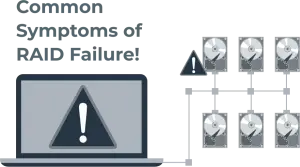
When a RAID 1 array experiences degradation, pinpointing the failed drive is a critical first step in the recovery process. Modern RAID systems are equipped with management tools that facilitate this identification. These tools often provide a detailed status report of each drive within the array, highlighting any that have failed or are underperforming. By accessing the RAID management interface, whether through a dedicated hardware controller's software or built-in operating system utilities, users can quickly ascertain which drive is causing the issue. These tools may display visual warnings, such as red or amber alerts, against the problematic drive or furnish logs indicating error codes and operational anomalies.
Beyond software diagnostics, physical inspection of the hardware may provide additional clues to the failing drive. Several signs may indicate drive failure:
- Unusual Noises: A drive emitting grinding, clicking, or buzzing sounds is often a telltale sign of mechanical failure.
- Status LEDs: Many hard drives and RAID enclosures have indicator lights that can reflect drive health. A steady or blinking red light usually denotes a failure or critical warning.
- Overheating: Touching the drives to check for unusual heat can sometimes suggest a problem, as failing drives might run hotter than their functional counterparts.
- Non-Responsive Drive: Drives that do not spin or are physically unresponsive when powered on can indicate a significant failure.
Both software-based diagnostics and physical inspection should be used in combination to accurately identify a failed drive, allowing for swift intervention to restore the RAID 1 array to optimal functioning.
Replacing the Faulty Drive
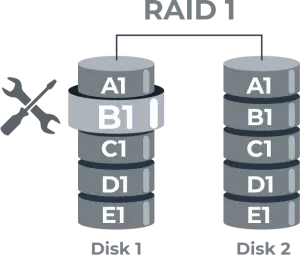
Choosing the right replacement drive is crucial to restoring your RAID 1 array to full functionality. Compatibility should be a primary consideration, taking into account both the drive's specifications and the RAID controller's requirements. Ideally, the replacement drive should match the original in terms of capacity, speed, and interface type (e.g., SATA, SAS). It's advisable to use the same brand and model if possible, or consult the RAID controller's compatibility list to ensure proper integration with the existing setup. Additionally, ensure that the drive's firmware is compatible with the RAID system to prevent any mismatches or communication errors.
Proper Procedures for Safely Removing and Installing Drives:
- 1. Power Down the System: Before handling any hardware components, ensure the system is powered off to prevent electrical hazards and data corruption.
- 2. Discharge Static Electricity: Use an anti-static wrist strap or touch a grounded metal object to discharge any static electricity that might damage sensitive components.
- 3. Remove the Faulty Drive:
- Open the drive bay or panel as per the manufacturer's instructions.
- Carefully disconnect the cables connected to the drive, ensuring not to tug or twist them harshly.
- Gently ease the drive out of its slot or mounting bracket.
- 4. Install the Replacement Drive:
- Slide the new drive into the vacant slot, aligning it properly within the bay or bracket.
- Reconnect all required cables securely, ensuring a snug fit.
- Ensure the drive is firmly seated and any screws or mounting brackets are securely fastened.
- 5. Power Up and Initialize the Drive:
- Power on the system and access the RAID management interface.
- Follow any prompts to initialize and integrate the new drive into the existing array.
- The system may begin an automatic rebuild of the array using the new drive.
Rebuilding the RAID Array
After successfully replacing the faulty drive, the next step is to initiate the rebuild process to restore the RAID 1 array to its full mirrored functionality. This process can typically be started through the RAID management utilities provided by your RAID controller or operating system's disk management tools. These interfaces usually offer a straightforward option to start the rebuild, often labeled as "Rebuild Array" or "Synchronize Disks." Upon selection, the system will begin duplicating data from the healthy drive to the newly installed drive, effectively reconstructing the mirrored array.
Once the rebuild process is underway, monitoring its progress is crucial to ensure it completes successfully and to address any issues that may arise. During this time, many RAID management interfaces will offer ongoing status updates, indicating the percentage of the rebuild completed and estimating the time remaining. It's important to regularly check these updates for any error messages or alerts that might suggest problems. Keep an eye on system performance, as rebuild activities can sometimes affect overall system responsiveness. Should any issues occur, refer to the RAID controller's documentation for troubleshooting steps. Successful rebuild completion will be confirmed by a notification from the management tool, indicating that the array is once again fully redundant and secure.
Verifying Data Integrity Post-Rebuild
After the RAID 1 rebuild process is complete, verifying the integrity of your data is a crucial step in ensuring that all files are intact and consistent. This generally involves running file system checks that are designed to detect and, in some cases, automatically correct errors. Depending on your operating system, these checks can be performed using utilities such as chkdsk on Windows, fsck on Linux, or the Disk Utility tools on macOS. These tools will scan the file system for anomalies, such as lost clusters, cross-linked files, or directory structure issues, and report on the health of the data.
If any inconsistencies or errors are discovered during the file system checks, it's important to address them promptly to prevent data corruption or loss. Here are the steps to take:
- Backup Important Data: Before attempting any fixes, ensure that a backup of critical data is made to prevent potential loss during correction efforts. This can be done using external drives, cloud storage, or other reliable backup solutions.
- Review Error Logs: Check the error logs and messages provided by the file system check to understand the nature and extent of the inconsistencies.
- Perform Automated Fixes: Utilize the options within your file system checking utility to automatically fix errors. Most tools offer this functionality either during the check process or as a separate command.
- Run Data Recovery Tools: If automatic fixes are not successful or partial data loss is detected, consider using specialized data recovery tools to attempt to retrieve lost files or repair damaged ones.
- Consult Professional Help: In cases of severe inconsistencies, or if data recovery efforts are not successful, it may be necessary to consult data recovery professionals who have the tools and expertise to address complex issues.
Preventative Measures to Avoid Future Degradation
- Regular System Monitoring and Maintenance Routines
Consistent monitoring and maintenance are essential for preventing RAID 1 array degradation. Implementing regular checks using RAID management tools can help detect anomalies early, allowing for prompt intervention before issues escalate. Scheduling periodic drive health assessments, such as SMART tests, can provide early warnings of potential failures. Additionally, keeping firmware and software updated ensures compatibility and optimal performance, reducing the likelihood of software-related problems.
- Implementing Robust Backup Solutions
While RAID 1 provides redundancy, it should not be relied upon as a substitute for a comprehensive backup strategy. Implementing robust backup solutions that include regular, automatic backups of critical data can further protect against data loss due to unforeseen failures. Consider utilizing both local and offsite backups, such as cloud storage, to safeguard against environmental risks like fire or theft. Ensuring that backups are current and easily accessible will provide peace of mind and a quick recovery path if the RAID array encounters issues.
- Ensuring Optimal Operating Conditions for Hardware Longevity
Maintaining an optimal environment for your RAID hardware can significantly extend its lifespan and reduce the risk of degradation. Ensure that drives are housed in well-ventilated enclosures to prevent overheating, which is a common cause of drive failure. Regularly clean dust from around hardware components and verify that all cooling fans are operational. Maintaining a stable power supply with surge protectors can also shield sensitive components from power fluctuations. By attending to these details, you can help ensure the longevity and reliability of your RAID setup.
Utilizing DiskInternals RAID Recovery™ Software
DiskInternals RAID Recovery™ is a powerful RAID 1 recovery software designed to recover data from RAID drive. Its capabilities include reconstructing RAID configurations, recovering lost or formatted partitions, and providing access to data even when the array fails to mount properly. The software supports a wide range of RAID levels and file systems, making it versatile for various setups. With user-friendly interfaces and advanced algorithms, it can reliably detect and recover data, ensuring minimal disruption and data loss.
Step-by-Step Guide on Using the Software for Data Recovery:
- 1. Install DiskInternals RAID Recovery™: Begin by downloading and installing the software on your computer. Ensure the system meets the software’s compatibility requirements.
- 2. Launch the Software: Open the DiskInternals RAID Recovery™ application.
- 3. Select the RAID Array: The software will scan for available devices. Select the degraded or damaged RAID array from the list of detected devices.
- 4. Automatic RAID Detection: Utilize the software’s capability to automatically detect the RAID parameters. If automatic detection does not resolve your issue, manually configure RAID settings based on your known setup.
- 5. Scan the Array: Initiate a complete scan of the array. The software will analyze the disks to identify recoverable data.
- 6. Preview Recovered Files: Once the scan is complete, the software will display a list of recoverable files. Utilize the preview function to verify data integrity and identify critical files for recovery.
- 7. Save Recovered Data: Choose the files you wish to recover and select a secure location to save them. It’s advisable to use a different drive or medium to ensure the data is not overwritten.
Ready to get your data back?
To start RAID data disaster recovery (recovering your data, documents, databases, images, videos, and other files from your RAID 0, RAID 1, 0+1, 1+0, 1E, RAID 4, RAID 5, 50, 5EE, 5R, RAID 6, RAID 60, RAIDZ, RAIDZ2, and JBOD), press the FREE DOWNLOAD button to get the latest version of DiskInternals RAID Recovery® and begin the step-by-step recovery process. You can preview all recovered files absolutely for free. To check the current prices, please press the Get Prices button. If you need any assistance, please feel free to contact Technical Support. The team is here to help you to rebuild RAID array without losing data!
Conclusion
In the realm of data integrity and reliability, timely intervention in RAID 1 degradation is of utmost importance. Swiftly identifying and addressing issues such as drive failures not only restores the redundancy that RAID 1 offers but also prevents potential data loss that could occur from subsequent failures. By understanding the causes, recognizing the signs of degradation, and taking immediate action to repair and rebuild RAID array, you ensure the longevity and effectiveness of your storage system.
Tip: how to rebuild RAID 1 without losing dataMoreover, adopting best practices for RAID maintenance and data protection is essential to safeguarding digital assets. Regularly monitoring system performance, implementing robust backup strategies, and ensuring optimal operating conditions are key components of a proactive approach. These measures not only enhance the reliability of your RAID setup but also instill confidence in the continuity and security of your data. By integrating these practices into your routine, you create a resilient environment capable of withstanding the challenges posed by hardware and software anomalies.
Related articles
- RAID Array for Video Editing: How to Choose
- How to set up RAID 1 on Windows 10 and Linux
- Configuring RAID 5: Step-by-Step Guide on How to Configure RAID 5 for Performance
- How to Rebuild RAID 5 Without Losing Your Data
- RAID 1 Recovery: all you can do yourself
- RAID 5 Data Recovery Step by Step
- RAID Recovery Services
- RAID Recovery Software
- RAID 4 Data Recovery: How to Perform It⠀
- RAID 0 vs RAID 1: Performance, Redundancy & Use Cases
- RAID 5 vs RAID 10 comparison: Which one is better for you?⠀
- How to set up RAID in Windows 10 in 2025
- RAID 5 VS RAID 6 - advantages and disadvantages
- The best NAS RAID: how to choose⠀
- HDD Raid Vs SSD Raid Storage Systems - How to move⠀
- NAS vs External Hard Drive: Comprehensive Guide to Choosing the Best Data Storage Solution
- RAID-1 vs RAID-5: Performance, Cost, and Data Protection Compared
- RAID 10 vs RAID 01: Is There Any Difference?
- RAID vs JBOD: performance and cost comparison⠀
- NAS vs SAN storage - Detailed Comparison⠀
- Perform RAID 50 Data Recovery Today!
- Basic Disks vs Dynamic: What is the Difference
- What Is a Hot Spare? Peculiarities of Usage
- Differences Between Software RAID and Hardware RAID
- How to check RAID status? 4 different methods!
- RAID Array Growing: How to Perform It
- How To Create RAID Arrays with mdadm on Ubuntu (22.04)
- How About RAID 1 Reliability?
- Can RAID array have snapshots?
- RAID Array Metadata: What Is Inside?
- RAID 5: How Big Should an Array Be?
- How Does RAID 5 on Windows 10 Work?
- What is FakeRAID?
- Which RAID is Better to Use for 4 Drives
- Hyper-V Manager - what is it?⠀
- Hyper-V: Generation 1 vs Generation 2
- Hyper-V Live Migration - what is it?⠀
- Hyper-V Snapshot Merge
- About Hyper-V clusters
- Hyper-V network adapters⠀
- Back up Active Directory Guide - Step-by-step Instructions⠀
- Effective Btrfs File Recovery: Complete Guide to Btrfs Data Recovery
- Make Sure Your Data is Safe While Using Microsoft Storage
- Set Up and Use Microsoft SQL Server Management Studio
- Guide: Linux Raid and Disk Data Safety
- Btrfs vs. EXT4: A Comprehensive Comparison of File Systems in Linux (2025)
- RAID Redundancy - best performance solutions⠀
- No hard drive detected or disk controller not supported in RAID
- Issue with the RAID after the BIOS update
- Using SSD in RAID Array
- ZFS Recovery software - How to recover deleted ZFS files
- Raid Recovery Qnap⠀
- RAID recovery software for Mac⠀
- How to Recover RAID Array Configuration
- How to Rebuild RAID Without Losing Data
- How to rebuild RAID 1 without losing data
- How to Rebuild RAID 0 Without Losing Data
- Difference and Comparison - RAID 1 and RAID 2
- Difference between RAID 2 and RAID 3
- Difference between RAID 4 and RAID 5
- What is Synology Hybrid RAID (SHR). How to Recover Data from Synology Hybrid RAID
- Recover Data from RAID on Linux
- RAID Foreign Disk: Causes, Solutions, and Best Practices
- Forensic RAID Recovery
- RAID Data Recovery evaluation. What is RAID data recovery?
- What Is a RAID Controller and What Are the Benefits of It?
- Recover Data from Broken/Failed RAID Set
- How to Clone RAID 0, 1, 5 Disk
- Raid Rebuild Vs. Raid Recovery
- RAID vs. backup - differences and benefits (RAID is not a Backup)
- How to Rebuild RAID array
- What is Synology Hybrid RAID? What is the difference between SHR and RAID Drives?
- Recover Data from RAID 5 on mdadm (Linux)
- RAID Rebuild Time: What is and How to Optimize It?
- RAID Disaster Data Recovery: Techniques and Strategies for Handling Catastrophic Events
- How to Repair a Failed RAID?
- How to Set Up RAID in Windows 11: A Step-by-Step Guide
- RAID 50 vs. RAID 60 – Key Differences
- How to Set Up and Configure RAID 10: Step-by-Step Guide
- What Is RAID 6? Definition, function
- RAID 10 vs RAID 6: Which Better?
- RAID 10: How Many Disks Are Needed and How to Set It Up
- How to recover data from a corrupted RAID?
- RAID 1 with 3 Drives: Everything You Need to Know
- NTFS RAID Recovery: Comprehensive Guide to Data Retrieval
- Comprehensive Guide to RAID in Cyber Security: Levels, Recovery, and Best Practices
- What is software RAID? - Comprehensive Guide
- Understanding RAID 0: Benefits, Risks, and Applications
- RAID 3 Explained: Benefits, Limitations, and Data Recovery Guide
- How Many Drives Are Needed for RAID 5? Minimum & Maximum Explained
- Understanding RAID Striping: A Comprehensive Guide to Disk Striping and Its Variants
- ZFS vs Btrfs vs RAID: Comprehensive Storage Comparison for Performance, Reliability, and Scalability
- How to Resize RAID Partitions: Step-by-Step Guide for RAID 1, 5, 6 & 10
- RAID 1 Minimum Drive Requirement: How Many Drives Do You Need?
- Bootable RAID Recovery Software: Complete Guide for RAID 0, 1, 5, 10 Recovery
- RAID Hard Drives Explained: What Is RAID for HDDs and External Drives
- RAID 5 Rebuild Failure Probability: Risks, Factors, and Solutions in 2025
- Understanding RAID 6 Performance: A Comprehensive Guide
- Recovering Data from RAID Drives: Step-by-Step Guide to RAID Recovery
- Adaptec RAID Recovery: Restore Data from Failed Arrays with DiskInternals RAID Recovery™
- SAN RAID Data Recovery: Recover RAID Arrays with Professional SAN Recovery Solutions
- What is a RAID? RAID Systems Explained & How to Recover RAID Arrays with Professional Tools
- Top 10 RAID Recovery Services: Best Solutions for Data Recovery
- RAID Server Data Recovery: Recover and Restore RAID Arrays Fast with Professional Tools
- RAID System Recovery: Essential Steps & Best Software for Safe Data and File Restoration
- What is RAID Connectivity? Essential Guide to RAID Array Setup
- How Many Drives for RAID 6?
- How to Read RAID Drives & Recover RAID Arrays on Windows: A Guide
- Synology RAID 5 Recovery: Recover Your RAID Array with Expert Tools and Tips
- X-RAID Recovery: Expert Guide to Netgear X-RAID and ReadyNAS Data Recovery
- SCSI RAID Recovery Software: Effective Solutions for SCSI RAID Data Recovery
- RAID Data Recovery for Deleted Arrays: Recover RAID Array Safely & Effectively
- What is RAID in Linux? Learn About Software RAID & Recover RAID Arrays Easily
- Change log for RAID Recovery™
- Intel Matrix RAID Recovery: Restore RAID 0, 1, 5, 10 with Reliable Solutions
- ZFS RAID Expansion: How to Expand RAIDZ and ZFS Pools Safely
- RAID 6 Drive Failure Tolerance: How Many Drives Can Fail?
- Windows Storage Spaces vs RAID: Performance, Speed, and Data Protection Comparison
- RAID 2 Array Explained: What Is RAID Level 2, Setup, and Performance Comparison
- RAID 5 RAID 6 RAID 10 - Key Differences and Performance Comparison
- RAID 5 vs RAID 0+1: Key Differences Explained
- Why RAID 1 Is Not a Good Substitute for a Backup
- How to Check Which RAID Is Configured: A Complete Guide for Windows and Linux
- RAID 50 vs. RAID 6 – Key Differences
- Cannot Format Old RAID Drive? Effective RAID Data Recovery Solutions
- RAID 6 with 5 Drives: Configuration, Performance, and Data Protection
- Best RAID for 6 Disks: Compare RAID 0, 5, 6, 10, 50 & 60 for Performance & Redundancy
- RAID 6 with 8 Drives: Configuration, Failures, and Performance Explained
- RAID 6 with 6 Drives: Performance, Redundancy, and Best Use Cases
- RAID 5 with 5 Drives: Configuration, Performance & Recovery | RAID 5 5 Drives Guide
- 15 Best External Hard Drives for RAID in 2026
- Dell RAID 1 Recovery: How to Recover Data from RAID 1 on Dell Servers Safely
- What Is RAID 1E? Performance RAID 10 1E vs RAID-1E Guide for Power Users
- RAID 1E vs RAID 5: Performance, Capacity and Failure Risk Compared
- RAID 1 Speeds: Read, Write & Disk Performance | Speed Up RAID 1 Guide
- XFS RAID Recovery Guide & Best XFS RAID Recovery Software
- RAID Data Recovery Cost: Affordable Solutions for RAID 0, RAID 1, RAID 5, and RAID 10 Failures
- NAS as a File Server: NAS vs. File Server Comparison for Storage and Sharing
- QNAP RAID 5 Recovery Failed? Safe Data Recovery Steps for NAS Users
- ReiserFS RAID Recovery: How to Restore Data from Failed RAID Arrays
- RAID Calculator For Geeks – Estimate Usable Space & Drive Size
- RAID 0 vs RAID 1 vs RAID 5 vs RAID 10 — Performance, Capacity & Recovery
- RAID 1 vs RAID 5 vs RAID 10 Performance Management, Speed & Capacity Guide
- ZFS Minimum Drives — How Many Disks You Need for RAIDZ1, RAIDZ2, RAIDZ3
- ZFS vs mdadm RAID — Why choose ZFS instead of RAID
- Encrypting RAID Arrays — RAID with Full Disk Encryption & Secure Setup
- Best RAID for OLTP: RAID Configuration for OLTP Workloads & Transactional Databases
- Best RAID for MySQL: RAID Configuration & RAID Setup for MySQL Databases
- Best RAID for NVMeoF: NVMe RAID Configuration & NVMe over Fabrics RAID Setup
- Fault Tolerance in NVMe-oF RAID — Rebuild Time, Data Protection & Redundancy
- RAID 0 vs Single Drive — SSD, NVMe & HDD Comparison (Performance vs Risk)
- RAID 0 vs Single Drive Reliability — Failure Risk, SSD Comparison & Recovery
- RAID 0 vs. SSD Performance: PCIe 4.0, PCIe 5.0 Speed Compared
- Does RAID 0 Increase FPS? — RAID 0 vs Single Drive FPS Guide
- RAID 5 Two-Disk Failure Recovery: Parity Recovery Beyond Tolerance
- Best RAID Controller Guide: Hardware RAID Cards Compared for Servers and SSDs
- RAID Controller for ESXi: VMware ESXi RAID Controller Recommendations
- RAID Controller for Linux: Best Linux-Compatible Hardware RAID Controllers
- SATA RAID Controller for ESXi: VMware ESXi Compatible SATA RAID Options
- RAID Calculator Online – Usable Space & Disk Size Calculator for RAID
- NAS Data Recovery Software & Tools for RAID Recovery
- Features
- RAID 0 Data Recovery
- RAID 10 Recovery
- RAID 6 Data Recovery
- RAID 0, 1, 3, 5, 10 data recovery software for Windows 10
- RAID Reconstructor on Broken RAID Arrays
- The Truth about Recovering RAID 5 with 2 Failed Disks
- SSD benefits for RAID array
- RAID 0 failure - How to Fix Failed Raid 0 Array
- Benefits of RAID arrays - what are the advantages of RAID?⠀
- RAID 3 vs RAID 5: which one would you prefer?
- What are RAID 01, RAID 1+0 and RAID 0+1⠀
- Mdadm RAID 1 not activating a spare disk Linux⠀
- What to do if RAID array doesn't reassemble after reboot
- RAID levels 0, 1, 5, 6, and 10
- Minimum disks for RAID 10⠀
- RAID Consistency Check: Ensure Data Integrity & Recover Lost Data
- Global Hot Spare vs Dedicated Hot Spare: Find the Difference
- What Are Some Common Symptoms of RAID Array Failures?⠀
- RAID status degraded - fix it⠀
- RAID 50 vs RAID 10 - What is the difference
- How to downsize hardware RAID partition and protect data
- What is RAID-Z? Its Difference Between RAID-Z2 vs RAID-Z3
- RAID 6: Replace Two Dead Drives
- Do You Need to Defragment RAID?
- How to Recover RAID partition - step by step guide⠀
- Does chunk size influence the speed of RAID?
- RAID 0, 5, 6, 10 Performance
- RAID Configuration Explained: Types, Setup, and Best Practices
- What Is RAID Redundancy? | RAID Redundancy Explained for Data Protection
- Perform Hyper-V Data Recovery Today
- How to Install Hyper-V in Your Environment in 2025
- Hyper-V Virtual Machine Replication⠀
- Difference Between Type 1 and Type 2 Hypervisor?⠀
- Hyper-V Server Core installation vs GUI - let's compare⠀
- How to Run Linux on a Hyper-V VM in 2025
- What is nutanix ahv?⠀
- What is System Center Virtual Machine Manager⠀
- What is Microsoft SQL Server and How Can You Use it Safely?
- Microsoft SQL Server Express Guide
- Use Microsoft Windows Server Safely
- What to do if you get Microsoft SQL Server error 18456?
- Microsoft Storage Spaces
- Xserve RAID data safety
- Apple RAID Card Data Recovery
- Here is Everything You Need to Know About RAID-Z Technology
- What is JBOD?
- Is it worth using RAID 5E/5EE?
- Let's compare: Synology vs QNAP
- Here is How to Backup RAID in 2025
- Synology RAID Set That Is Broken or Crashed? RAID data recovery
- Here is How to add drive to RAID 5 in 2025
- Best NAS hard drive recovery in 2026 | Top RAID network-attached storage Hard Drives
- SQL Server Database in Recovery Pending - How to fix it (2025)
- RAID Hard Disk Data Recovery Software (2025)
- Best RAID Data Recovery Software for Linux
- Difference between RAID 3 and RAID 4
- Buffalo Data Recovery
- Rapid RAID Recovery Software
- RAID Server Data Recovery
- How to Recover RAID Crash Data
- Raid Drive Array Recovery
- How to Setup Raid 0 Windows 10 (11)?
- How Many Disks Can Fail in RAID 5?
- What is RAID 5? Overview and Key Functions
- How to Remove software RAID device using mdadm
- AHCI vs. RAID: Pros, Cons & Differences
- Recover Data from RAID 1 on mdadm (Linux)
- Difference & Comparison: RAID vs. non-RAID System
- Ultimate Guide to RAID Data Recovery: Tips & Techniques
- Guide to Recovering a Failed RAID Array | Step-by-Step Recovery Process
- Open Source RAID Recovery Software Explained and Comparison
- HDD RAID vs SSD RAID and Combining Both: Everything You Need to Know
- RAID 0: How Many Drives Are Needed?
- RAID 1: How Many Drives Are Needed for Data Redundancy?
- What is RAID 1? RAID Mirroring
- Recovering RAID 5 After Controller Failure
- What is Xserve RAID? Comprehensive Guide and Overview
- Complete Guide to RAID Controller Failure and Recovery: Expert Tips
- Understanding Hardware RAID: Comprehensive Guide to RAID Levels and Benefits
- Understanding RAID 60: Architecture, Advantages, and Data Recovery
- RAID 10: How Many Drives Can Fail? | Comprehensive Guide to Failure Tolerance
- ZFS RAID Setup Guide: Configuration, Management & Expansion
- A Comprehensive Review of RAID Recovery Software: Choosing the Right Tool
- DiskInternals RAID Recovery vs EaseUS Data Recovery Wizard | Comprehensive Comparison
- Comprehensive Guide to ZFS RAID Levels, Types, and Configurations
- ZFS vs RAID: Comprehensive Comparison of Performance, Reliability, and Features
- RAID Drives Explained: Learn How RAID Storage Enhances Performance
- HP RAID Recovery Tool | How to Recover Data with DiskInternals RAID Recovery Software
- Recover Striped RAID: Professional RAID 0 Data Recovery with DiskInternals RAID Recovery™
- BTRFS Restore File: How to Undelete Files and Restore Deleted Data Easily
- Recover Data from a RAID Array: Effective Solutions for Fast and Secure Data Retrieval
- Windows 7 RAID Recovery: How to Recover Data from RAID 1, RAID 5, and RAID 10 Arrays
- What is RAID Data Recovery? | Recover RAID Arrays with RAID Recovery Software
- What is a RAID Volume? Understanding RAID Volumes and Recovery Solutions
- Best RAID Software for Mac | Top Free & Paid RAID Tools for macOS 2026
- RAID Recovery Volume: Effective RAID Array Recovery Solutions for Data Loss Prevention
- Intel RAID 0 Recovery & RAID 1 Recovery: Solutions for Data Loss & Recovery Tools
- Optimize RAID for Redundancy and Performance - Expert Guide
- RAID 0 vs RAID 5: Speed, Performance & Key Differences (2026)
- Synology RAID 1 Recovery: Recover RAID Array with Trusted Tools and Expert Solutions
- Interim Recovery RAID 5: Expert Guide to Data Recovery and RAID Array Repair
- MDADM RAID 0 Recovery: Expert Guide to Fix and Recover Your RAID Array
- RAID Level 4: What Is RAID 4, How It Works
- RAID Restorer – Recover Data from Failed RAID Arrays with Reliable Software
- ZFS RAID with Different Size Drives – Setup, Limitations, and Best Practices
- RAID 0, 1, 5, 10 Explained: Performance, Redundancy & Best RAID Configurations
- How to Recover Data from a Broken RAID 1 Set – Step-by-Step Guide
- RAID 50: Drive Failure Tolerance and Data Recovery Solutions
- RAID 5 with 3 Disks: Configuration, Benefits, and Performance Insights
- How to Create RAID 5 with 6 Disks: Complete Setup Guide and Performance Tips
- RAID 6 Double Parity Calculation Explained – Data Protection Insights
- How to Add a Disk to mdadm RAID 5: Step-by-Step Guide
- RAID 0 vs RAID 10 and RAID 10 vs RAID 0 Performance Comparison
- RAID 50 vs. RAID 5 – Performance, Speed, and Data Protection Comparison
- Configure RAID on Ubuntu – Step-by-Step Guide for RAID 0, 1, 5, and 10
- RAID 0 vs. JBOD – Key Differences, Performance, and Speed Comparison
- RAID Array Rebuild: How to Rebuild a RAID Array Safely and Recover Lost Data
- Recover Data from Old RAID Drives | Best Methods & Software for RAID Recovery
- Dell RAID 5 Recovery - Safely and Fast
- RAID 1E vs RAID 10: Performance, Capacity, Cost & Failure Risk Guide
- Ext3 RAID Recovery Guide - Data Recovery RAID Ext3
- ASUS RAID Recovery Guide - Fix Failed ASUS RAID
- ZFS Recovery Tools — Data Recovery ZFS Guide & Best Software
- RAIDZ1 vs RAID 5 — Performance, Integrity & Recovery Comparison
- ZFS Mirror vs RAIDZ — Performance, Capacity & Recovery Guide
- RAID Degraded: What to Do | Warning Fixes and Steps After a Failed Rebuild
- RAID 7 — What It Is? Origins, Risks & Recovery Options
- RAID in Cloud Storage Systems — SDS, Virtual RAID & Erasure Coding Guide
- RAID 10 with 8 Disks — Configuration, Performance, Rebuilds & Best Practices
- Is RAID 0 Worth It in 2026? Risk, Performance, SSD & NVMe Guidance
- Best Practices for RAID over NVMe-oF — Tuning, Monitoring & DR
- RAID 0 for Gaming — Is RAID 0 Good for Gaming? Performance & Risk Guide
- RAID 0 for 4K Editing — Is RAID 0 Good for 4K Video Editing?
- RAID 0 for Large File Workloads: Scratch Disks, NVMe, When It Makes Sense
- Is RAID 0 Obsolete? RAID 0 with SSD and NVMe — Still Worth It?
- RAID 0 Redundancy vs No Redundancy — Does RAID 0 Have Redundancy?
- RAID 5 Interrupted Rebuild Recovery: Fix Stopped or Aborted Rebuilds
- RAID 0 Failure Probability with N Disks Explained
- RAID 1 Corrupted Mirror Recovery: How to Recover a Damaged RAID 1 Mirror
- When RAID 0 Is Acceptable: Use Cases, Risks, and When You Should Use RAID 0
- RAID Best Practices for VMware: Best RAID Configuration for VMware ESXi
- RAID 0 Backed by Versioned Backup: Is RAID 0 Safe with Versioned Backups?
- RAID 10 Best for VMware: Why RAID 10 Is the Recommended RAID for ESXi
- Best PCIe RAID Controller: Top Hardware PCI Express RAID Cards Compared
- SAS RAID Controller for VMware ESXi: Best Hardware RAID Options
- Best FREE RAID Data Recovery Software (2026)
- DiskInternals RAID Recovery vs ReclaiMe: Comprehensive RAID Recovery Solutions Compared