Hyper-V network adapters: create, configure and remove
Here you will find out:
- what Hyper-V is
- how you can set up Hyper-V network adapters
- when DiskInternals can help you
Are you ready? Let's read!
How to construct a Hyper-V virtual machine was discussed in the previous blog article (VM). Creating a Hyper-V VM, on the other hand, is only the first step in creating a large-scale virtual environment; you must also verify that VMs running on a Hyper-V host can interact with one another. You'll need to know about Hyper-V network adapters, the technology underlying Hyper-V networking, and how to configure Hyper-V networking for this.
Hyper-V Networking
A virtual network adapter (sometimes referred to as a virtual NIC) is a virtualized version of a real network adapter. It connects a physical server to other servers, virtual machines, or other networking devices across a LAN connection in Hyper-V settings. In a nutshell, vNIC is responsible for enabling and managing all network communications.
Each VM contains one or more virtual network interface cards (vNICs), which connect to a single subnet. However, you may give that NIC various IP addresses to obtain access to multiple subnets.
When you install the Hyper-V role on your computer and start generating new VMs, you should be aware of the default networking configurations.
- 1. Virtual switches were not available in earlier Windows versions (before to Windows 10). When Hyper-V is enabled on Windows 10, however, you may utilize a Default Switch for smooth networking since it gives you access to the host's network.
- 2. Virtual network adapters in Hyper-V allow VMs to communicate with each other via a virtual switch. Newly generated VMs, on the other hand, have no virtual switches attached to them. Each new VM comes with a network adapter that you may configure by assigning a single virtual switch or leave unplugged. As a result, you must establish a virtual switch and configure a virtual network adapter to allow network connectivity.
Different levels of network access are provided by three virtual switches:
- A physical network adapter can be connected to an external virtual switch, allowing VMs to access the physical network. An external virtual switch allows VMs on the same physical machine, as well as VMs and the physical computer, to communicate and access the physical network.
- An internal virtual switch allows communication between VMs running on the same Hyper-V server, as well as between the management OS and those VMs. This form of switch, however, does not provide access to a physical network.
- Only the VMs that operate on the same Hyper-V host are connected via a private virtual switch. This form of network allows for network communication that is separated.
VLAN tagging, which is a way of giving a particular tag (VLAN ID) to each packet running on the network, is also worth mentioning. VLAN tagging makes it easier to figure out which information packets belong to which VLAN. As a consequence, this strategy allows you to isolate network traffic while still ensuring that network communications are uninterrupted.
There are two types of virtual network adapters in Hyper-V:
- Only Generation 1 VMs may use legacy network adapters, which simulate a real network adapter. For unenlightened guest VMs that don't support Hyper-V Integration Services or Linux Integration Services, this network adapter is utilized. On a single VM, up to four old vNiCs can be installed. Furthermore, a legacy network adapter is used to allow communication between guest OSes that are not Hyper-V compatible.
- The guest OSes can be installed over the network using legacy vNiCs. Enlightened guest VMs that use Hyper-V Integration Services or Linux Integration Services employ synthetic network adapters. On a single VM, up to 8 synthetic vNICs can be deployed. They usually outperform legacy vNICs in terms of performance. VMBus, which allows and manages communication between distinct partitions, enables network connectivity in this situation. Furthermore, you may utilize VLAN tagging with this sort of network adapter.
Configure Virtual Network Adapter
You may enable and configure a Hyper-V network adapter in one of two ways: using the graphical user interface (GUI) in Hyper-V Manager or through PowerShell scripts. We'll go through both of them in depth. Now, let's have a look at the first method:
1. Go to Hyper-V Manager and open it.
2. Right-click the VM name for which you want to install a Hyper-V network adapter and choose Add Hyper-V Network Adapter. Make a selection of options.
3. A new menu will appear, displaying information about the virtual machine's settings. Select Add Hardware from the Hardware Section to view a list of devices you may add to your VM. In our scenario, there are just two possibilities: Network Adapter and Legacy Network Adapter (which is only available for Generation 1) are two different types of network adapters.
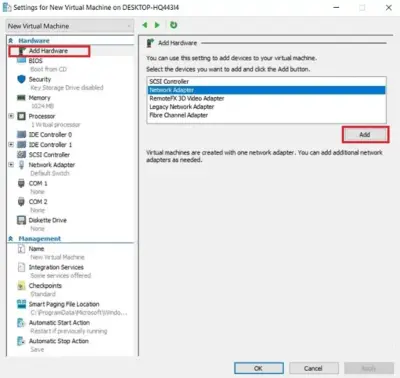
4. You'll be led to the Network Adapter area, where you may setup a new Hyper-V network adapter by connecting to a virtual switch, enabling VLAN identification and defining VLAN ID, and setting the maximum and minimum bandwidth utilization. By choosing Remove, you may also get rid of the Hyper-V network adapter.
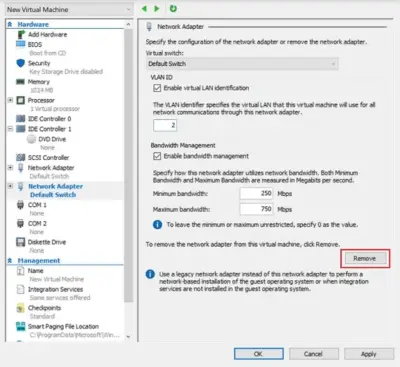
5. To preserve your changes, click Apply.
You may also change the hardware acceleration settings and activate more sophisticated capabilities in Hyper-V Manager.
1. In the Hardware section, double-click Network Adapter. Select Hardware Acceleration from the drop-down menu. You can activate VMQ and IPsec task offloading, as well as set the maximum number of Offloaded SAs, in this section (security associations). The Hyper-V Virtual Machine Queue is a hardware virtualization mechanism that guarantees immediate network data delivery to the shared memory of the virtual machine. IPsec is a security protocol that encrypts network data transmissions. You can transfer IPsec-related operations to a network adapter with IPsec task offloading enabled to avoid overusing hardware resources.
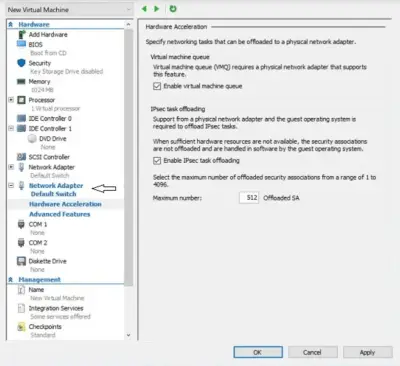
2. To preserve your changes, click Apply.
3. Next, pick Advanced Capabilities to configure the virtual network adapter's advanced features. MAC address, DHCP guard, Router guard, Protected network, Port mirroring, and NIC teaming are just a few of them. Each feature is accompanied by a brief explanation on how to utilize it. Take a look at them and pick which features you want to enable.
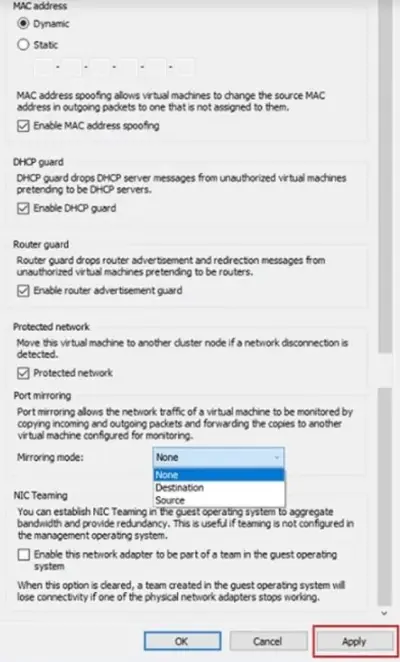
4. To save your changes, check the relevant boxes and click Apply.
Use PowerShell to Manage Hyper-V Network Adapters
As can be seen, Hyper-V Manager's setup choices are relatively restricted. Furthermore, you can only set up Hyper-V network adapters for guest VMs using the GUI, not for the management OS. As a result, PowerShell may be utilized to provide more complex functionality as well as a variety of configuration choices. Let's have a look at how PowerShell can handle Hyper-V network devices.
Hyper-V network adapters creation
You must execute PowerShell in administrator mode in order for the PowerShell cmdlets to operate. To do so, put PowerShell into a search box, right-click the PowerShell icon, and choose Run as Administrator from the context menu.
To add a new virtual network adapter to a Hyper-V VM, use the Add-VMNetworkAdapter cmdlet. An example of how to use this cmdlet is shown below:
Add-VMNetworkAdapter -VMName DemoVM -SwitchName DemoVSwitch –Name ‘Demo Network Adapter’In the management OS, the following example shows how to create a second virtual network adapter:
Add-VMNetworkAdapter -ManagementOS -Name ‘Second Network Adapter’Connect or disconnect adapters
Connecting a virtual network adapter to a virtual switch of your choosing is possible using the Connect-VMNetworkAdapter cmdlet. The example below shows how to simultaneously install one virtual switch (Default switch) to two virtual machines (DemoVM and New Virtual Machine). Make sure none of the virtual machines is operating.
Connect-VMNetworkAdapter -VMName DemoVM, ‘New Virtual Machine’ -SwitchName ‘Default Switch’The Detach-VMNetworkAdapter cmdlet may be used to disconnect a Hyper-V network adapter from a virtual switch or an Ethernet resource pool. You may disconnect all network adapters from a single VM named DemoVM using the script below:
Disconnect-VMNetworkAdapter -VMName DemoVMThis PowerShell script can be used to disconnect all virtual network adapters that are connected to a virtual switch Default Switch in all VMs in Hyper-V environment.
Get-VMNetworkAdapter -VMName *| Where-Object {$_.SwitchName -eq 'Default Switch'} | Disconnect-VMNetworkAdapterWith PowerShell, you can be even more precise in your configurations. If you want to disconnect all network adapters that are connected to a particular virtual switch (Default Switch) that are running on a certain VM (DemoVM), use the cmdlet below:
Get-VMNetworkAdapter -VMName DemoVM | Where-Object {$_.SwitchName -eq 'Default Switch'} | Disconnect-VMNetworkAdapterRemove adapters
This cmdlet is used to delete one or more virtual network adapters from a virtual machine (VM) as well as the management OS.
The network adapter NewNetworkAdapter is deleted from a VM named DemoVM in the following example:
Remove-VMNetworkAdapter -VMName DemoVM -VMNetworkAdapterName NewNetworkAdapterThe following example demonstrates how to disable the network adapter Secondary in the administration OS:
Remove-VMNetworkAdapter -ManagementOs -Name SecondaryRename adapters
On the management OS, you may also rename a Hyper-V network adapter of a specific VM:
Rename-VMNetworkAdapter -VMName DemoVM -NewName ‘Network Adapter 2019’You may check that all network adapters of a VM named DemoVM have been correctly renamed in Hyper-V Manager.
Run the following script to rename a network adapter (Network Adapter 2019) of a specific VM (DemoVM):
VMNetworkAdapter -VMName Demo rename VM -NewName 'Hyper-V network adapter' -Name 'Network Adapter 2019'The following cmdlet may be used to rename a management OS network adapter.
Rename-VMNetworkAdapter -ManagementOs -Name Adapter -NewName ‘Communications Channel’Set adapters
This section contains a set of cmdlets that may be used to configure the Hyper-V network adapter's functionality in a Hyper-V VM or the management OS. It might take a long time to go over all of the setup choices in detail. As a result, we'll simply go through a handful of the PowerShell capabilities that may be activated.
You may enable DHCP Guard, for example, by running the script below. DHCP Guard is a system security feature that protects the system from illegal access from the guest OS.
Set-VMNetworkAdapter -VMName DemoVM -DhcpGuard OnYou may also activate Port Mirroring, which allows you to copy and transfer network packets from one virtual network adapter to another. Source and Destination are the two mirroring modes. We agree that the network traffic of this specific network adapter will be duplicated and delivered to the monitoring VM by selecting Source mode. A Destination mirroring mode will be assigned to that VM's network adapter. In order for this functionality to function, each Source network adapter must be allocated a Destination network adapter.
Run the following script to activate Port Mirroring in Source mode:
Set-VMNetworkAdapter -VMName DemoVM –Name ‘Hyper-V network adapter’-PortMirroring SourceThis cmdlet will activate the Port Mirroring capability on the DemoVM VM and attach its virtual network adapter to the source role.
The Monitoring virtual network adapter is configured as the port mirroring destination point in the following example. As a consequence, a VM named DemoVM ('Source') will monitor the VM named 'New Virtual Machine's' network traffic (Destination).
Set-VMNetworkAdapter -VMName ‘New Virtual Machine’-Name Monitoring -PortMirroring DestinationTo enable VLAN identification as well as assign a specific VLAN ID, use the following cmdlet:
Set-VMNetworkAdapterVlan -VMName DemoVM -VMNetworkAdapterName ‘Hyper-V network adapter’ -Access -VlanId 20VLAN tagging will be enabled on a specific Hyper-V network adapter (Hyper-V network adapter) that is attached to a specific VM in this situation (DemoVM).
Alternatively, run the following cmdlet to deactivate VLAN tagging:
Set-VMNetworkAdapterVlan -VMName DemoVM -VMNetworkAdapterName ‘Hyper-V network adapter’ -UntaggedThe biggest benefit of using PowerShell cmdlets is that you may arrange them as you want and construct complex scripts. You may significantly speed up the process of managing and configuring your Hyper-V setup with their assistance.
Get network adapters
These PowerShell scripts can be used to access information about the virtual network adapters that are present on a particular VM, on the management OS, or on all VMs as well as the management OS running in the virtual environment. All of the cmdlets are presented below:
For a single VM:
Get-VMNetworkAdapter –VMName DemoVMFor the management OS:
Get-VMNetworkAdapter -ManagementOSFor all VMs in Hyper-V environment, including the management OS:
Get-VMNetworkAdapter -AllIf the final script is properly implemented, you will see the following screen containing information about your Hyper-V network adapters:
Remove Hyper-V network adapters
This cmdlet is used to remove one or more virtual network adapters from a VM, as well as from the management OS.
In the next example, the network adapter NewNetworkAdapter is removed from a VM named DemoVM:
Remove-VMNetworkAdapter -VMName DemoVM -VMNetworkAdapterName NewNetworkAdapterThe example below shows how you can remove the network adapter Secondary from the management OS:
Remove-VMNetworkAdapter -ManagementOs -Name SecondaryRename Hyper-V network adapters
You can also rename a Hyper-V network adapter of a particular VM or on the management OS:
Rename-VMNetworkAdapter -VMName DemoVM -NewName ‘Network Adapter 2019’In Hyper-V Manager you can verify that all network adapters of a VM named DemoVM have been successfully renamed.
To give a new name to a network adapter (Network Adapter 2019) of a particular VM (DemoVM), run the following script:
Rename-VMNetworkAdapter -VMName DemoVM -Name ‘Network Adapter 2019’ -NewName ‘Hyper-V network adapter’The next cmdlet can help you to rename a network adapter of the management OS.
Rename-VMNetworkAdapter -ManagementOs -Name Adapter -NewName ‘Communications Channel’Set Hyper-V network adapters
This section contains a set of cmdlets that may be used to configure the Hyper-V network adapter's functionality in a Hyper-V VM or the management OS. It might take a long time to go over all of the setup choices in detail. As a result, we'll simply go through a handful of the PowerShell capabilities that may be activated.
You may enable DHCP Guard, for example, by running the script below. DHCP Guard is a system security feature that protects the system from illegal access from the guest OS.
Set-VMNetworkAdapter -VMName DemoVM -DhcpGuard OnYou may also activate Port Mirroring, which allows you to copy and transfer network packets from one virtual network adapter to another. Source and Destination are the two mirroring modes. We agree that the network traffic of this specific network adapter will be duplicated and delivered to the monitoring VM by choosing Source mode. A Destination mirroring mode will be assigned to that VM's network adapter. In order for this functionality to work, each Source network adapter must be allocated a Destination network adapter.
Run the following script to activate Port Mirroring in Source mode:
Set-VMNetworkAdapter -VMName DemoVM –Name ‘Hyper-V network adapter’-PortMirroring SourceThis cmdlet will activate the Port Mirroring capability on the DemoVM VM and attach its virtual network adapter to the source role.
The Monitoring virtual network adapter is configured as the port mirroring destination point in the following example. As a consequence, a VM named DemoVM ('Source') will monitor the VM named 'New Virtual Machine's' network traffic (Destination).
Set-VMNetworkAdapter -VMName ‘New Virtual Machine’-Name Monitoring -PortMirroring DestinationThe following cmdlet can be used to enable VLAN identification as well as to assign a specific VLAN ID:
Set-VMNetworkAdapterVlan -VMName DemoVM -VMNetworkAdapterName ‘Hyper-V network adapter’ -Access -VlanId 20In this case, VLAN tagging will be enabled on a particular Hyper-V network adapter (Hyper-V network adapter) that is connected to a certain VM (DemoVM).
Or, if you want to disable VLAN tagging, type this cmdlet:
Set-VMNetworkAdapterVlan -VMName DemoVM -VMNetworkAdapterName ‘Hyper-V network adapter’ -UntaggedThe main advantage of the PowerShell cmdlets is that you can arrange them in any way you want, and create comprehensive scripts. With their help, you can considerably optimize the process of managing and configuring your Hyper-V environment.
Recover Lost Data Using DiskInternals RAID Recovery
DiskInternals RAID Recovery is a professional software application that allows you to recover lost files and partitions from all kinds of RAID arrays. It is the favorite RAID backup & recovery tool of many IT experts; this software program has been regularly updated for more than 15 years.
Tip: Discover the difference between Hyper-V and VMware recovery!More interestingly, DiskInternals RAID Recovery comes with a suite of useful features, as well as support various file systems. With the software, you would definitely get back your lost data from both software and hardware RAIDs; it works for macOS, Linux, and Windows OS. There are three (3) recovery modes supported by this program; there is also a built-in Recovery Wizard to guide users.
This VHD recovery tool is reliable and works only on Windows PCs. It supports all file types and works pretty very fast.
First Step:
Firstly, you need to turn off your computer/network server and disconnect the RAID drives in the array.
Second Step:
Remove the drives and connect them to a computer system via USB or any other supported means of connectivity.
Third Step:
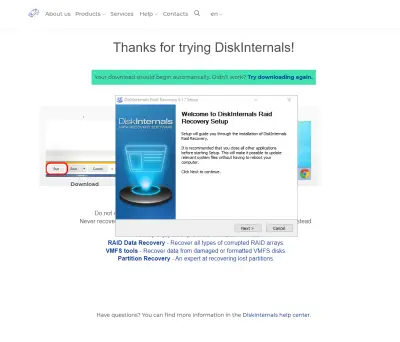
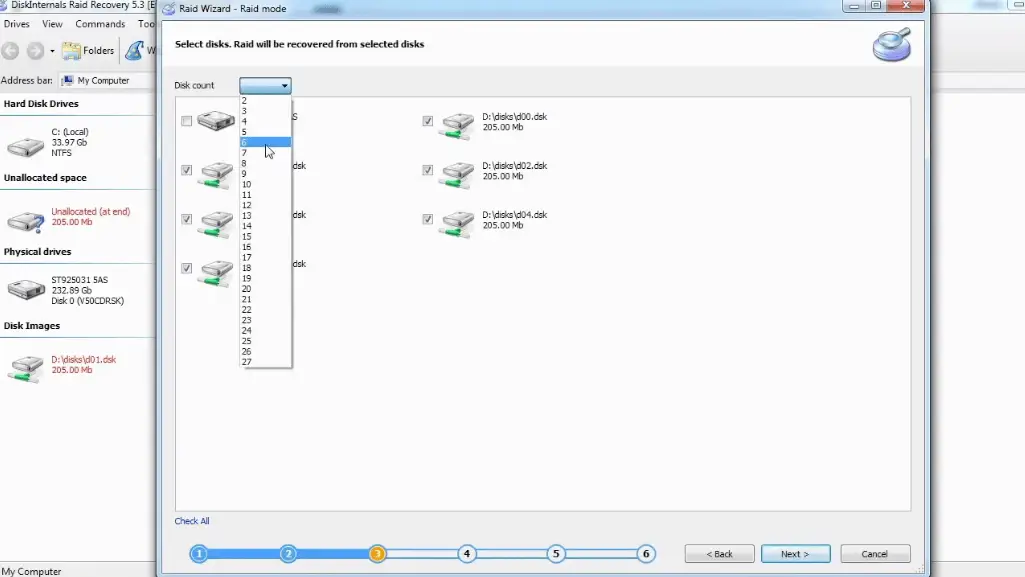
Boot the computer where the hard drives are connected and install DiskInternals RAID Recovery software. After the installation, launch the program and follow the Recovery Wizard prompts to recover your lost files from each of the connected drives, one after another.
Recovery Tips
These are tips you should have at the back of your mind when attempting to recover files using DiskInternals RAID Recovery.
- Don’t rush the process - allow each step to run completely and successfully before proceeding to the next. Else, you may not recover all your lost files.
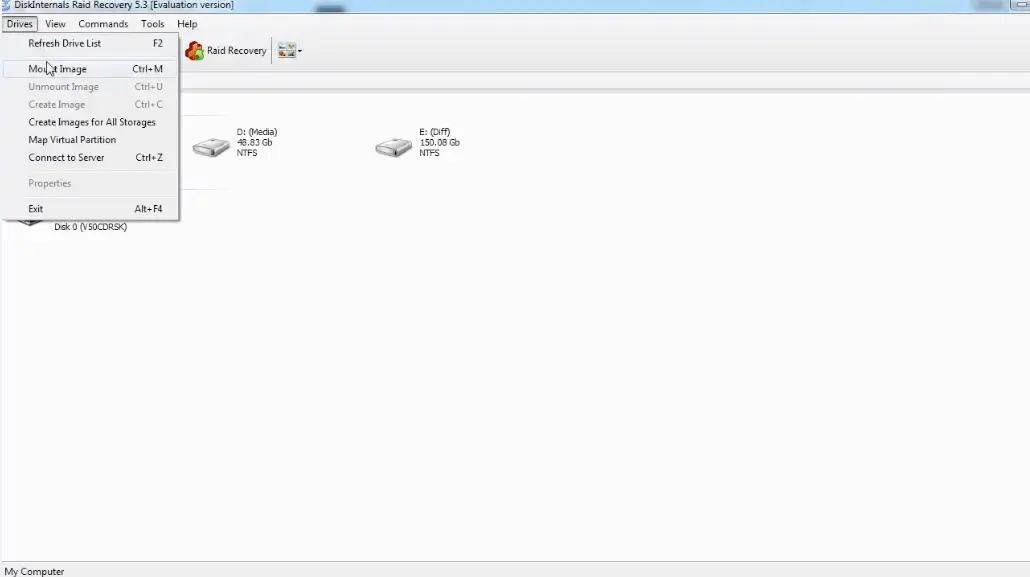
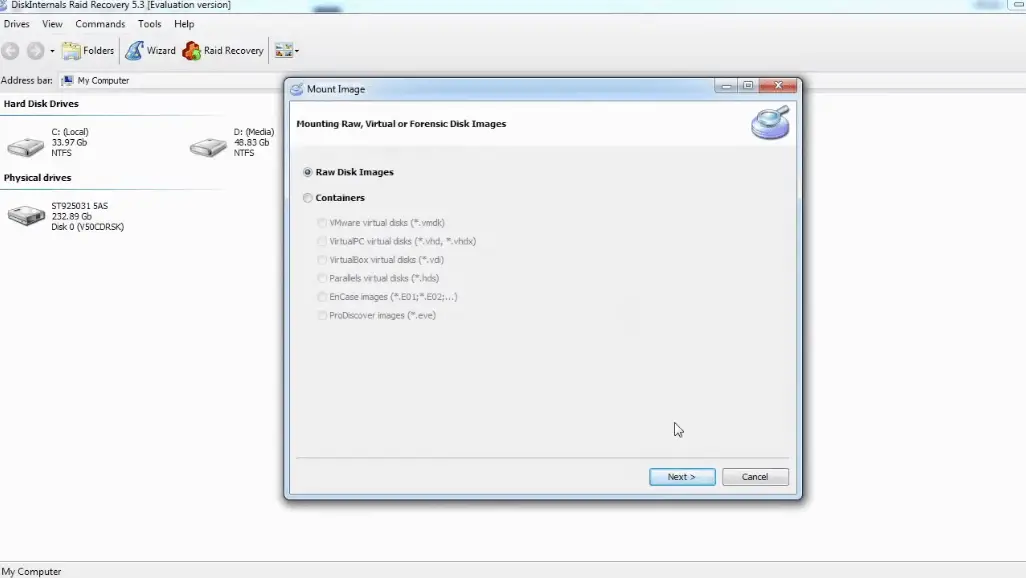
- Verify that you chose the exact disk drive that had the lost files you want to recover. If you select the wrong drive, you won’t get back any of the lost files.
- DiskInternals RAID Recovery comes with a previewing engine, so you can preview the recovered files before saving them back to your local or remote storage.
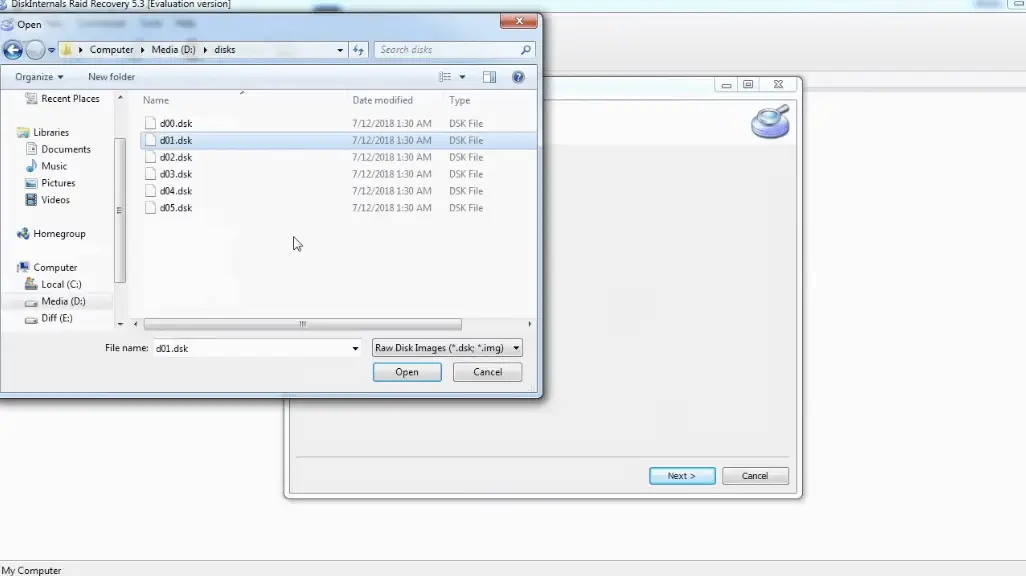
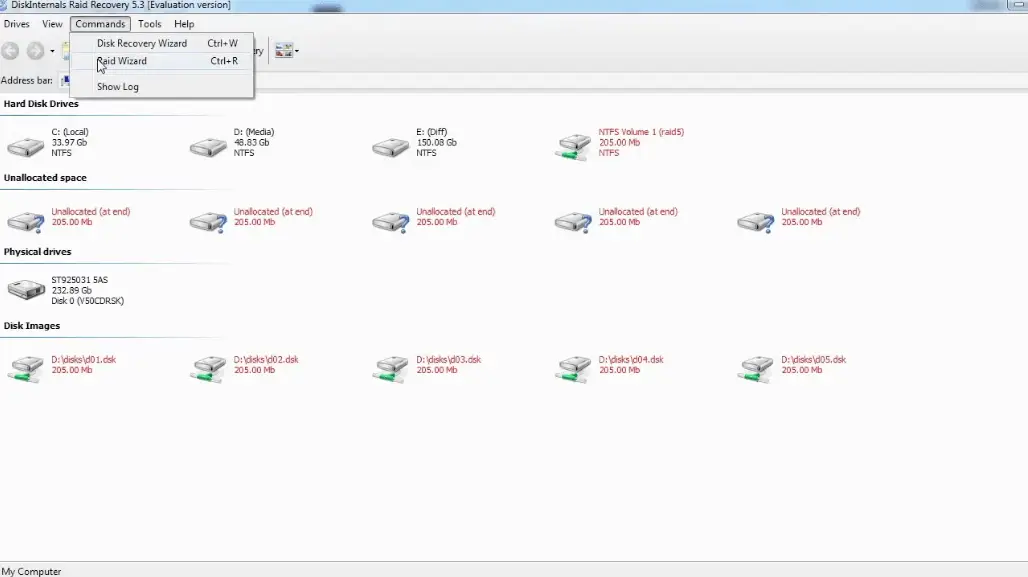
Important Note: Don’t save the recovered files on the same drive where they were previously saved - from where they got lost.
Why Choose DiskInternals RAID Recovery?
Yeah, there are pretty many RAID Recovery tools out there, but DiskInternals RAID Recovery is much-advanced and backed by IT experts. It works very fast too, and there are three recovery modes you can choose from. Hereunder are other reasons to choose this recovery software:
- Retrieves lost files from software and hardware RAIDs
- Supports manual and automated recovery (Recovery Wizard) options
- Can save recover files from remote directories or local drive
- Supports Unicode filenames and multi-level folders
- Allows you to create backups for free (disk images)
- Automatically fixes pool and filesystem parameters, including disk order
- Recovers previous versions of files if available
- Verifies checksums to validate data credibility.
RAID Failure Prevention Tips
To prevent RAID array failure, there are some handy tips you need to know. It's simply knowing the common reasons why RAID arrays fail and then implementing safety measures that would curb those "reasons."
- Firstly, you should always monitor the RAID disk drives’ critical SMART parameters, health status, and temperature routinely. This will help you identify RAID array failure signs earlier and fix them before it escalates.
- Secondly, always back up your data regularly because no one can be too sure when data loss could occur.
- Don’t perform CHKDSK or SFC scans in a bid to fix and repair RAID array errors.
- Don’t ever use the “beta” version of a RAID firmware, OS, or system file. However, ensure to keep your OS and critical software apps updated to their latest stable versions regularly.
- Retain at least two new or empty drives, which would be used to replace failed drives in the array.
- Backup VMware ESXI virtual machines.
Related articles
- What is a VM Snapshot: Comprehensive Guide to Virtual Machine Snapshots
- How to Copy ESXi VM and Copy VM from One ESXi Host to Another
- How to Recover VMDK File: Recover VMware VMDK File and Extract Data from VMDK
- How to SSH Into ESXi Host Securely
- VMware OVA vs OVF: Key Differences, Use Cases, and Recovery Tips
- Free VHD Viewer & Free App to View VHD File | Safely Open and Preview VHD/VHDX
- VMware: Workstation Pro vs Workstation Player
- Migrating VirtualBox VM to Hyper-V - Complete Guide
- How to Install VirtualBox Extension Pack on Windows, Linux & macOS
- How to repaire corrupt VMDK header files
- How to Increase VMware Virtual Disk Size and Expand Partition?
- What Is the VMX File in VMware ESXi?
- Guide to Change VMware ESXi Logs Location
- How to Recover Corrupt VMDK File in VMware
- Proxmox Backup and Restore: Comprehensive Guide for Efficient Data Management
- Unlocking a Locked VM in Proxmox: Step-by-Step Guide to Resolve and Prevent Issues
- How to Mount VHD Files in Windows 10: A Comprehensive Guide
- How to Move VMware VM to Another Host Without vCenter
- How to Convert VHDX to VMDK: Comprehensive Guide with Recovery Tips
- How to Restore VHDX File: Step-by-Step Guide for VHDX Restore to HDD, Disk, and More
- Convert VHDX to VDI: Easy Methods & Data Recovery Insights
- Convert OVA to Hyper-V: Step-by-Step Guide for Easy Virtual Machine Migration
- Exploring Alternatives to VMware ESXi for Virtualization: Top Options in 2026
- VHD Recovery Software - Recover Corrupt or Deleted VHD Files
- How to Install macOS on VMware ESXi or VMware Workstation
- Convert OVA to VHD | How to Convert VHD to OVA | Step-by-Step Guide to Virtual Machine Conversion
- Best VMware Backup Solutions in 2025: Comprehensive Guide and Top Picks
- Repair virtual disk in VDMK
- Restore Hyper-V Virtual Machine from VHDX: Quick and Reliable Recovery Guide
- How to Access VMFS Datastore from Linux, ESXi host or Windows
- How to Convert or Migrate Hyper-V to VMware VM
- Easiest Guide to Copy VHD to Physical Disk Without Data Loss
- Ultimate Guide to Migrating Proxmox VMs to a New Server
- How to Open a VHDX File: Extract Data & Recover VHDX Files with Ease
- Enabling SSH
- How to Fix/Repair Corrupted VMDK Files Effortless
- Mounting Server Disks
- Recover Deleted VMDK from Datastore Today
- repair VMDK files in VMware | DiskInternals VMFS Recovery™
- Recover VM from flat VMDK - The Best Solutions
- Restore a VMDK file
- Is VMware virtual machine inaccessible? Fix it in 2025!
- Restore VMware virtual machine from VMDK file
- Restore VMware VM with snapshot(delta.vmdk) files⠀
- VMFS Recovery software as a solution for NFS data repair
- What is ESXi Recovery Mode
- What Is Raw Device Mapping (RDM) in VMware? Benefits, Setup, and Use Cases
- VMware ESX vs. ESXi - Main Differences. Detailed Comparison
- What is virtualization? | Meaning of virtualization
- VMware vMotion: all you need to know
- How to Clone a VM - Best Steps to Using in VMware
- What is VMware HA?
- What is the difference between VMware HA vs vMotion
- VMware vMotion storage: What do You Need to Know
- What is VMware DRS?
- VMware Fault Tolerance: what is it and how does it work?
- VMFS Block Size: How to Choose
- VMFS UNMAP: What is It?
- What is Space Reclamation and How to Perform It
- What is thin provisioning (TP)?⠀
- Thick vs Thin Provisioning: All You Wanted to Know
- What is а LUN? (Logical Unit Number)
- How to Upgrade VMFS from 3 to 5th version
- VMware Infrastructure: What Components are Used
- VMware vMotion requirements: for VMs and for hosts
- VMware vMotion vs storage vMotion: all you wanted to know
- VMware FT vs VMware HA: what the difference?
- VMware Template vs. VMware Clone: the differences and similarities
- VMware Workstation and Its Uses
- What is VMware VDS and How It Works
- ESX Partitions: All You Wanted to Know
- VMkernel Ports and Networking Layers
- VMware Cold and Hot Migration: What Is It
- What is Virtual Desktop Infrastructure(VDI)?
- What is VMware vCenter Server and How Does It Works
- What is VM Host Server
- What is a Snapshot in VMware⠀
- How to Manage VMware ESXi
- What is vVol and How Does That Work
- VMware ESXi vs vSphere vs vCenter: Key Differences, Features, and Which to Choose
- What is NVRAM?⠀
- What is a VM Cluster and How to Create It
- Using and Creating VMware Content Library: Features, Setup, and Best Practices
- VirtualBox vs. VMware - Comparison
- No bootable medium found
- Citrix vs VMWare VDI - What are the differences in 2025?
- Manage Hyper-V Integration Services 2026
- Hyper-V Checkpoint and Its Importance for VM
- What is the 3-2-1 backup rule?⠀
- Hyper-V Export VM: How Does It Work
- ESXi Free Limitations: Pros and Cons
- How to Convert VMware VMs to Hyper-V
- Convert VHD to VMDK - Free Methods
- How To Perform a USB Passthrough in Hyper-V⠀
- What is Hyper-V VDI and Its Benefits
- P2V vs VMware: What is Better for You?
- How to Install Kali Linux VMware
- How to install Kali Linux in VirtualBox⠀
- VMware ESXi Root and Default Password
- What is VMware networking?
- VHDX Files and How to Mount Them on Windows
- Disaster Recovery Checklist: You Need A Plan
- VMware vSwitch
- How to open VMDK files
- VMware Network Adapter settings
- VMware EVC Mode: What It Is, How It Works, and How to Enable It in vSphere
- VMware NFS vs VMFS
- VMware snapshot best practices
- Hyper-V Virtual SAN
- Hyper-V NIC Teaming⠀
- The Ultimate Guide to AWS EBS Snapshots: How to Create, Manage, and Optimize Your Snapshots
- Hyper-V Nested Virtualization - all about and how to enable⠀
- How to get full screen in Virtualbox
- About VirtualBox network settings
- About VMware home lab
- Physical Server vs. Virtual Server: Key Differences
- Steps to update VirtualBox
- ESXi 7.0 ESXCLI Command Reference in 2025
- How to remote control an Ubuntu System
- Setting up VirtualBox
- How to create a Virtual Machine from a hard drive
- VMware vSphere 7
- VMware vSphere Replication
- Host Profile in VMware - what is and how to use it?
- About VMware vRealize Orchestrator
- Intel VT-x in BIOS: how to enable it?
- Want to increase VirtualBox disk size?
- VMware Cloud Foundation
- Virtual Desktop Infrastructure and VMware Horizon
- VMware Player Shared Folders⠀
- How to Fix DiskPart Virtual Disk Service Errors in 2025 - Best Ways
- Result code: e_invalidarg (0x80070057)
- Unable to Connect to Virtual Disk Service in Disk Management: Fixes & Solutions
- Hardware virtualization is enabled
- The best solutions for Virtual Machine in Windows 10, 11
- Here is how to enable virtualization
- Here is everything you should know about GMSA
- How to format VMware disk using ESXI
- VMware Data Recovery Software
- Tools to mount VMFS on Linux, ESXi, Windows
- VMFS Partition Table Recovery
- Reset a Virtual Machine in VMware
- Free Download VMware Data Recovery Tool
- VMware Disk Image: 2025 guide
- How to Repair Damaged VMware Virtual Machine (2025)
- VDS fails to claim a disk
- Read VMFS partition on Windows
- Checking VMDK Disk for Errors (VMDK check tool)
- VMware Data Recovery configuration
- How to browse VMDK file
- ESXi repair install
- How to fix a Time Capsule disk in "Internal disk needs repair" status?
- VMware Data Recovery Services
- How to Recover Data from Virtual Disk Files
- Disk Mode for the ESXi VM. What is it and how do we use it: VMware
- VMware VMDK Recovery Tool
- Recover VMware virtual machine
- Repair ESXi datastore
- VMware missing VMDK file
- How to Extract Files from VMDK: Best VMDK Extractor Methods
- Fix VMFS Corruption
- How to check VMFS for metadata corruption
- VMware disk needs repair
- DiskInternals VMDK Viewer
- VMware Workstation: The Specified Virtual Disk Needs Repair Fix
- Restoring The Entire Virtual Machine Whith DiskInternals VMFS Recovery
- VMware VMDK Recovery Tool - Restore VMDK Files
- What Is Backup and Recovery? - Backup vs Recovery
- How to Backup VMware Data. Backup solution for Vmware
- How to restore VHD file backup? (2025)
- How to download VMDK file from datastore to Your System in the VMware
- Best VMware Admin Tools: Optimize Performance with Essential Management Tools
- What Is VMware Data Recovery?
- Download VMware Data Recovery Plug-in by DiskInternals
- How to recover deleted virtual machine in VMware?
- The Best Virtualization Software of 2026: Top Picks and Recovery Tips
- Recover a Deleted VMFS Datastore on VMware ESXi
- How to FSCK VMFS Repair?
- How to Fix DiskPart Virtual Disk Service Errors in DiskPart 2026
- How to Fix VMDK is Corrupted and Cannot be Repaired
- Virtual Disk Service Error The Object Is Not Found - How to fix?
- Fix "Virtual Disk Service Error Clean Is Not Allowed”
- How to Backup and Recovery ESXi Virtual Machines?
- How to Backup VMware ESXi Virtual Machines - Back Up ESXi Host Configuration
- How to Recover a VMware Image
- How to Fix ESXi Boot Failure in UEFI Configuration?
- ESXi UEFI booting hits a roadblock, halting at the "VMware Hypervisor Recovery" phase with no further advancement
- VMware vSphere 8.0 - What's New?
- What is VMware ESXi Server?
- Vmware Delete Flat File - Let's Figure It Out
- Diverse Hyper-V Replication and Failover Types
- VMware Disaster Recovery (DR) Solutions
- How to recover a corrupt or damaded VMDK file on Mac?
- Mastering VMware Disk Mount: A Comprehensive Guide for Windows 10 Users
- Restore your Lost VMware Files - DiskInternals VMware data recovery
- VMware Player vs Hyper-V: Performance, Features, and Comparison Chart
- How to create a virtual hard disk (VHD) on Windows
- Difference between VMFS 5 vs VMFS 6
- Restore VMware VMs in Minutes — Fast, Safe & ESXi 8 Ready
- What is quiescing VMware vSphere?
- How to Recover or Remove Orphaned Virtual Machines
- VMDK file format - What is Virtual Machine Disk format
- Comparison between HA vs DRS (Distributed Resource Scheduler) in VMware vSphere
- Virtual Machine Disk Consolidation Is Needed: Full Fix Guide
- SCSI Controller in VMware: Types, Benefits, and Configuration Tips for Optimal Performance
- VMware Horizon Vs VDI by Microsoft - What the difference
- VMware Distributed Switch – The Complete Guide
- VMware Hypervisor Recovery: Strategies and Best Practices
- How to Clone VM in Hyper-V - Best Ways!
- Understanding Datastore Inaccessibility in VMware
- What is VMware Remote Console and how Use it in Linux and Windows?
- VMware ESXi Home Lab: Ultimate Guide to Setup, Configuration, and Best Practices
- Why Is Your VM (Virtual Machine) Running Slow?
- What exactly is VM sprawl, and what steps can be taken to prevent it?
- Overview and Configuration of USB Passthrough in VMware Virtual Machines
- Convert a VMware Workstation VM to ESXi using 3 Ways
- Understanding the Differences: VDI vs HVD
- VM Backup vs Snapshot: Key Differences & VMware Best Practices
- Types and Strategies of Backup: Understanding Incremental, Differential, and Full Backups
- What is VMware vCloud Suite - Why Should You Use it?
- How to Create and Use Shared Folders in VirtualBox: A Comprehensive Guide
- Comparing Virtual Disk Formats: VDI, VHD, and VMDK
- How to Recover VHDX Files (VHDX recovery)
- How to Mount a VMDK File from Another VM in VMware: Step-by-Step Guide
- Migrating VMFS 5 Datastore to VMFS 6 Datastore: A Step-by-Step Guide
- Repair VHD - Virtual Hard Disk repair tool
- Recovering a Virtual Machine in Oracle: Step-by-Step Guide
- What is vApp in VMware? Key Concepts and Usage Examples
- Recovery and Restore of vApp Data: Comprehensive Guide
- VHDX Repair: Comprehensive Guide to Fix Corrupt or Unreadable VHDX Files description
- What is a Virtual Hard Disk (VHD File)?
- How to Disable Hyper-V in Windows 10 and 11: Complete Guide
- How to Restore VMDK to a Physical Drive - Complete Guide
- Resolving "VMware File Not Found" Errors: Comprehensive Guide to File Recovery
- Mastering VMware Snapshot Recovery: Understanding, Creating, Managing, and Restoring VMs
- Restore VMDK from Backup: Comprehensive Step-by-Step Guide
- Comprehensive Guide to VMware File Types and Extensions
- Failed to Read from File VMDK: Causes, Solutions, and Prevention
- Proxmox vs ESXi: Comprehensive Guide to Choosing the Best Hypervisor
- Data Recovery on iSCSI LUN: Comprehensive Guide to Prevent and Recover Data Loss
- Proxmox vs. VMware: Comprehensive Comparison, Performance, and Cost Analysis
- Recover a Deleted Virtual Machine in Proxmox: Step-by-Step Guide
- How to Mount VHDX Files in Windows 10: A Comprehensive Guide
- Virtual Disk Bad Blocks: Detection, Repair, Prevention
- Mount VHD in Windows 7
- VMware Player Snapshots: Limitations, Workarounds, and Best Practices
- What is a Virtual Machine? | Guide to VM Components & Benefits
- What is a VM Server? | Understanding VM Server Architecture & Benefits
- Proxmox vs. Hyper-V: In-Depth Comparison of Virtualization Giants
- Proxmox vs VirtualBox: Comprehensive Performance & Feature Comparison
- VMware DRS (Distributed Resource Scheduler) - What is it?
- Comprehensive Guide to Virtual Data Recovery Software | Best Tools & Tips
- Repair-VHD PowerShell: Step-by-Step Guide (3 Essential Steps to Fix VHD)
- Convert VHD to VHDX: Easy Steps to Convert VHDX to VHD Format
- What is a KVM Virtual Machine? | KVM Virtualization Explained with File Recovery Solutions
- How to Delete VHDX File in Windows 11 | Step-by-Step Guide + File Recovery Tips
- VDI Recovery Software to Restore VM VirtualBox and VDI Files
- Mount VHDX Linux: Step-by-Step Guide to Mounting VHD and VHDX Files on Linux Easily
- Proxmox vs ESXi for Homelabs: Choose the Best Virtualization Platform for Your Setup
- Free VMFS Reader for Windows, Linux & macOS – Access VMware VMFS Volumes Easily
- Virtual Data Recovery Services
- Virtual Server Data Recovery: Restore Lost Data from VMware, VMFS, and VMDK Files
- Xen vs Proxmox - A Comprehensive Comparison
- VHD vs VHDX Performance: Key Differences, Benefits, and When to Choose
- How to Resize a VHD File or VHDX
- Best VMware Backup Software and Solutions | Top Backup Options for VMware 2025
- VDI Meaning: What Is a VDI? Virtual Desktop Infrastructure Explained
- How to Create a VDI from a Hard Drive: Step-by-Step Guide for VirtualBox Users
- RDM vs VMDK: Key Differences & Performance Insights for VMware Environments
- How to Convert VMDK to RDM: Step-by-Step Guide for VMware Storage Management
- How to Convert RDM to VMDK in VMware: Step-by-Step Guide
- What Is an RDM? Learn About RDM Storage and Disks in VMware
- Convert VHD from Dynamic to Fixed | Easy Guide to Convert Dynamic VHD to Fixed
- Extract VMDK from OVA: Step-by-Step Guide for VMware and Data Recovery
- Recover Deleted VHD Files Easily: Step-by-Step Guide for Successful Recovery
- How to Backup ESXi Host Configuration: Step-by-Step Guide for VMware Administrators
- Nutanix vs VMware: Comprehensive Comparison of Virtualization Platforms
- VMware Disk Types: Thick, Thin, and RDM Explained for Virtual Machine Management
- VMDK to VHDX: Convert VMDK to VHDX with PowerShell & Tools
- What is Nutanix and How It Works: Discover What Nutanix Does and Its Use Cases
- Change log for VMFS Recovery™
- How to Install VIB on ESXi: ESXCLI Software VIB Install Guide
- How to Install VMware Tools on Ubuntu | Install VMware Tools on Ubuntu 22.04
- Nutanix vs AWS: Key Differences, Use Cases, and Choosing the Best Cloud Solution
- Master Proxmox CLI Commands: Your Guide to Virtualization Management and Troubleshooting
- How to Install VIB on ESXi: ESXCLI Commands for ESXi VIB Installation
- Proxmox Disaster Recovery: Step-by-Step Guide to Secure Your Virtualized Environment
- Proxmox Backup Server: Comprehensive Guide to Setup and Management
- Proxmox Backup Server Setup: Step-by-Step Guide for Configuration
- Proxmox Server Setup: Complete Guide to Install and Configure Proxmox VE
- Proxmox VE Minimum Requirements: Essential Hardware for Optimal Virtualization
- Proxmox: How to Delete a VM Safely | Step-by-Step Guide
- Proxmox Recovery: Step-by-Step Guide to Restore VMs and Recover Lost Data
- Proxmox NAT Setup: Step-by-Step Guide to Configure NAT & Recover VM Files
- Proxmox Backup vs Snapshot: Key Differences for Data Protection
- How to Install Proxmox VE on Ubuntu Server & Desktop | Complete Installation Guide
- How to Install Ubuntu Desktop & Server on Proxmox | Step-by-Step VM Installation
- Corrupt VDI File: How to Fix and Recover Virtual Disk Data Effectively
- What is a VMware VIB File? Comprehensive Guide to .vib Files and Data Recovery
- Resize VDI - How to Resize VDI Files: Step-by-Step Guide
- Proxmox Backup and Restore: Easily Restore VM from Backup or to a New VM
- How to Fix a Corrupted VirtualBox VMDK Compressed Image
- How to Find MAC and IP Address of a Virtual Machine in VMware | VMware MAC & IP Guide
- VMware Drag and Drop Not Working? Fix Issues in Workstation, Player & Windows 10
- How to Copy Files from VM to Local Machine | VMware File Transfer to Host Guide
- How to Paste in VMware Console | Enable Copy and Paste in VMware Console Guide
- VMware to Nutanix Migration: Step-by-Step Guide for Seamless Transition
- Create VM Template in VMware: Step-by-Step Guide
- How to Recover VMDK File on oVirt
- Docker Meaning, Definition & How It Works: What Docker Is Used for in Software
- Docker vs VMware: Performance, ESXi Comparison, Containers & Key Differences
- oVirt vs KVM: Key Differences, Performance, and Which Virtualization to Choose
- Proxmox vs oVirt: Full Comparison of Virtualization Platforms in 2026
- How to Convert VMware to oVirt: Importing VMware VMs to oVirt
- KVM vs VMware: Performance, Features, Cost & Comparison of Virtualization Platforms
- oVirt vs VMware: Compare KVM oVirt vs VMware ESXi for Virtualization in 2026
- Open VM Tools vs VMware Tools: Feature, Update & Performance Differences
- OpenStack vs VMware: Cost, Features, Scalability & Virtualization Comparison
- OpenStack vs Proxmox VE: Compare Virtualization, Deployment, and VM Recovery
- AWS vs VMware: Pricing, Performance & Security | Azure vs VMware Cloud Guide
- AWS vs VMware: Pricing, Performance & Hybrid Cloud Comparison
- vSphere vs OpenStack - Full Comparison
- OpenStack vs Nutanix: Key Differences, Use Cases, VM Recovery & Performance Guide
- Migrate oVirt to VMware - Can I Move VM from oVirt to VMware?
- VMware vs Red Hat Virtualization Comparison - Pros & Cons
- QEMU vs VMware: Performance, Features
- QEMU vs VirtualBox vs VMware: Performance, Usability, and Best Use Cases
- VMware Blast vs PCoIP: Performance, Compatibility, Recovery Explained
- Virtualbox vs Hyper-V
- Parallels vs VMware Fusion: Performance, Features, and Best macOS Virtualization Option
- OpenShift vs VMware: Key Differences, Use Cases, and Comparison Guide in 2026
- VMware ESXi vs NSX: Key Differences, Use Cases, and Integration Explained
- Dual Boot Linux vs Virtual Machine: Performance, Setup & Recovery Guide
- Compare WSL vs Virtual Machine
- Bootcamp vs Virtual Machine: Windows on Mac Performance & Recovery Guide
- VMware CPU vs Core: CPU, Cores & vCPU Optimization for Virtual Machines
- Kubernetes vs VMware: Key Differences, Use Cases, Cost & Recovery Guide
- Import VMDK to Proxmox: Step-by-Step Proxmox VMDK Import Guide
- Difference Between OVF and VMDK | VMware File Formats Explained
- Virtual Machine vs. Cloud Server: Key Differences, Performance & Cost Guide
- SQL Server Virtual Machine vs. Physical Machine: Performance & Best Practices
- How to Install Mac OS on VMware Workstation
- VMware High Availability vs. Fault Tolerance - Key Differences
- How to Install Windows on Mac VMware Fusion - Windows 10 & 11 Guide
- Best Virtual Machines for Mac OS X: A Guide to Installing Mac OS on VMware
- How to Install macOS on VMware
- How to Install VMware Fusion on a Mac | Step-by-Step VMware Setup Guide
- VMware Delete from Disk vs. Remove from Inventory - Key Differences Explained
- VMware Boot ISO Image: How to Boot from ISO in vSphere and Workstation
- Export a VMware Virtual Machine from ESXi | ESX VM Export Guide
- How to Restart a VM Safely | VM Restart Methods and Recovery Guide
- What Is a Port Group in VMware & Distributed Port Group Explained
- Convert VMDK to VDI VirtualBox | VirtualBox Convert VMDK to VDI Guide
- Convert VMDK to QCOW2 & QCOW2 to VMDK with qemu-img (KVM Guide)
- How to Convert VMDK to VMX
- How to Start a VMDK File Without a VMX File: Boot and Recovery Guide
- VMware Converter V2V Conversion Guide: V2V VMware Converter Migration
- VMware Converter to OVF: Fix Unable to Parse OVF File & Export VM
- Oracle DB Create Schema: How to Create Schema in Oracle Database
- VMware Converter VMDK to OVF | VMware VMDK to OVF Converter Guide
- What Is Change Block Tracking? VMware CBT, Enable, Reset, CTK Explained
- VDI vs VMDK: Performance, VirtualBox and Mac Comparison Guide
- How to Convert VMDK to VMX | VMDK to VMX Converter and Recovery Guide
- VMware ESXi Networking Concepts: vSwitch, VLAN, and Design Guide
- USB Boot in VMware: VM Workstation Boot From USB Guide
- VMware ESXi USB Passthrough and Mount USB Drive ESXi Guide
- Recover Missed VMDK Descriptor: VMware Repair and VMFS Recovery Guide
- KVM vs LXC: Full Comparison of Performance, Security & Use Cases
- KVM vs Docker: Performance, Isolation & When to Use Each
- KVM vs QEMU: Architecture, Performance & When to Use Each
- VMware Cannot Open Configuration File VMX: Fixes & Recovery
- VMX vs VMDK: VMware File Differences, Roles & Recovery
- VMX Configuration File Options: Complete VMware VMX Parameters Reference
- VMware VMX vs VMDK Repair: Fix, Rebuild & Recover VM Files
- Hardware RAID Enterprise Usage vs Software RAID: Full Guide
- ESXi vs KVM vs Xen: Full Hypervisor Comparison 2026
- LXC vs KVM vs Docker: Full Linux Virtualization Comparison 2026
- KVM vs ESXi: Performance, Cost & Architecture Compared
- KVM vs VirtualBox: Architecture, Features, and Performance Comparison
- Proxmox vs KVM: Virtualization Architecture, Performance, and Platform Guide
- Xen vs KVM: Hypervisor Architecture, Performance, and Platform Comparison
- KVM vs Hyper-V: Performance, Architecture, and Virtualization Comparison
- What Is VMFS in VMware: VMFS File System Explained and Features
- Convert VMX to OVF & OVF to VMX: Full Guide with ovftool
- Xen vs KVM vs VirtualBox: Full Hypervisor Comparison 2026
- VMware Hotplug Memory & CPU: Enable, Configure, and Disable Guide
- VMware CPU Cores per Socket Best Practice, Licensing, and Performance
- VMware Quiesce Meaning: Definition, How It Works & When to Use It
- Compare VMware Essentials Plus and Standard - Full Feature Guide
- NSX-T vs NSX-V: Architecture, Features & Migration Guide
- How to Create a Virtual Switch in VMware Workstation & ESXi
- Restarting Management Agents ESXi: All Methods & Safe Guide
- Xen vs. VMware: Hypervisor Comparison — Architecture, Performance & Cost
- Merge VHDX and AVHDX: Hyper-V Snapshot Merge Full Guide
- Xen VHD Recovery
- VMware Memory Hotplug Linux: Ubuntu, CentOS & Debian Guide
- VMware Snapshot Quiesce: When to Use It & How It Works
- VMware virtual machine Networking & ESXi Network
- Xen VHD Recovery: Recover & Repair XenServer Virtual Disk Files
- XCP‑ng vs VMware ESXi: Performance, Features & Pricing Compared 2026
- Corrupted Xen VHD: Repair & Recover Damaged XenServer Virtual Disks
- Hypervisor Comparison 2026: Top Platforms, Types & Best Picks
- Compare VMware Essentials Editions: Features, Cost & Guide
- Migrate VM from ESXi to Proxmox: Complete 2026 Guide
- Install VMware Tools Mac OS: Complete Step-by-Step Guide
- XCP-ng VHD Recovery: Recover VM, Corrupted VHD & SR
- Recover Deleted VHD Xen & Restore Deleted XenServer VM
- XCP-ng vs Proxmox vs VMware: XCP NG vs Proxmox Guide
- Install ESXI on USB
- Install Ubuntu on VirtualBox
- Ways to Fix VirtualBox E_FAIL (0x80004005) Error
- VMware disk image recovery - 2025 expierence
- Diskinternals VMFS Recovery Serial Key
- Remote Recovery
- VMFS Recovery™ for VMware Data Recovery