
How to Create a VM Template in VMware
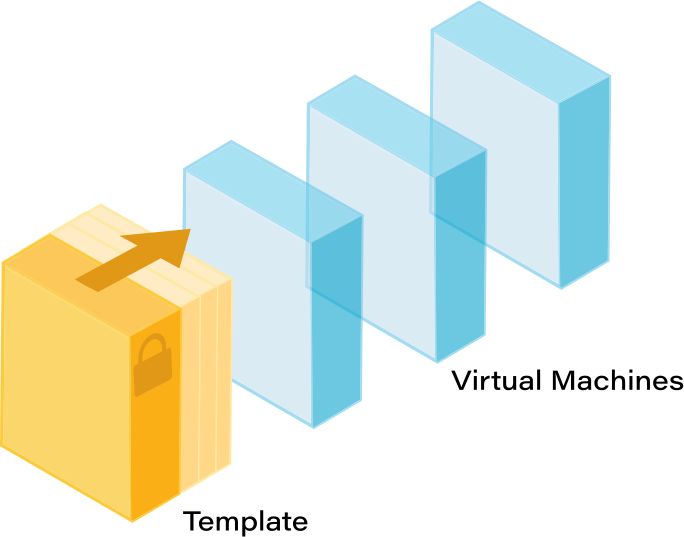
Creating a virtual machine template in VMware is a powerful way to streamline the deployment of multiple, identical virtual servers, saving both time and resources within your IT infrastructure. In this step-by-step guide, we'll walk you through the process of creating a VM template from scratch, ensuring you have a reusable blueprint for future virtual machines. Whether you're a seasoned IT professional or just getting started, this guide will equip you with the knowledge needed to efficiently replicate environments, optimize resource management, and maintain consistency across your virtual infrastructure. Let’s dive into the world of virtualization and unlock the full potential of VMware templates.
What Is a VMware VM Template and Why It Matters
Definition and Use Cases
A VMware VM template is a pre-configured master copy of a virtual machine designed specifically to streamline the process of creating numerous VMs with identical settings. It includes the operating system, applications, and all configurations necessary for the specific tasks or environments for which the VMs are intended. The primary use cases for VM templates include:
- Rapid Deployment: Quickly deploy several identical VMs for testing, development, or production environments.
- Standardization: Ensure consistency across deployments by using a common template, reducing the risk of configuration drift.
- Time Savings: Save valuable time by automating the setup of environments, reducing repetitive workload for IT teams.
- Disaster Recovery: Easily recreate environments with pre-configured settings after unforeseen issues or failures.
Benefits Over Manual VM Deployment
Deploying VMs from a template offers various advantages over setting them up manually for each instance:
- Consistency: By using a template, you ensure that every VM is identical in its configuration, reducing errors caused by manual configuration.
- Efficiency: Automating the deployment process minimizes setup time, allowing IT teams to focus on other critical tasks.
- Scalability: Quickly scale your infrastructure up or down by deploying or retiring VMs as needed without having to configure each one manually.
- Ease of Management: Templates simplify the management of software updates or patches, as changes can be made to the template and then redeployed.
Key Differences: Template vs. Clone vs. Snapshot
Understanding the differences between a template, a clone, and a snapshot is crucial for effective virtual machine management:
Template:
- A template is a static, read-only master copy of a VM that serves as a blueprint for creating new VMs. It serves as a perfect starting point for consistency in deployments.
- Templates cannot be powered on, which ensures they remain unchanged until you intentionally update them.
Clone:
- A clone is an exact duplicate of a VM that is created from the current state of a running or powered-off VM.
- Clones are useful for creating a copy of a VM when you require an immediate replication of its current state and data without the read-only limitations of a template.
Snapshot:
- A snapshot captures the entire state, data, and configuration of a VM at a specific point. It allows you to revert a VM to that state if necessary.
- Snapshots are typically used for backup purposes, testing changes, or updates that might need to be rolled back.
By leveraging these tools effectively, you can ensure a reliable, efficient, and scalable virtual infrastructure.
Pre-Requisites Before You Create a VMware Template
System Requirements and VMware Tools
Before creating a VMware template, ensuring that your system meets specific requirements and that VMware Tools are installed and updated is paramount. VMware Tools enhance the performance of your virtual machines and improve their management. Here are some considerations:
- Ensure Compatibility: Confirm that the host hardware and the VMware software version you're using are compatible with the guest OS of your VM. This compatibility maintains stability and performance across environments.
- VMware Tools Installation: Installing VMware Tools in your VM ensures optimized network and graphics performance and better management through features like time synchronization between the host and the guest.
Optimal VM Configuration Before Template Conversion
Configuring your VM correctly before converting it into a template is crucial. Optimal configuration ensures that all VMs created from the template operate efficiently and securely:
- Resource Allocation: Assign sufficient CPU, memory, and disk spaces tailored to the anticipated workloads of the VM. Over-provisioning or under-provisioning can lead to performance degradation.
- Operating System Updates: Ensure that the guest OS is up-to-date with the latest security patches and updates to safeguard against vulnerabilities when deployed.
- Application Installation: Pre-install necessary applications and make sure they are updated to their latest versions, minimizing the need for post-deployment configurations.
Security, Licensing, and Compliance Considerations
Before converting your VM into a template, addressing security, licensing, and compliance issues is essential. These considerations protect sensitive data and ensure lawful use of software:
- Security Settings: Implement baseline security configurations, such as firewall settings and antivirus installations, to ensure each deployed VM meets organizational security standards.
- Software Licensing: Verify that all installed software is properly licensed for use in the number of VMs you plan to deploy. This verification avoids legal issues related to software piracy.
- Compliance Checks: Confirm that the configurations and installations comply with industry standards (like PCI DSS, HIPAA) relevant to your organization. Compliance ensures that the deployed VMs do not compromise data protection or violate regulations.
Create VM Template in VMware vSphere: Full Process

Step 1: Prepare the Virtual Machine
The initial step in creating a VM template involves meticulously preparing your virtual machine to ensure optimal performance, reliability, and security for all VMs created from the template:
- Install Operating System and Updates: Ensure the guest OS is fully installed and up to date, applying all necessary patches to protect against vulnerabilities.
- Install VMware Tools: This enhances VM performance and compatibility, providing features like improved graphics response and seamless clipboard operations.
- Configure Applications: Install and configure any applications that the VMs will need, making sure they are updated to their latest versions.
Step 2: Power Off and Clean Up the VM
Before proceeding to convert into a template, it is crucial to power off and clean up the virtual machine:
- Delete Unnecessary Files: Remove temporary files, browser caches, and any unnecessary logs that might inflate the VM size.
- Sysprep Tool: For Windows virtual machines, consider using the Sysprep tool to remove system-specific data, thus avoiding SID conflicts in cloned VMs.
- Shutdown the VM: Power off the VM to ensure it is in a clean state, allowing for a more stable and efficient template creation process.
Step 3: Convert to Template Using vSphere Client
Once the VM is prepared and cleaned, use the vSphere Client to convert it into a template:
- Access vSphere Client: Log into your vSphere Client and navigate to the "VMs and Templates" view.
- Select the VM: Right-click the VM you wish to convert, and select "Template," then choose "Convert to Template."
- Verification: Check that the conversion process has completed successfully and that the VM is listed under "Templates."
Step 4: Store and Manage Templates in Content Library
Proper storage and management of your templates ensure efficient use and easy access:
- Create Content Library: In vSphere, set up a content library if you haven't already. This acts as a central repository for your templates.
- Add Template to Library: Right-click the newly created template and select "Clone to Library." Select the desired content library destination.
- Version Control and Accessibility: Keep track of different template versions, documenting any changes made for easy backtracking, and ensure that the templates are accessible to all necessary components of your infrastructure.
Alternative Methods to Create Template VMware Style
Clone to Template vs. Convert to Template
When creating templates in VMware, two primary methods can be used: "Clone to Template" and "Convert to Template." Both have distinct purposes and use cases:
- Convert to Template: This approach involves transforming an existing VM into a template, rendering the original VM inactive in the process. It’s suitable when the VM is solely intended for templating and will not be needed as an active entity thereafter.
- Clone to Template: Conversely, the "Clone to Template" method creates a template while maintaining the original virtual machine intact and operational. This method is useful when you need to continue using the original VM while also creating a template for future deployments.
Choosing between these methods depends on whether you need to keep the original VM active or merely use it as a base for template creation.
Using OVF/OVA for Template Distribution
Open Virtualization Format (OVF) and OVA (an OVF package in a single file) are formats that facilitate the distribution of virtual machines and templates across different environments:
- OVF/OVA Benefits: These formats are widely adopted due to their standardized nature, ease of import/export, and capability to preserve VM configurations, including networking and storage specifications.
- Distribution Across Platforms: By exporting VMs as OVF/OVA templates, they can be easily shared or moved across different data centers or to clients using different virtualization platforms, promoting interoperability.
Automating Template Creation with PowerCLI
For administrators seeking to streamline processes, automating template creation using PowerCLI can greatly enhance efficiency:
- PowerCLI Scripts: PowerCLI provides a robust command-line utility that can automate repetitive tasks such as template creation, updating, and deployment, freeing up valuable time for sysadmins.
- Automation Benefits: Automating through scripts ensures consistency in template creation and can quickly adapt to incorporate new configurations, keeping templates up-to-date with minimal manual intervention.
Deploying VMs from a Template
Deployment Options in vCenter
VMware vCenter provides a variety of deployment options to create virtual machines from templates, facilitating a smooth and scalable process:
- Deploy VM from Template: This option allows you to select a template and deploy a new VM directly from it. The process involves selecting the template, defining the VM name, choosing resource pools, and setting storage options.
- Linked Clones: For test and development environments, linked clones provide an efficient way to deploy VMs that share the same base as the template but maintain the ability to diverge as needed. This approach saves space and resources.
- Bulk Deployment: Using vCenter’s bulk deployment capabilities, you can deploy multiple instances of a VM template simultaneously, accommodating dynamic scaling needs quickly and efficiently.
Customization Specifications
Customization specifications in VMware come into play while deploying VMs, ensuring each instance is unique and matches the operational requirements:
- Guest OS Customization: With customization specifications, you can automate the process of entering unique information such as hostnames, IP addresses, and license keys, which helps to eliminate manual errors and ensure compliance with network policies.
- Automation with Sysprep: For Windows-based VMs, VMware customization can utilize Microsoft’s Sysprep tool to reset system-specific data, ensuring each VM is treated as a unique entity upon deployment.
Post-Deployment Tasks
After deploying a VM from a template, certain tasks should be performed to ensure optimal operation and security:
- Network Configuration Verification: Confirm that network settings are appropriate and that the VM is properly integrated into network management and monitoring systems.
- Performance Checks: Conduct performance assessments to ensure the VM is operating with adequate resources and tweak as necessary to meet workload demands.
- Security Audits: Run initial security audits to verify compliance with organizational policies and ensure no vulnerabilities exist, adjusting firewall settings, and antivirus configurations as appropriate.
Maintaining and Updating VMware Templates
Keeping OS and Software Up to Date
Ensuring that your VMware templates are regularly updated is critical for maintaining security, efficiency, and functionality across all virtual machines deployed from them:
- Operating System Updates: Regularly apply the latest patches and updates to the operating system within your templates. This practice safeguards against vulnerabilities and enhances performance stability.
- Software Maintenance: Update and verify all installed applications are at their latest versions within your templates. This reduces the need for new deployments to go through extensive post-deployment updates, allowing for quicker and more reliable scaling.
- Scheduled Update Cycles: Implement a regular schedule for checking and applying updates, ensuring that the templates remain compliant with security policies and operational requirements.
Version Control and Documentation
Proper version control and thorough documentation are essential for managing changes to your VMware templates:
- Versioning Templates: Assign distinct version numbers to each iteration of your templates, detailing the changes made. This strategy simplifies rolling back to previous configurations if necessary and aids in auditing changes.
- Change Logs: Maintain detailed documentation of the modifications applied to each version of a template. This practice ensures that all changes are accountable, reproducible, and easily understandable for team members.
- Automated Tracking Tools: Utilize version control software to automate tracking of changes and provide insights into historical configurations, aligning with both operational and compliance standards.
Reverting and Recreating Templates
At times, you may need to revert to earlier templates or recreate them to accommodate new requirements or changes in standards:
- Reverting Templates: If a new template version introduces issues, use version control mechanisms to revert to a previous, stable version. This capability limits downtime and facilitates smooth operations.
- Recreation Process: When major systemic changes occur or new baseline requirements are established, recreate templates from scratch. Consider integrating newer technologies, updated applications, or improved configurations aligned with current operational needs.
- Validation and Testing: After reverting or recreating a template, thoroughly validate and test it to ensure compliance with operational and security standards before deploying new VMs.
Ready to get your data back?
To start VMware data recovery (recovering your data, documents, databases, images, videos, and other files), press the FREE DOWNLOAD button below to get the latest version of DiskInternals VMFS Recovery® and begin the step-by-step process of recovering files from a virtual machine. You can preview all recovered files absolutely for FREE. To check the current prices, please press the Get Prices button. If you need any assistance, please feel free to contact Technical Support. The team is here to help you with VM data recovery!
Troubleshooting Common Issues When You Create VM Templates

Template Not Showing in Content Library
If a template is not appearing in your content library, there could be several underlying issues affecting this visibility:
- Library Synchronization: Ensure that the content library is synchronized properly. Check your network connection and permissions to confirm that the synchronization processes can complete without interruption.
- Template Registration: Verify that the template was correctly registered to the content library. Occasionally, a registration step might be missed, resulting in the template not appearing.
- Library Configuration: Check the content library’s configuration settings to make sure it is set to include the necessary templates. Also, ensure that the template format is compatible with the library’s parameters.
Issues with Customization Specifications
Problems with customization specifications can affect the deployment of VMs by not applying intended changes:
- Incorrect Configurations: Double-check that the customization specifications are configured correctly, ensuring that all fields are filled out accurately and consistent with network policies, such as IP configurations and domain joining information.
- Sysprep Errors (Windows): For Windows VMs, issues with the Sysprep tool can lead to customization failures. Verify that the Sysprep files are not corrupt and that no errors arise during generalization.
- Unsupported Guest OS: Ensure that the customization specifications are compatible with the guest OS of the VM. Unsupported or mismatched OS configurations can lead to specification application failures.
Permissions and Role Conflicts
Permissions and role conflicts can interfere with template creation and usage:
- User Permissions: Confirm that the user’s permissions are sufficient to create, modify, and access VM templates. Lack of access rights can prevent necessary actions from being performed.
- Role Assignment Errors: Check role assignments to ensure alignment with required privileges for template management. Potential conflicts in role definitions might restrict actions needed within the VMware environment.
- Audit and Adjust: Regularly audit permissions and roles to adapt to organizational changes and prevent privilege mismatches that can lead to operational issues.
Best Practices for Enterprise-Grade VM Template Management
Standardization and Naming Conventions
Implementing consistent standards and naming conventions is fundamental for managing VM templates at an enterprise level:
- Consistent Naming: Develop a structured naming convention that includes descriptive information such as template type, OS version, and intended use-case. This convention simplifies identification and management within large environments.
- Documentation of Standards: Clearly document standard procedures and configurations for creating and maintaining templates. This documentation ensures all team members follow consistent practices, reducing misconfigurations and errors.
- Template Baselines: Establish baseline configurations for different types of templates, ensuring each deployment adheres to organization-wide standards and performance expectations.
Storage Optimization Tips
Efficient use of storage resources is critical for maintaining scalability and performance across enterprise environments:
- Thin Provisioning: Utilize thin provisioning for template storage as it allocates storage on-demand rather than reserving space up front, optimizing disk usage across your infrastructure.
- Deduplication and Compression: Enable deduplication and compression technologies to reduce storage overhead and improve data management efficiency, especially when dealing with multiple templates hosting similar data.
- Periodic Cleanups: Regularly review and purge outdated or unused templates and versions from the storage to free up valuable resources and enhance system performance.
Integration with CI/CD and Automation Pipelines
Integrating VM templates within CI/CD and automation pipelines can significantly boost speed, consistency, and reliability in deployments:
- Automated Template Updates: Incorporate scripts and automated processes into your pipelines to ensure templates are regularly updated with the latest software and patches, streamlining maintenance efforts.
- Seamless Integration: Leverage tools like PowerCLI and orchestration platforms to facilitate smooth interactions between template management and development pipelines, enabling rapid deployment and testing.
- Testing and Validation: Automate the testing and validation of template-based deployments to ensure they meet quality and operational standards before being implemented in a production environment.
Conclusion: Why You Should Always Use Templates in VMware Environments
Leveraging templates in VMware environments is a strategic approach that delivers numerous benefits, making it an indispensable practice for both small and large-scale IT operations. By utilizing VM templates, organizations achieve unparalleled consistency and efficiency in deploying virtual machines, ensuring each instance is configured accurately and swiftly.
This practice reduces the risk of errors that often accompany manual setups and accelerates deployment times, enabling IT teams to focus on more innovative tasks. Additionally, templates ensure scalability, allowing businesses to respond promptly to changing demands without compromising on quality or performance.
Embracing templates not only enhances operational productivity but also strengthens security and compliance by embedding standardized configurations into each deployment. In a rapidly evolving technological landscape, VMware templates are key to maintaining a robust, agile, and future-ready infrastructure.
FAQ
-
Yes, you can edit a VMware template after its creation, but it involves converting the template back into a virtual machine. Once converted, you can make the necessary changes or updates to the VM as needed. After completing these modifications, you can then convert the VM back into a template, ensuring it reflects the latest configurations and updates. This process allows for the updating of software, OS patches, or any specific configurations within the template. It is important to manage and document these changes carefully to maintain consistency across deployments.
-
Whether to clone a VM or use a template depends on your specific needs. Templates are ideal for deploying multiple identical VMs quickly and ensuring consistency across your deployments, making them well-suited for routine environment setups. Cloning, on the other hand, creates an exact copy of an existing VM at its current state, which is useful for situations where you need to replicate the current state of a VM, including all its specific configurations and data. If your priority is maintaining uniformity and accelerating the deployment process, using a template is generally the better choice. However, for tasks requiring the exact replication of a VM's present condition, cloning is more appropriate.
-
VM templates can positively affect storage and performance by optimizing resource usage. Templates, especially when created using thin provisioning, help save storage space by allocating disk space dynamically as needed rather than upfront. This efficient storage management reduces wastage and keeps unnecessary storage costs in check. Performance-wise, templates streamline the deployment process, allowing for rapid and consistent VM creation, which minimizes the potential for configuration errors and reduces the load on infrastructure teams. However, maintaining numerous outdated or unused templates can lead to storage clutter, so regular clean-ups are essential to sustain optimal performance.
Related articles
- NSX-T vs NSX-V: Architecture, Features & Migration Guide
- Oracle DB Create Schema: How to Create Schema in Oracle Database
- What is a VM Snapshot: Comprehensive Guide to Virtual Machine Snapshots
- How to Copy ESXi VM and Copy VM from One ESXi Host to Another
- How to Recover VMDK File: Recover VMware VMDK File and Extract Data from VMDK
- How to SSH Into ESXi Host Securely
- VMware OVA vs OVF: Key Differences, Use Cases, and Recovery Tips
- Free VHD Viewer & Free App to View VHD File | Safely Open and Preview VHD/VHDX
- VMware: Workstation Pro vs Workstation Player
- Migrating VirtualBox VM to Hyper-V - Complete Guide
- How to Install VirtualBox Extension Pack on Windows, Linux & macOS
- How to repaire corrupt VMDK header files
- How to Increase VMware Virtual Disk Size and Expand Partition?
- What Is the VMX File in VMware ESXi?
- Guide to Change VMware ESXi Logs Location
- How to Recover Corrupt VMDK File in VMware
- Proxmox Backup and Restore: Comprehensive Guide for Efficient Data Management
- Unlocking a Locked VM in Proxmox: Step-by-Step Guide to Resolve and Prevent Issues
- How to Mount VHD Files in Windows 10: A Comprehensive Guide
- How to Move VMware VM to Another Host Without vCenter
- How to Convert VHDX to VMDK: Comprehensive Guide with Recovery Tips
- How to Restore VHDX File: Step-by-Step Guide for VHDX Restore to HDD, Disk, and More
- Convert VHDX to VDI: Easy Methods & Data Recovery Insights
- Convert OVA to Hyper-V: Step-by-Step Guide for Easy Virtual Machine Migration
- Exploring Alternatives to VMware ESXi for Virtualization: Top Options in 2026
- VHD Recovery Software - Recover Corrupt or Deleted VHD Files
- How to Install macOS on VMware ESXi or VMware Workstation
- Convert OVA to VHD | How to Convert VHD to OVA | Step-by-Step Guide to Virtual Machine Conversion
- Best VMware Backup Solutions in 2025: Comprehensive Guide and Top Picks
- Repair virtual disk in VDMK
- Restore Hyper-V Virtual Machine from VHDX: Quick and Reliable Recovery Guide
- How to Access VMFS Datastore from Linux, ESXi host or Windows
- How to Convert or Migrate Hyper-V to VMware VM
- Easiest Guide to Copy VHD to Physical Disk Without Data Loss
- Ultimate Guide to Migrating Proxmox VMs to a New Server
- How to Open a VHDX File: Extract Data & Recover VHDX Files with Ease
- Enabling SSH
- How to Fix/Repair Corrupted VMDK Files Effortless
- Mounting Server Disks
- Recover Deleted VMDK from Datastore Today
- repair VMDK files in VMware | DiskInternals VMFS Recovery™
- Recover VM from flat VMDK - The Best Solutions
- Restore a VMDK file
- Is VMware virtual machine inaccessible? Fix it in 2025!
- Restore VMware virtual machine from VMDK file
- Restore VMware VM with snapshot(delta.vmdk) files⠀
- VMFS Recovery software as a solution for NFS data repair
- What is ESXi Recovery Mode
- What Is Raw Device Mapping (RDM) in VMware? Benefits, Setup, and Use Cases
- VMware ESX vs. ESXi - Main Differences. Detailed Comparison
- What is virtualization? | Meaning of virtualization
- VMware vMotion: all you need to know
- How to Clone a VM - Best Steps to Using in VMware
- What is VMware HA?
- What is the difference between VMware HA vs vMotion
- VMware vMotion storage: What do You Need to Know
- What is VMware DRS?
- VMware Fault Tolerance: what is it and how does it work?
- VMFS Block Size: How to Choose
- VMFS UNMAP: What is It?
- What is Space Reclamation and How to Perform It
- What is thin provisioning (TP)?⠀
- Thick vs Thin Provisioning: All You Wanted to Know
- What is а LUN? (Logical Unit Number)
- How to Upgrade VMFS from 3 to 5th version
- VMware Infrastructure: What Components are Used
- VMware vMotion requirements: for VMs and for hosts
- VMware vMotion vs storage vMotion: all you wanted to know
- VMware FT vs VMware HA: what the difference?
- VMware Template vs. VMware Clone: the differences and similarities
- VMware Workstation and Its Uses
- What is VMware VDS and How It Works
- ESX Partitions: All You Wanted to Know
- VMkernel Ports and Networking Layers
- VMware Cold and Hot Migration: What Is It
- What is Virtual Desktop Infrastructure(VDI)?
- What is VMware vCenter Server and How Does It Works
- What is VM Host Server
- What is a Snapshot in VMware⠀
- How to Manage VMware ESXi
- What is vVol and How Does That Work
- VMware ESXi vs vSphere vs vCenter: Key Differences, Features, and Which to Choose
- What is NVRAM?⠀
- What is a VM Cluster and How to Create It
- Using and Creating VMware Content Library: Features, Setup, and Best Practices
- VirtualBox vs. VMware - Comparison
- No bootable medium found
- Citrix vs VMWare VDI - What are the differences in 2025?
- Manage Hyper-V Integration Services 2026
- Hyper-V Checkpoint and Its Importance for VM
- What is the 3-2-1 backup rule?⠀
- Hyper-V Export VM: How Does It Work
- ESXi Free Limitations: Pros and Cons
- How to Convert VMware VMs to Hyper-V
- How to set up Hyper-V network adapters - guide
- Convert VHD to VMDK - Free Methods
- How To Perform a USB Passthrough in Hyper-V⠀
- What is Hyper-V VDI and Its Benefits
- P2V vs VMware: What is Better for You?
- How to Install Kali Linux VMware
- How to install Kali Linux in VirtualBox⠀
- VMware ESXi Root and Default Password
- What is VMware networking?
- VHDX Files and How to Mount Them on Windows
- Disaster Recovery Checklist: You Need A Plan
- VMware vSwitch
- How to open VMDK files
- VMware Network Adapter settings
- VMware EVC Mode: What It Is, How It Works, and How to Enable It in vSphere
- VMware NFS vs VMFS
- VMware snapshot best practices
- Hyper-V Virtual SAN
- Hyper-V NIC Teaming⠀
- The Ultimate Guide to AWS EBS Snapshots: How to Create, Manage, and Optimize Your Snapshots
- Hyper-V Nested Virtualization - all about and how to enable⠀
- How to get full screen in Virtualbox
- About VirtualBox network settings
- About VMware home lab
- Physical Server vs. Virtual Server: Key Differences
- Steps to update VirtualBox
- ESXi 7.0 ESXCLI Command Reference in 2025
- How to remote control an Ubuntu System
- Setting up VirtualBox
- How to create a Virtual Machine from a hard drive
- VMware vSphere 7
- VMware vSphere Replication
- Host Profile in VMware - what is and how to use it?
- About VMware vRealize Orchestrator
- Intel VT-x in BIOS: how to enable it?
- Want to increase VirtualBox disk size?
- VMware Cloud Foundation
- Virtual Desktop Infrastructure and VMware Horizon
- VMware Player Shared Folders⠀
- How to Fix DiskPart Virtual Disk Service Errors in 2025 - Best Ways
- Result code: e_invalidarg (0x80070057)
- Unable to Connect to Virtual Disk Service in Disk Management: Fixes & Solutions
- Hardware virtualization is enabled
- The best solutions for Virtual Machine in Windows 10, 11
- Here is how to enable virtualization
- Here is everything you should know about GMSA
- How to format VMware disk using ESXI
- VMware Data Recovery Software
- Tools to mount VMFS on Linux, ESXi, Windows
- VMFS Partition Table Recovery
- Reset a Virtual Machine in VMware
- Free Download VMware Data Recovery Tool
- VMware Disk Image: 2025 guide
- How to Repair Damaged VMware Virtual Machine (2025)
- VDS fails to claim a disk
- Read VMFS partition on Windows
- Checking VMDK Disk for Errors (VMDK check tool)
- VMware Data Recovery configuration
- How to browse VMDK file
- ESXi repair install
- How to fix a Time Capsule disk in "Internal disk needs repair" status?
- VMware Data Recovery Services
- How to Recover Data from Virtual Disk Files
- Disk Mode for the ESXi VM. What is it and how do we use it: VMware
- VMware VMDK Recovery Tool
- Recover VMware virtual machine
- Repair ESXi datastore
- VMware missing VMDK file
- How to Extract Files from VMDK: Best VMDK Extractor Methods
- Fix VMFS Corruption
- How to check VMFS for metadata corruption
- VMware disk needs repair
- DiskInternals VMDK Viewer
- VMware Workstation: The Specified Virtual Disk Needs Repair Fix
- Restoring The Entire Virtual Machine Whith DiskInternals VMFS Recovery
- VMware VMDK Recovery Tool - Restore VMDK Files
- What Is Backup and Recovery? - Backup vs Recovery
- How to Backup VMware Data. Backup solution for Vmware
- How to restore VHD file backup? (2025)
- How to download VMDK file from datastore to Your System in the VMware
- Best VMware Admin Tools: Optimize Performance with Essential Management Tools
- What Is VMware Data Recovery?
- Download VMware Data Recovery Plug-in by DiskInternals
- How to recover deleted virtual machine in VMware?
- The Best Virtualization Software of 2026: Top Picks and Recovery Tips
- Recover a Deleted VMFS Datastore on VMware ESXi
- How to FSCK VMFS Repair?
- How to Fix DiskPart Virtual Disk Service Errors in DiskPart 2026
- How to Fix VMDK is Corrupted and Cannot be Repaired
- Virtual Disk Service Error The Object Is Not Found - How to fix?
- Fix "Virtual Disk Service Error Clean Is Not Allowed”
- How to Backup and Recovery ESXi Virtual Machines?
- How to Backup VMware ESXi Virtual Machines - Back Up ESXi Host Configuration
- How to Recover a VMware Image
- How to Fix ESXi Boot Failure in UEFI Configuration?
- ESXi UEFI booting hits a roadblock, halting at the "VMware Hypervisor Recovery" phase with no further advancement
- VMware vSphere 8.0 - What's New?
- What is VMware ESXi Server?
- Vmware Delete Flat File - Let's Figure It Out
- Diverse Hyper-V Replication and Failover Types
- VMware Disaster Recovery (DR) Solutions
- How to recover a corrupt or damaded VMDK file on Mac?
- Mastering VMware Disk Mount: A Comprehensive Guide for Windows 10 Users
- Restore your Lost VMware Files - DiskInternals VMware data recovery
- VMware Player vs Hyper-V: Performance, Features, and Comparison Chart
- How to create a virtual hard disk (VHD) on Windows
- Difference between VMFS 5 vs VMFS 6
- Restore VMware VMs in Minutes — Fast, Safe & ESXi 8 Ready
- What is quiescing VMware vSphere?
- How to Recover or Remove Orphaned Virtual Machines
- VMDK file format - What is Virtual Machine Disk format
- Comparison between HA vs DRS (Distributed Resource Scheduler) in VMware vSphere
- Virtual Machine Disk Consolidation Is Needed: Full Fix Guide
- SCSI Controller in VMware: Types, Benefits, and Configuration Tips for Optimal Performance
- VMware Horizon Vs VDI by Microsoft - What the difference
- VMware Distributed Switch – The Complete Guide
- VMware Hypervisor Recovery: Strategies and Best Practices
- How to Clone VM in Hyper-V - Best Ways!
- Understanding Datastore Inaccessibility in VMware
- What is VMware Remote Console and how Use it in Linux and Windows?
- VMware ESXi Home Lab: Ultimate Guide to Setup, Configuration, and Best Practices
- Why Is Your VM (Virtual Machine) Running Slow?
- What exactly is VM sprawl, and what steps can be taken to prevent it?
- Overview and Configuration of USB Passthrough in VMware Virtual Machines
- Convert a VMware Workstation VM to ESXi using 3 Ways
- Understanding the Differences: VDI vs HVD
- VM Backup vs Snapshot: Key Differences & VMware Best Practices
- Types and Strategies of Backup: Understanding Incremental, Differential, and Full Backups
- What is VMware vCloud Suite - Why Should You Use it?
- How to Create and Use Shared Folders in VirtualBox: A Comprehensive Guide
- Comparing Virtual Disk Formats: VDI, VHD, and VMDK
- How to Recover VHDX Files (VHDX recovery)
- How to Mount a VMDK File from Another VM in VMware: Step-by-Step Guide
- Migrating VMFS 5 Datastore to VMFS 6 Datastore: A Step-by-Step Guide
- Repair VHD - Virtual Hard Disk repair tool
- Recovering a Virtual Machine in Oracle: Step-by-Step Guide
- What is vApp in VMware? Key Concepts and Usage Examples
- Recovery and Restore of vApp Data: Comprehensive Guide
- VHDX Repair: Comprehensive Guide to Fix Corrupt or Unreadable VHDX Files description
- What is a Virtual Hard Disk (VHD File)?
- How to Disable Hyper-V in Windows 10 and 11: Complete Guide
- How to Restore VMDK to a Physical Drive - Complete Guide
- Resolving "VMware File Not Found" Errors: Comprehensive Guide to File Recovery
- Mastering VMware Snapshot Recovery: Understanding, Creating, Managing, and Restoring VMs
- Restore VMDK from Backup: Comprehensive Step-by-Step Guide
- Comprehensive Guide to VMware File Types and Extensions
- Failed to Read from File VMDK: Causes, Solutions, and Prevention
- Proxmox vs ESXi: Comprehensive Guide to Choosing the Best Hypervisor
- Data Recovery on iSCSI LUN: Comprehensive Guide to Prevent and Recover Data Loss
- Proxmox vs. VMware: Comprehensive Comparison, Performance, and Cost Analysis
- Recover a Deleted Virtual Machine in Proxmox: Step-by-Step Guide
- How to Mount VHDX Files in Windows 10: A Comprehensive Guide
- Virtual Disk Bad Blocks: Detection, Repair, Prevention
- Mount VHD in Windows 7
- VMware Player Snapshots: Limitations, Workarounds, and Best Practices
- What is a Virtual Machine? | Guide to VM Components & Benefits
- What is a VM Server? | Understanding VM Server Architecture & Benefits
- Proxmox vs. Hyper-V: In-Depth Comparison of Virtualization Giants
- Proxmox vs VirtualBox: Comprehensive Performance & Feature Comparison
- VMware DRS (Distributed Resource Scheduler) - What is it?
- Comprehensive Guide to Virtual Data Recovery Software | Best Tools & Tips
- Repair-VHD PowerShell: Step-by-Step Guide (3 Essential Steps to Fix VHD)
- Convert VHD to VHDX: Easy Steps to Convert VHDX to VHD Format
- What is a KVM Virtual Machine? | KVM Virtualization Explained with File Recovery Solutions
- How to Delete VHDX File in Windows 11 | Step-by-Step Guide + File Recovery Tips
- VDI Recovery Software to Restore VM VirtualBox and VDI Files
- Mount VHDX Linux: Step-by-Step Guide to Mounting VHD and VHDX Files on Linux Easily
- Proxmox vs ESXi for Homelabs: Choose the Best Virtualization Platform for Your Setup
- Free VMFS Reader for Windows, Linux & macOS – Access VMware VMFS Volumes Easily
- Virtual Data Recovery Services
- Virtual Server Data Recovery: Restore Lost Data from VMware, VMFS, and VMDK Files
- Xen vs Proxmox - A Comprehensive Comparison
- VHD vs VHDX Performance: Key Differences, Benefits, and When to Choose
- How to Resize a VHD File or VHDX
- Best VMware Backup Software and Solutions | Top Backup Options for VMware 2025
- VDI Meaning: What Is a VDI? Virtual Desktop Infrastructure Explained
- How to Create a VDI from a Hard Drive: Step-by-Step Guide for VirtualBox Users
- RDM vs VMDK: Key Differences & Performance Insights for VMware Environments
- How to Convert VMDK to RDM: Step-by-Step Guide for VMware Storage Management
- How to Convert RDM to VMDK in VMware: Step-by-Step Guide
- What Is an RDM? Learn About RDM Storage and Disks in VMware
- Convert VHD from Dynamic to Fixed | Easy Guide to Convert Dynamic VHD to Fixed
- Extract VMDK from OVA: Step-by-Step Guide for VMware and Data Recovery
- Recover Deleted VHD Files Easily: Step-by-Step Guide for Successful Recovery
- How to Backup ESXi Host Configuration: Step-by-Step Guide for VMware Administrators
- Nutanix vs VMware: Comprehensive Comparison of Virtualization Platforms
- VMware Disk Types: Thick, Thin, and RDM Explained for Virtual Machine Management
- VMDK to VHDX: Convert VMDK to VHDX with PowerShell & Tools
- What is Nutanix and How It Works: Discover What Nutanix Does and Its Use Cases
- Change log for VMFS Recovery™
- How to Install VIB on ESXi: ESXCLI Software VIB Install Guide
- How to Install VMware Tools on Ubuntu | Install VMware Tools on Ubuntu 22.04
- Nutanix vs AWS: Key Differences, Use Cases, and Choosing the Best Cloud Solution
- Master Proxmox CLI Commands: Your Guide to Virtualization Management and Troubleshooting
- How to Install VIB on ESXi: ESXCLI Commands for ESXi VIB Installation
- Proxmox Disaster Recovery: Step-by-Step Guide to Secure Your Virtualized Environment
- Proxmox Backup Server: Comprehensive Guide to Setup and Management
- Proxmox Backup Server Setup: Step-by-Step Guide for Configuration
- Proxmox Server Setup: Complete Guide to Install and Configure Proxmox VE
- Proxmox VE Minimum Requirements: Essential Hardware for Optimal Virtualization
- Proxmox: How to Delete a VM Safely | Step-by-Step Guide
- Proxmox Recovery: Step-by-Step Guide to Restore VMs and Recover Lost Data
- Proxmox NAT Setup: Step-by-Step Guide to Configure NAT & Recover VM Files
- Proxmox Backup vs Snapshot: Key Differences for Data Protection
- How to Install Proxmox VE on Ubuntu Server & Desktop | Complete Installation Guide
- How to Install Ubuntu Desktop & Server on Proxmox | Step-by-Step VM Installation
- Corrupt VDI File: How to Fix and Recover Virtual Disk Data Effectively
- What is a VMware VIB File? Comprehensive Guide to .vib Files and Data Recovery
- Resize VDI - How to Resize VDI Files: Step-by-Step Guide
- Proxmox Backup and Restore: Easily Restore VM from Backup or to a New VM
- How to Fix a Corrupted VirtualBox VMDK Compressed Image
- How to Find MAC and IP Address of a Virtual Machine in VMware | VMware MAC & IP Guide
- VMware Drag and Drop Not Working? Fix Issues in Workstation, Player & Windows 10
- How to Copy Files from VM to Local Machine | VMware File Transfer to Host Guide
- How to Paste in VMware Console | Enable Copy and Paste in VMware Console Guide
- VMware to Nutanix Migration: Step-by-Step Guide for Seamless Transition
- How to Recover VMDK File on oVirt
- Docker Meaning, Definition & How It Works: What Docker Is Used for in Software
- Docker vs VMware: Performance, ESXi Comparison, Containers & Key Differences
- oVirt vs KVM: Key Differences, Performance, and Which Virtualization to Choose
- Proxmox vs oVirt: Full Comparison of Virtualization Platforms in 2026
- How to Convert VMware to oVirt: Importing VMware VMs to oVirt
- KVM vs VMware: Performance, Features, Cost & Comparison of Virtualization Platforms
- oVirt vs VMware: Compare KVM oVirt vs VMware ESXi for Virtualization in 2026
- Open VM Tools vs VMware Tools: Feature, Update & Performance Differences
- OpenStack vs VMware: Cost, Features, Scalability & Virtualization Comparison
- OpenStack vs Proxmox VE: Compare Virtualization, Deployment, and VM Recovery
- AWS vs VMware: Pricing, Performance & Security | Azure vs VMware Cloud Guide
- AWS vs VMware: Pricing, Performance & Hybrid Cloud Comparison
- vSphere vs OpenStack - Full Comparison
- OpenStack vs Nutanix: Key Differences, Use Cases, VM Recovery & Performance Guide
- Migrate oVirt to VMware - Can I Move VM from oVirt to VMware?
- VMware vs Red Hat Virtualization Comparison - Pros & Cons
- QEMU vs VMware: Performance, Features
- QEMU vs VirtualBox vs VMware: Performance, Usability, and Best Use Cases
- VMware Blast vs PCoIP: Performance, Compatibility, Recovery Explained
- Virtualbox vs Hyper-V
- Parallels vs VMware Fusion: Performance, Features, and Best macOS Virtualization Option
- OpenShift vs VMware: Key Differences, Use Cases, and Comparison Guide in 2026
- VMware ESXi vs NSX: Key Differences, Use Cases, and Integration Explained
- Dual Boot Linux vs Virtual Machine: Performance, Setup & Recovery Guide
- Compare WSL vs Virtual Machine
- Bootcamp vs Virtual Machine: Windows on Mac Performance & Recovery Guide
- VMware CPU vs Core: CPU, Cores & vCPU Optimization for Virtual Machines
- Kubernetes vs VMware: Key Differences, Use Cases, Cost & Recovery Guide
- Import VMDK to Proxmox: Step-by-Step Proxmox VMDK Import Guide
- Difference Between OVF and VMDK | VMware File Formats Explained
- Virtual Machine vs. Cloud Server: Key Differences, Performance & Cost Guide
- SQL Server Virtual Machine vs. Physical Machine: Performance & Best Practices
- How to Install Mac OS on VMware Workstation
- VMware High Availability vs. Fault Tolerance - Key Differences
- How to Install Windows on Mac VMware Fusion - Windows 10 & 11 Guide
- Best Virtual Machines for Mac OS X: A Guide to Installing Mac OS on VMware
- How to Install macOS on VMware
- How to Install VMware Fusion on a Mac | Step-by-Step VMware Setup Guide
- VMware Delete from Disk vs. Remove from Inventory - Key Differences Explained
- VMware Boot ISO Image: How to Boot from ISO in vSphere and Workstation
- Export a VMware Virtual Machine from ESXi | ESX VM Export Guide
- How to Restart a VM Safely | VM Restart Methods and Recovery Guide
- What Is a Port Group in VMware & Distributed Port Group Explained
- Convert VMDK to VDI VirtualBox | VirtualBox Convert VMDK to VDI Guide
- Convert VMDK to QCOW2 & QCOW2 to VMDK with qemu-img (KVM Guide)
- How to Convert VMDK to VMX
- How to Start a VMDK File Without a VMX File: Boot and Recovery Guide
- VMware Converter V2V Conversion Guide: V2V VMware Converter Migration
- VMware Converter to OVF: Fix Unable to Parse OVF File & Export VM
- VMware Converter VMDK to OVF | VMware VMDK to OVF Converter Guide
- What Is Change Block Tracking? VMware CBT, Enable, Reset, CTK Explained
- VDI vs VMDK: Performance, VirtualBox and Mac Comparison Guide
- How to Convert VMDK to VMX | VMDK to VMX Converter and Recovery Guide
- VMware ESXi Networking Concepts: vSwitch, VLAN, and Design Guide
- USB Boot in VMware: VM Workstation Boot From USB Guide
- VMware ESXi USB Passthrough and Mount USB Drive ESXi Guide
- Recover Missed VMDK Descriptor: VMware Repair and VMFS Recovery Guide
- KVM vs LXC: Full Comparison of Performance, Security & Use Cases
- KVM vs Docker: Performance, Isolation & When to Use Each
- KVM vs QEMU: Architecture, Performance & When to Use Each
- VMware Cannot Open Configuration File VMX: Fixes & Recovery
- VMX vs VMDK: VMware File Differences, Roles & Recovery
- VMX Configuration File Options: Complete VMware VMX Parameters Reference
- VMware VMX vs VMDK Repair: Fix, Rebuild & Recover VM Files
- Hardware RAID Enterprise Usage vs Software RAID: Full Guide
- ESXi vs KVM vs Xen: Full Hypervisor Comparison 2026
- LXC vs KVM vs Docker: Full Linux Virtualization Comparison 2026
- KVM vs ESXi: Performance, Cost & Architecture Compared
- KVM vs VirtualBox: Architecture, Features, and Performance Comparison
- Proxmox vs KVM: Virtualization Architecture, Performance, and Platform Guide
- Xen vs KVM: Hypervisor Architecture, Performance, and Platform Comparison
- KVM vs Hyper-V: Performance, Architecture, and Virtualization Comparison
- What Is VMFS in VMware: VMFS File System Explained and Features
- Convert VMX to OVF & OVF to VMX: Full Guide with ovftool
- Xen vs KVM vs VirtualBox: Full Hypervisor Comparison 2026
- VMware Hotplug Memory & CPU: Enable, Configure, and Disable Guide
- VMware CPU Cores per Socket Best Practice, Licensing, and Performance
- VMware Quiesce Meaning: Definition, How It Works & When to Use It
- Compare VMware Essentials Plus and Standard - Full Feature Guide
- How to Create a Virtual Switch in VMware Workstation & ESXi
- Restarting Management Agents ESXi: All Methods & Safe Guide
- Xen vs. VMware: Hypervisor Comparison — Architecture, Performance & Cost
- Merge VHDX and AVHDX: Hyper-V Snapshot Merge Full Guide
- Xen VHD Recovery
- VMware Memory Hotplug Linux: Ubuntu, CentOS & Debian Guide
- VMware Snapshot Quiesce: When to Use It & How It Works
- VMware virtual machine Networking & ESXi Network
- Xen VHD Recovery: Recover & Repair XenServer Virtual Disk Files
- XCP‑ng vs VMware ESXi: Performance, Features & Pricing Compared 2026
- Corrupted Xen VHD: Repair & Recover Damaged XenServer Virtual Disks
- Hypervisor Comparison 2026: Top Platforms, Types & Best Picks
- Compare VMware Essentials Editions: Features, Cost & Guide
- Migrate VM from ESXi to Proxmox: Complete 2026 Guide
- Install VMware Tools Mac OS: Complete Step-by-Step Guide
- XCP-ng VHD Recovery: Recover VM, Corrupted VHD & SR
- Recover Deleted VHD Xen & Restore Deleted XenServer VM
- XCP-ng vs Proxmox vs VMware: XCP NG vs Proxmox Guide
- Install ESXI on USB
- Install Ubuntu on VirtualBox
- Ways to Fix VirtualBox E_FAIL (0x80004005) Error
- VMware disk image recovery - 2025 expierence
- Diskinternals VMFS Recovery Serial Key
- Remote Recovery
- VMFS Recovery™ for VMware Data Recovery