
oVirt vs KVM: Key Differences, Use Cases, and Which to Choose
Selecting the right solution can be critical to maximizing efficiency and performance in your IT environment. Two prominent players in this field are oVirt and KVM, each offering unique features and benefits. Understanding the key differences between them is essential for making an informed choice.
This article delves into the nuances that set oVirt and KVM apart, examining their performance capabilities, management features, and overall impact on operational workflows. By the end, you'll have a clearer perspective on which virtualization solution aligns best with your specific needs and objectives.
What Is KVM? Understanding the Hypervisor
Kernel-Based Virtual Machine (KVM) Basics
Kernel-Based Virtual Machine (KVM) is an open-source virtualization technology integrated into Linux as a native hypervisor. It allows Linux to function as a type-1 (bare-metal) hypervisor, enabling the kernel to manage multiple isolated virtual environments.
How KVM Works as a Native Hypervisor
KVM transforms the Linux kernel into a full-fledged hypervisor by leveraging hardware virtualization extensions like Intel VT-x and AMD-V. Each virtual machine (VM) operates as a separate process, managed and scheduled by the host kernel, providing robust performance and low latency through direct hardware access.
Core Features of KVM
- Performance: KVM benefits from its integration with the Linux kernel, offering high efficiency and low overhead. It takes advantage of hardware virtualization support to ensure minimal performance degradation, rivaling any top-tier hypervisor.
- Security (SELinux & AppArmor): KVM's security is bolstered by Linux security modules like SELinux and AppArmor. These frameworks offer robust Mandatory Access Control (MAC) policies, providing layers of defense against unauthorized access and ensuring that processes operate within their designated security domains.
- Hardware Support: KVM stands out for its broad hardware compatibility, supporting a vast range of devices. It efficiently utilizes hardware virtualization extensions, facilitating seamless interaction with physical resources, and sustains high levels of VM density on host systems.
What Is oVirt? The Management Layer Explained
Role of oVirt as a Virtualization Management Platform
oVirt is an open-source virtualization management platform designed to simplify and enhance the deployment, monitoring, and management of virtualized environments. Serving as a comprehensive management layer over the KVM hypervisor, oVirt offers user-friendly tools for orchestrating virtual machines, optimizing resources, and ensuring high availability and resilience.
Architecture Overview: oVirt Engine and VDSM
oVirt's architecture is anchored by two main components: the oVirt Engine and VDSM (Virtual Desktop and Server Manager).
- oVirt Engine: Acts as the central management interface, providing a web-based console for managing and monitoring virtualized resources. It orchestrates various tasks like VM lifecycle management, resource allocation, and user permissions.
- VDSM: This component runs on each host node, facilitating communication between the oVirt Engine and the underlying KVM hypervisor. It handles tasks such as VM migrations, storage management, and real-time performance monitoring.
Dependencies: PostgreSQL, Apache Tomcat, KVM
oVirt relies on several key technologies:
- PostgreSQL: Utilized as the backend database, PostgreSQL stores all configuration, historical, and runtime data crucial for the seamless operation of oVirt.
- Apache Tomcat: As the servlet container, Apache Tomcat runs the oVirt Engine, providing the web-based user interface and handling HTTP-based client requests.
- KVM: As the hypervisor layer beneath oVirt, KVM provides the core virtualization capabilities, with oVirt enhancing and managing these functionalities to offer a robust, enterprise-grade virtualization solution.
oVirt vs KVM: Key Differences
Scope: Hypervisor (KVM) vs Management Suite (oVirt)
KVM and oVirt serve distinct roles in the virtualization ecosystem. KVM acts as a powerful hypervisor embedded within the Linux kernel, providing the foundational layer for creating and running virtual machines. In contrast, oVirt functions as a comprehensive management suite designed to oversee and streamline the operation of KVM-hosted environments, offering advanced functionalities such as centralized management, resource optimization, and high availability.
Complexity & Learning Curve
KVM, being a hypervisor, requires familiarity with Linux command-line tools and concepts for efficient utilization, which can present a steeper learning curve for those new to Linux systems. oVirt simplifies this process by providing a more intuitive, graphical management interface. However, setting up and configuring oVirt initially can be complex due to its broader scope and additional components, making it better suited for those seeking a robust management solution.
Use Case Suitability (Standalone vs Clustered Environments)
KVM is ideal for standalone or smaller environments where direct management of the hypervisor through command line interfaces suffices. It's a great fit for users who need a lightweight, powerful virtualization solution. Conversely, oVirt excels in clustered environments, where multiple hosts require coordinated management and where higher-level features such as load balancing, VM migration, and comprehensive monitoring are necessary.
UI & Automation: CLI vs Web-Based Management
KVM is primarily managed via command-line interfaces (CLI) like virsh and libvirt, favoring users who are comfortable with scripting and manual configuration. oVirt, however, offers a polished, web-based interface, facilitating easier accessibility and management through visual tools. This interface supports automation and orchestration tasks, appealing to administrators who prefer a GUI-driven management experience.
Integration Capabilities
- oVirt: Offers robust integration capabilities with tools like GlusterFS for scalable storage solutions, Ansible for automation, and Foreman for lifecycle management, providing a comprehensive ecosystem for enterprise-level deployments.
- KVM: Integrates seamlessly with tools such as Libvirt for management abstractions,
virshfor command-line management, and Cockpit for web-based server administration, ensuring a versatile but focused virtualization experience.
Performance Comparison: oVirt on KVM vs Bare KVM
Resource Overhead of oVirt Engine
Running oVirt introduces additional resource overhead due to its comprehensive management services. The oVirt Engine, responsible for orchestrating tasks and maintaining the system state, requires substantial memory and processing power. This additional overhead can impact the performance of virtual machines compared to a setup utilizing bare KVM, where resources are more directly allocated to VMs without the mediation of a management layer.
VM Provisioning Speed & Live Migration
In environments using bare KVM, VM provisioning can be faster as there is no intermediary management layer. However, the oVirt Engine provides enhancements like templated VM creation, which can streamline the provisioning process for environments with frequent deployments. Furthermore, oVirt excels in live migration capabilities, allowing seamless movement of VMs between hosts with minimal downtime, a task that can be more manually intensive with bare KVM.
Scalability Considerations
Scalability is a key advantage of using oVirt, especially in large or dynamic environments. oVirt’s centralized management console allows for streamlined scaling, efficient resource allocation, and load balancing across multiple hosts. While bare KVM can scale effectively from a hypervisor standpoint, managing numerous VMs across multiple hosts without a dedicated suite like oVirt can become operationally complex and time-consuming.
Use Cases: When to Choose oVirt and When KVM Alone Is Enough
For Small Deployments or Dev Environments: Use KVM Directly
In scenarios where simplicity and efficiency are paramount, such as small deployments or development environments, using KVM directly is often the preferred choice. KVM's lightweight nature and direct integration with the Linux kernel provide a no-frills approach to virtualization, ensuring minimal resource consumption and straightforward management. This setup is ideal for developers or small-scale operations that require a low-overhead, flexible virtualization solution without the complexity of additional management layers.
For Production, Enterprise, or Cluster Management: Use oVirt
Conversely, in production, enterprise-level, or clustered environments, oVirt emerges as a highly advantageous solution. It offers a robust suite of management tools that enhance operational efficiency through features like centralized control, automated load balancing, detailed monitoring, and advanced networking capabilities. oVirt is particularly suited for organizations that demand high availability, streamlined VM migrations, and extensive scalability across multiple hosts. Its web-based interface simplifies management tasks, ensuring that large-scale virtualization infrastructures are both powerful and user-friendly.
Comparison Table: oVirt vs KVM by Scenario
| 💼 Scenario | 🧠 oVirt | ⚙️ KVM |
| 🏢 Enterprise Virtualization | Comprehensive platform with centralized management and automation | Requires additional tools for comprehensive management |
| 🚀 Performance-Critical Workloads | High performance, with slight overhead due to GUI layer | Minimal layer — maximum performance |
| 🧩 Ease of Setup and Use | User-friendly web interface, but more complex to learn | Requires CLI and manual configuration, but offers flexibility |
| 🔗 Infrastructure Integration | Deep integration with LDAP, GlusterFS, and other enterprise solutions | High customization, but more manual setup |
| 🙋♂️ Community & Support | Support from Red Hat and stable documentation | Broad Linux community, support depends on distribution |
oVirt on Top of KVM: How They Work Together
Why oVirt Needs KVM Underneath
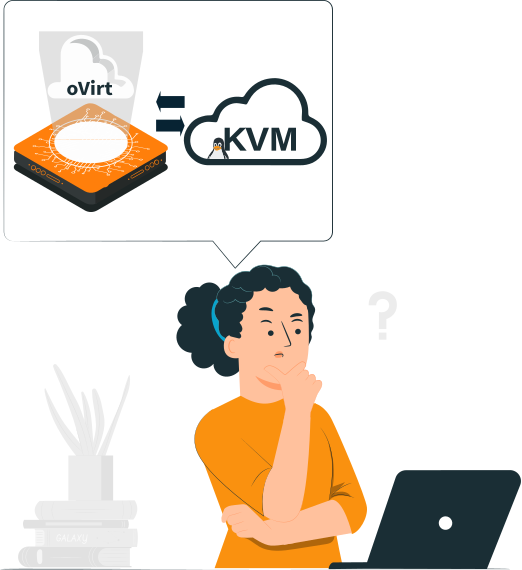
oVirt is fundamentally designed to operate above the KVM hypervisor, leveraging KVM's powerful virtualization capabilities as its core engine. KVM provides the necessary low-level infrastructure to create and manage virtual machines, which oVirt enhances through its rich management features. This symbiotic relationship allows oVirt to provide advanced functionalities like automated resource allocation, robust storage solutions, and sophisticated networking features, all while relying on KVM's proven stability and performance as a hypervisor.
Admin Layer vs Virtualization Engine
In this partnership, oVirt acts as the administrative layer, offering a comprehensive management interface to streamline and coordinate virtualization tasks across multiple hosts. It abstracts complex operations into user-friendly processes, enabling administrators to effortlessly manage large virtualized environments. KVM, on the other hand, serves as the virtualization engine, executing the actual tasks of running and maintaining virtual machines. Together, they create a cohesive ecosystem where oVirt's administrative prowess is powered by KVM's efficient virtualization capabilities.
Tip: KVM vs Hyper-VInstalling and Managing VMs Through oVirt
Utilizing oVirt for installing and managing virtual machines significantly simplifies the process compared to direct KVM management. With oVirt, administrators can deploy VMs using predefined templates, automate provisioning tasks, and leverage orchestration tools for consistent deployments. The platform's intuitive web-based interface facilitates the creation, configuration, and monitoring of VMs, allowing for real-time insights and adjustments. This streamlined approach reduces manual intervention, minimizes risks, and enhances overall operational efficiency, demonstrating the powerful synergy between oVirt and KVM.
Ready to get your data back?
To start recovering your data, documents, databases, images, videos, and other files, press the FREE DOWNLOAD button below to get the latest version of DiskInternals VMFS Recovery® and begin the step-by-step recovery process. You can preview all recovered files absolutely for FREE. To check the current prices, please press the Get Prices button. If you need any assistance, please feel free to contact Technical Support. The team is here to help you get your data back!
Alternatives to oVirt and KVM
Proxmox VE
Proxmox Virtual Environment (Proxmox VE) is an open-source virtualization management solution that integrates KVM at its core along with LXC containers. It offers a user-friendly web interface for managing virtual machines, containers, storage, and networking. Proxmox is valued for its simplicity, robust feature set, and community support, making it a popular choice for both small-scale deployments and enterprise environments.
VMware vSphere/ESXi
VMware vSphere, with its hypervisor component ESXi, is one of the leading enterprise-grade virtualization platforms. Known for its performance, reliability, and comprehensive feature set, VMware vSphere is ideal for businesses that require sophisticated management tools, extensive support, and advanced capabilities such as VM clustering, fault tolerance, and vMotion live migration. It's a premium solution suited to organizations willing to invest in a proprietary platform.
OpenStack
OpenStack is an open-source cloud computing platform that provides a suite of components for building and managing large-scale cloud infrastructures. It is highly extensible and can integrate with various hypervisors, including KVM. OpenStack's modular architecture and wide-ranging capabilities make it an excellent choice for service providers and large enterprises looking to deploy public or private clouds.
Red Hat Virtualization (RHV)
Red Hat Virtualization (RHV) is an enterprise virtualization solution built on KVM and derived from the open-source oVirt project. It offers high-performance virtualization with a focus on stability, security, and integration with Red Hat's ecosystem. RHV is particularly appealing to organizations that prioritize industry support and enterprise-grade features alongside seamless integration with Red Hat Enterprise Linux (RHEL) environments.
Note: Proxmox vs oVirtConclusion: oVirt vs KVM – Which Is Right for You?
Choosing between oVirt and KVM depends on your specific needs around simplicity, scalability, team size, and automation. While both rely on the KVM hypervisor, their approach to management and deployment can suit very different environments.
Summary of Key Factors
| 🔑Factor | 🖥️KVM | 🧩oVirt |
| 🧰Simplicity | Lightweight and minimalistic | More complex setup, GUI-driven |
| 📈Scalability | Ideal for small to medium environments | Designed for managing large-scale infrastructures |
| 👥Team Size | Great for small teams or solo sysadmins | Suitable for larger teams with dedicated ops |
| 🤖Automation Needs | Manual or CLI/script-based automation | Built-in scheduling, templates, REST APIs |
Recommendation Matrix
| 🧪Use Case | ✅Recommended Tool | 💡Why |
| 👨💻Solo Admin / Small IT Team | KVM | Simple, low overhead, ideal for CLI enthusiasts |
| 🏢Large Enterprise Deployment | oVirt | Centralized management, scalability, user roles |
| 🧪Dev/Test Environments | KVM | Fast setup, scriptable, easy VM lifecycle control |
| ⚙️Automation-Heavy Operations | oVirt | API-driven orchestration, scheduling, and templates built-in |
| 🖱️GUI-Preferred Management | oVirt | Intuitive web interface for managing hosts, storage, and VMs |
| 💾Resource-Constrained Systems | KVM | Lower resource consumption, no extra services required |
If you prefer full control, minimal dependencies, and are comfortable with CLI or custom scripts, KVM is your go-to choice. But if your infrastructure demands high availability, large-scale orchestration, and a robust management interface, oVirt provides the enterprise-grade tools to handle it efficiently.
Related articles
- Migrate VM from ESXi to Proxmox: Complete 2026 Guide
- VMware OVA vs OVF: Key Differences, Use Cases, and Recovery Tips
- KVM vs Docker: Performance, Isolation & When to Use Each
- Convert OVA to Hyper-V: Step-by-Step Guide for Easy Virtual Machine Migration
- Guide to Change VMware ESXi Logs Location
- repair VMDK files in VMware | DiskInternals VMFS Recovery™
- Is VMware virtual machine inaccessible? Fix it in 2025!
- Restore VMware VM with snapshot(delta.vmdk) files⠀
- What is virtualization? | Meaning of virtualization
- What is VMware HA?
- What is the difference between VMware HA vs vMotion
- VMware vMotion storage: What do You Need to Know
- VMware Fault Tolerance: what is it and how does it work?
- What is thin provisioning (TP)?⠀
- What is а LUN? (Logical Unit Number)
- How to Upgrade VMFS from 3 to 5th version
- VMware vMotion vs storage vMotion: all you wanted to know
- VMware Template vs. VMware Clone: the differences and similarities
- VMware Workstation and Its Uses
- VMkernel Ports and Networking Layers
- What is VM Host Server
- What is a Snapshot in VMware⠀
- What is vVol and How Does That Work
- VMware ESXi vs vSphere vs vCenter: Key Differences, Features, and Which to Choose
- What is NVRAM?⠀
- What is a VM Cluster and How to Create It
- Using and Creating VMware Content Library: Features, Setup, and Best Practices
- VirtualBox vs. VMware - Comparison
- No bootable medium found
- Citrix vs VMWare VDI - What are the differences in 2025?
- What is the 3-2-1 backup rule?⠀
- Convert VHD to VMDK - Free Methods
- P2V vs VMware: What is Better for You?
- How to Install Kali Linux VMware
- VMware ESXi Root and Default Password
- What is VMware networking?
- VMware vSwitch
- How to open VMDK files
- VMware EVC Mode: What It Is, How It Works, and How to Enable It in vSphere
- VMware NFS vs VMFS
- Hyper-V Nested Virtualization - all about and how to enable⠀
- About VMware home lab
- Install ESXI on USB
- Steps to update VirtualBox
- Install Ubuntu on VirtualBox
- How to remote control an Ubuntu System
- Setting up VirtualBox
- VMware vSphere Replication
- Ways to Fix VirtualBox E_FAIL (0x80004005) Error
- Want to increase VirtualBox disk size?
- VMware Player Shared Folders⠀
- Result code: e_invalidarg (0x80070057)
- Hardware virtualization is enabled
- The best solutions for Virtual Machine in Windows 10, 11
- Here is how to enable virtualization
- Here is everything you should know about GMSA
- VMFS Partition Table Recovery
- Reset a Virtual Machine in VMware
- Free Download VMware Data Recovery Tool
- VMware disk image recovery - 2025 expierence
- How to Repair Damaged VMware Virtual Machine (2025)
- Checking VMDK Disk for Errors (VMDK check tool)
- VMware Data Recovery configuration
- How to Recover Data from Virtual Disk Files
- Disk Mode for the ESXi VM. What is it and how do we use it: VMware
- VMware VMDK Recovery Tool
- Recover VMware virtual machine
- VMware missing VMDK file
- How to Extract Files from VMDK: Best VMDK Extractor Methods
- Fix VMFS Corruption
- How to check VMFS for metadata corruption
- VMware disk needs repair
- DiskInternals VMDK Viewer
- VMware Workstation: The Specified Virtual Disk Needs Repair Fix
- Best VMware Admin Tools: Optimize Performance with Essential Management Tools
- How to Access VMFS Datastore from Linux, ESXi host or Windows
- What Is VMware Data Recovery?
- Download VMware Data Recovery Plug-in by DiskInternals
- How to recover deleted virtual machine in VMware?
- The Best Virtualization Software of 2026: Top Picks and Recovery Tips
- VHD Recovery Software - Recover Corrupt or Deleted VHD Files
- Recover a Deleted VMFS Datastore on VMware ESXi
- How to FSCK VMFS Repair?
- How to Fix DiskPart Virtual Disk Service Errors in DiskPart 2026
- How to Fix VMDK is Corrupted and Cannot be Repaired
- Fix "Virtual Disk Service Error Clean Is Not Allowed”
- VMware vSphere 8.0 - What's New?
- What is VMware ESXi Server?
- VMware Disaster Recovery (DR) Solutions
- VMware Player vs Hyper-V: Performance, Features, and Comparison Chart
- How to create a virtual hard disk (VHD) on Windows
- Restore VMware VMs in Minutes — Fast, Safe & ESXi 8 Ready
- Comparison between HA vs DRS (Distributed Resource Scheduler) in VMware vSphere
- SCSI Controller in VMware: Types, Benefits, and Configuration Tips for Optimal Performance
- VMware Distributed Switch – The Complete Guide
- How to Clone VM in Hyper-V - Best Ways!
- What is VMware Remote Console and how Use it in Linux and Windows?
- VMware ESXi Home Lab: Ultimate Guide to Setup, Configuration, and Best Practices
- Why Is Your VM (Virtual Machine) Running Slow?
- How to Increase VMware Virtual Disk Size and Expand Partition?
- What exactly is VM sprawl, and what steps can be taken to prevent it?
- What Is the VMX File in VMware ESXi?
- Understanding the Differences: VDI vs HVD
- VM Backup vs Snapshot: Key Differences & VMware Best Practices
- Types and Strategies of Backup: Understanding Incremental, Differential, and Full Backups
- What is VMware vCloud Suite - Why Should You Use it?
- How to Create and Use Shared Folders in VirtualBox: A Comprehensive Guide
- Comparing Virtual Disk Formats: VDI, VHD, and VMDK
- How to Mount a VMDK File from Another VM in VMware: Step-by-Step Guide
- Migrating VMFS 5 Datastore to VMFS 6 Datastore: A Step-by-Step Guide
- How to Convert or Migrate Hyper-V to VMware VM
- Exploring Alternatives to VMware ESXi for Virtualization: Top Options in 2026
- Proxmox Backup and Restore: Comprehensive Guide for Efficient Data Management
- Easiest Guide to Copy VHD to Physical Disk Without Data Loss
- How to Disable Hyper-V in Windows 10 and 11: Complete Guide
- How to Restore VMDK to a Physical Drive - Complete Guide
- Mastering VMware Snapshot Recovery: Understanding, Creating, Managing, and Restoring VMs
- Restore VMDK from Backup: Comprehensive Step-by-Step Guide
- Ultimate Guide to Migrating Proxmox VMs to a New Server
- Recover a Deleted Virtual Machine in Proxmox: Step-by-Step Guide
- Virtual Disk Bad Blocks: Detection, Repair, Prevention
- Mount VHD in Windows 7
- VMware Player Snapshots: Limitations, Workarounds, and Best Practices
- What is a Virtual Machine? | Guide to VM Components & Benefits
- What is a VM Server? | Understanding VM Server Architecture & Benefits
- Best VMware Backup Solutions in 2025: Comprehensive Guide and Top Picks
- How to Move VMware VM to Another Host Without vCenter
- VMware DRS (Distributed Resource Scheduler) - What is it?
- How to Convert VHDX to VMDK: Comprehensive Guide with Recovery Tips
- Convert VHDX to VDI: Easy Methods & Data Recovery Insights
- Convert VHD to VHDX: Easy Steps to Convert VHDX to VHD Format
- Convert OVA to VHD | How to Convert VHD to OVA | Step-by-Step Guide to Virtual Machine Conversion
- How to Delete VHDX File in Windows 11 | Step-by-Step Guide + File Recovery Tips
- Mount VHDX Linux: Step-by-Step Guide to Mounting VHD and VHDX Files on Linux Easily
- Free VMFS Reader for Windows, Linux & macOS – Access VMware VMFS Volumes Easily
- Virtual Server Data Recovery: Restore Lost Data from VMware, VMFS, and VMDK Files
- Restore Hyper-V Virtual Machine from VHDX: Quick and Reliable Recovery Guide
- VHD vs VHDX Performance: Key Differences, Benefits, and When to Choose
- How to Resize a VHD File or VHDX
- VDI Meaning: What Is a VDI? Virtual Desktop Infrastructure Explained
- RDM vs VMDK: Key Differences & Performance Insights for VMware Environments
- Convert VHD from Dynamic to Fixed | Easy Guide to Convert Dynamic VHD to Fixed
- Extract VMDK from OVA: Step-by-Step Guide for VMware and Data Recovery
- Recover Deleted VHD Files Easily: Step-by-Step Guide for Successful Recovery
- Nutanix vs VMware: Comprehensive Comparison of Virtualization Platforms
- VMware Disk Types: Thick, Thin, and RDM Explained for Virtual Machine Management
- Change log for VMFS Recovery™
- Nutanix vs AWS: Key Differences, Use Cases, and Choosing the Best Cloud Solution
- Master Proxmox CLI Commands: Your Guide to Virtualization Management and Troubleshooting
- Proxmox Backup Server Setup: Step-by-Step Guide for Configuration
- Proxmox Server Setup: Complete Guide to Install and Configure Proxmox VE
- Proxmox VE Minimum Requirements: Essential Hardware for Optimal Virtualization
- Proxmox NAT Setup: Step-by-Step Guide to Configure NAT & Recover VM Files
- What is a VMware VIB File? Comprehensive Guide to .vib Files and Data Recovery
- Resize VDI - How to Resize VDI Files: Step-by-Step Guide
- Proxmox Backup and Restore: Easily Restore VM from Backup or to a New VM
- VMware Drag and Drop Not Working? Fix Issues in Workstation, Player & Windows 10
- How to Copy Files from VM to Local Machine | VMware File Transfer to Host Guide
- How to Paste in VMware Console | Enable Copy and Paste in VMware Console Guide
- VMware to Nutanix Migration: Step-by-Step Guide for Seamless Transition
- How to Copy ESXi VM and Copy VM from One ESXi Host to Another
- Proxmox vs oVirt: Full Comparison of Virtualization Platforms in 2026
- KVM vs VMware: Performance, Features, Cost & Comparison of Virtualization Platforms
- Open VM Tools vs VMware Tools: Feature, Update & Performance Differences
- OpenStack vs VMware: Cost, Features, Scalability & Virtualization Comparison
- AWS vs VMware: Pricing, Performance & Security | Azure vs VMware Cloud Guide
- QEMU vs VMware: Performance, Features
- QEMU vs VirtualBox vs VMware: Performance, Usability, and Best Use Cases
- Virtualbox vs Hyper-V
- How to SSH Into ESXi Host Securely
- OpenShift vs VMware: Key Differences, Use Cases, and Comparison Guide in 2026
- Dual Boot Linux vs Virtual Machine: Performance, Setup & Recovery Guide
- Compare WSL vs Virtual Machine
- Bootcamp vs Virtual Machine: Windows on Mac Performance & Recovery Guide
- VMware CPU vs Core: CPU, Cores & vCPU Optimization for Virtual Machines
- Kubernetes vs VMware: Key Differences, Use Cases, Cost & Recovery Guide
- Import VMDK to Proxmox: Step-by-Step Proxmox VMDK Import Guide
- Difference Between OVF and VMDK | VMware File Formats Explained
- VMware High Availability vs. Fault Tolerance - Key Differences
- How to Install Windows on Mac VMware Fusion - Windows 10 & 11 Guide
- VMware Delete from Disk vs. Remove from Inventory - Key Differences Explained
- VMware Boot ISO Image: How to Boot from ISO in vSphere and Workstation
- How to Restart a VM Safely | VM Restart Methods and Recovery Guide
- Convert VMDK to VDI VirtualBox | VirtualBox Convert VMDK to VDI Guide
- How to Convert VMDK to VMX
- VMware Converter V2V Conversion Guide: V2V VMware Converter Migration
- VMware Converter to OVF: Fix Unable to Parse OVF File & Export VM
- Oracle DB Create Schema: How to Create Schema in Oracle Database
- What Is Change Block Tracking? VMware CBT, Enable, Reset, CTK Explained
- How to Convert VMDK to VMX | VMDK to VMX Converter and Recovery Guide
- USB Boot in VMware: VM Workstation Boot From USB Guide
- Recover Missed VMDK Descriptor: VMware Repair and VMFS Recovery Guide
- KVM vs LXC: Full Comparison of Performance, Security & Use Cases
- KVM vs QEMU: Architecture, Performance & When to Use Each
- VMX vs VMDK: VMware File Differences, Roles & Recovery
- VMX Configuration File Options: Complete VMware VMX Parameters Reference
- Hardware RAID Enterprise Usage vs Software RAID: Full Guide
- ESXi vs KVM vs Xen: Full Hypervisor Comparison 2026
- LXC vs KVM vs Docker: Full Linux Virtualization Comparison 2026
- KVM vs ESXi: Performance, Cost & Architecture Compared
- KVM vs VirtualBox: Architecture, Features, and Performance Comparison
- Xen vs KVM: Hypervisor Architecture, Performance, and Platform Comparison
- What Is VMFS in VMware: VMFS File System Explained and Features
- Convert VMX to OVF & OVF to VMX: Full Guide with ovftool
- Xen vs KVM vs VirtualBox: Full Hypervisor Comparison 2026
- VMware CPU Cores per Socket Best Practice, Licensing, and Performance
- NSX-T vs NSX-V: Architecture, Features & Migration Guide
- Restarting Management Agents ESXi: All Methods & Safe Guide
- Xen vs. VMware: Hypervisor Comparison — Architecture, Performance & Cost
- VMware Memory Hotplug Linux: Ubuntu, CentOS & Debian Guide
- Install VMware Tools Mac OS: Complete Step-by-Step Guide
- Recover Deleted VHD Xen & Restore Deleted XenServer VM
- Enabling SSH
- How to Fix/Repair Corrupted VMDK Files Effortless
- Mounting Server Disks
- Recover Deleted VMDK from Datastore Today
- Remote Recovery
- VMFS Recovery™ for VMware Data Recovery
- Recover VM from flat VMDK - The Best Solutions
- Restore a VMDK file
- Restore VMware virtual machine from VMDK file
- VMFS Recovery software as a solution for NFS data repair
- What is ESXi Recovery Mode
- What Is Raw Device Mapping (RDM) in VMware? Benefits, Setup, and Use Cases
- VMware ESX vs. ESXi - Main Differences. Detailed Comparison
- VMware vMotion: all you need to know
- How to Clone a VM - Best Steps to Using in VMware
- What is VMware DRS?
- VMFS Block Size: How to Choose
- VMFS UNMAP: What is It?
- What is Space Reclamation and How to Perform It
- Thick vs Thin Provisioning: All You Wanted to Know
- VMware Infrastructure: What Components are Used
- VMware vMotion requirements: for VMs and for hosts
- VMware FT vs VMware HA: what the difference?
- What is VMware VDS and How It Works
- ESX Partitions: All You Wanted to Know
- VMware Cold and Hot Migration: What Is It
- What is Virtual Desktop Infrastructure(VDI)?
- What is VMware vCenter Server and How Does It Works
- How to Manage VMware ESXi
- Manage Hyper-V Integration Services 2026
- Hyper-V Checkpoint and Its Importance for VM
- Hyper-V Export VM: How Does It Work
- ESXi Free Limitations: Pros and Cons
- How to Convert VMware VMs to Hyper-V
- How to set up Hyper-V network adapters - guide
- VMware: Workstation Pro vs Workstation Player
- How To Perform a USB Passthrough in Hyper-V⠀
- What is Hyper-V VDI and Its Benefits
- How to install Kali Linux in VirtualBox⠀
- VHDX Files and How to Mount Them on Windows
- Disaster Recovery Checklist: You Need A Plan
- VMware Network Adapter settings
- VMware snapshot best practices
- Hyper-V Virtual SAN
- Hyper-V NIC Teaming⠀
- The Ultimate Guide to AWS EBS Snapshots: How to Create, Manage, and Optimize Your Snapshots
- How to get full screen in Virtualbox
- About VirtualBox network settings
- How to Install VirtualBox Extension Pack on Windows, Linux & macOS
- Physical Server vs. Virtual Server: Key Differences
- ESXi 7.0 ESXCLI Command Reference in 2025
- How to create a Virtual Machine from a hard drive
- VMware vSphere 7
- Host Profile in VMware - what is and how to use it?
- About VMware vRealize Orchestrator
- Intel VT-x in BIOS: how to enable it?
- VMware Cloud Foundation
- Virtual Desktop Infrastructure and VMware Horizon
- How to Fix DiskPart Virtual Disk Service Errors in 2025 - Best Ways
- Unable to Connect to Virtual Disk Service in Disk Management: Fixes & Solutions
- How to format VMware disk using ESXI
- VMware Data Recovery Software
- Tools to mount VMFS on Linux, ESXi, Windows
- VMware Disk Image: 2025 guide
- VDS fails to claim a disk
- Read VMFS partition on Windows
- How to browse VMDK file
- ESXi repair install
- How to fix a Time Capsule disk in "Internal disk needs repair" status?
- VMware Data Recovery Services
- Repair ESXi datastore
- Restoring The Entire Virtual Machine Whith DiskInternals VMFS Recovery
- VMware VMDK Recovery Tool - Restore VMDK Files
- What Is Backup and Recovery? - Backup vs Recovery
- How to Backup VMware Data. Backup solution for Vmware
- How to restore VHD file backup? (2025)
- How to download VMDK file from datastore to Your System in the VMware
- Diskinternals VMFS Recovery Serial Key
- Virtual Disk Service Error The Object Is Not Found - How to fix?
- How to Backup and Recovery ESXi Virtual Machines?
- How to Backup VMware ESXi Virtual Machines - Back Up ESXi Host Configuration
- How to Recover a VMware Image
- How to Fix ESXi Boot Failure in UEFI Configuration?
- ESXi UEFI booting hits a roadblock, halting at the "VMware Hypervisor Recovery" phase with no further advancement
- Vmware Delete Flat File - Let's Figure It Out
- Diverse Hyper-V Replication and Failover Types
- Repair virtual disk in VDMK
- How to repaire corrupt VMDK header files
- How to recover a corrupt or damaded VMDK file on Mac?
- Mastering VMware Disk Mount: A Comprehensive Guide for Windows 10 Users
- Restore your Lost VMware Files - DiskInternals VMware data recovery
- Difference between VMFS 5 vs VMFS 6
- What is quiescing VMware vSphere?
- How to Recover or Remove Orphaned Virtual Machines
- VMDK file format - What is Virtual Machine Disk format
- How to Install macOS on VMware ESXi or VMware Workstation
- Virtual Machine Disk Consolidation Is Needed: Full Fix Guide
- VMware Horizon Vs VDI by Microsoft - What the difference
- VMware Hypervisor Recovery: Strategies and Best Practices
- Understanding Datastore Inaccessibility in VMware
- Overview and Configuration of USB Passthrough in VMware Virtual Machines
- Convert a VMware Workstation VM to ESXi using 3 Ways
- How to Recover Corrupt VMDK File in VMware
- How to Recover VHDX Files (VHDX recovery)
- Repair VHD - Virtual Hard Disk repair tool
- Migrating VirtualBox VM to Hyper-V - Complete Guide
- Recovering a Virtual Machine in Oracle: Step-by-Step Guide
- What is vApp in VMware? Key Concepts and Usage Examples
- Recovery and Restore of vApp Data: Comprehensive Guide
- VHDX Repair: Comprehensive Guide to Fix Corrupt or Unreadable VHDX Files description
- What is a Virtual Hard Disk (VHD File)?
- Resolving "VMware File Not Found" Errors: Comprehensive Guide to File Recovery
- Comprehensive Guide to VMware File Types and Extensions
- Failed to Read from File VMDK: Causes, Solutions, and Prevention
- Proxmox vs ESXi: Comprehensive Guide to Choosing the Best Hypervisor
- Data Recovery on iSCSI LUN: Comprehensive Guide to Prevent and Recover Data Loss
- How to Mount VHDX Files in Windows 10: A Comprehensive Guide
- What is a VM Snapshot: Comprehensive Guide to Virtual Machine Snapshots
- Unlocking a Locked VM in Proxmox: Step-by-Step Guide to Resolve and Prevent Issues
- How to Mount VHD Files in Windows 10: A Comprehensive Guide
- Comprehensive Guide to Virtual Data Recovery Software | Best Tools & Tips
- Repair-VHD PowerShell: Step-by-Step Guide (3 Essential Steps to Fix VHD)
- How to Restore VHDX File: Step-by-Step Guide for VHDX Restore to HDD, Disk, and More
- How to Open a VHDX File: Extract Data & Recover VHDX Files with Ease
- What is a KVM Virtual Machine? | KVM Virtualization Explained with File Recovery Solutions
- VDI Recovery Software to Restore VM VirtualBox and VDI Files
- Virtual Data Recovery Services
- Xen vs Proxmox - A Comprehensive Comparison
- Best VMware Backup Software and Solutions | Top Backup Options for VMware 2025
- How to Create a VDI from a Hard Drive: Step-by-Step Guide for VirtualBox Users
- How to Convert VMDK to RDM: Step-by-Step Guide for VMware Storage Management
- How to Convert RDM to VMDK in VMware: Step-by-Step Guide
- What Is an RDM? Learn About RDM Storage and Disks in VMware
- How to Backup ESXi Host Configuration: Step-by-Step Guide for VMware Administrators
- VMDK to VHDX: Convert VMDK to VHDX with PowerShell & Tools
- What is Nutanix and How It Works: Discover What Nutanix Does and Its Use Cases
- How to Install VIB on ESXi: ESXCLI Software VIB Install Guide
- How to Install VMware Tools on Ubuntu | Install VMware Tools on Ubuntu 22.04
- How to Install VIB on ESXi: ESXCLI Commands for ESXi VIB Installation
- Proxmox Disaster Recovery: Step-by-Step Guide to Secure Your Virtualized Environment
- Proxmox Backup Server: Comprehensive Guide to Setup and Management
- How to Install Ubuntu Desktop & Server on Proxmox | Step-by-Step VM Installation
- Corrupt VDI File: How to Fix and Recover Virtual Disk Data Effectively
- How to Fix a Corrupted VirtualBox VMDK Compressed Image
- How to Find MAC and IP Address of a Virtual Machine in VMware | VMware MAC & IP Guide
- How to Recover VMDK File: Recover VMware VMDK File and Extract Data from VMDK
- Create VM Template in VMware: Step-by-Step Guide
- How to Recover VMDK File on oVirt
- Docker Meaning, Definition & How It Works: What Docker Is Used for in Software
- Docker vs VMware: Performance, ESXi Comparison, Containers & Key Differences
- How to Convert VMware to oVirt: Importing VMware VMs to oVirt
- oVirt vs VMware: Compare KVM oVirt vs VMware ESXi for Virtualization in 2026
- OpenStack vs Proxmox VE: Compare Virtualization, Deployment, and VM Recovery
- AWS vs VMware: Pricing, Performance & Hybrid Cloud Comparison
- vSphere vs OpenStack - Full Comparison
- OpenStack vs Nutanix: Key Differences, Use Cases, VM Recovery & Performance Guide
- Migrate oVirt to VMware - Can I Move VM from oVirt to VMware?
- VMware vs Red Hat Virtualization Comparison - Pros & Cons
- VMware Blast vs PCoIP: Performance, Compatibility, Recovery Explained
- Parallels vs VMware Fusion: Performance, Features, and Best macOS Virtualization Option
- VMware ESXi vs NSX: Key Differences, Use Cases, and Integration Explained
- Virtual Machine vs. Cloud Server: Key Differences, Performance & Cost Guide
- SQL Server Virtual Machine vs. Physical Machine: Performance & Best Practices
- How to Install Mac OS on VMware Workstation
- Free VHD Viewer & Free App to View VHD File | Safely Open and Preview VHD/VHDX
- Best Virtual Machines for Mac OS X: A Guide to Installing Mac OS on VMware
- How to Install macOS on VMware
- How to Install VMware Fusion on a Mac | Step-by-Step VMware Setup Guide
- Export a VMware Virtual Machine from ESXi | ESX VM Export Guide
- What Is a Port Group in VMware & Distributed Port Group Explained
- Convert VMDK to QCOW2 & QCOW2 to VMDK with qemu-img (KVM Guide)
- How to Start a VMDK File Without a VMX File: Boot and Recovery Guide
- VMware Converter VMDK to OVF | VMware VMDK to OVF Converter Guide
- VDI vs VMDK: Performance, VirtualBox and Mac Comparison Guide
- VMware ESXi Networking Concepts: vSwitch, VLAN, and Design Guide
- VMware ESXi USB Passthrough and Mount USB Drive ESXi Guide
- VMware Cannot Open Configuration File VMX: Fixes & Recovery
- VMware VMX vs VMDK Repair: Fix, Rebuild & Recover VM Files
- Proxmox vs KVM: Virtualization Architecture, Performance, and Platform Guide
- KVM vs Hyper-V: Performance, Architecture, and Virtualization Comparison
- VMware Hotplug Memory & CPU: Enable, Configure, and Disable Guide
- VMware Quiesce Meaning: Definition, How It Works & When to Use It
- Compare VMware Essentials Plus and Standard - Full Feature Guide
- How to Create a Virtual Switch in VMware Workstation & ESXi
- Merge VHDX and AVHDX: Hyper-V Snapshot Merge Full Guide
- Xen VHD Recovery
- VMware Snapshot Quiesce: When to Use It & How It Works
- VMware virtual machine Networking & ESXi Network
- Xen VHD Recovery: Recover & Repair XenServer Virtual Disk Files
- XCP‑ng vs VMware ESXi: Performance, Features & Pricing Compared 2026
- Corrupted Xen VHD: Repair & Recover Damaged XenServer Virtual Disks
- Hypervisor Comparison 2026: Top Platforms, Types & Best Picks
- Compare VMware Essentials Editions: Features, Cost & Guide
- XCP-ng VHD Recovery: Recover VM, Corrupted VHD & SR
- Proxmox vs. VMware: Comprehensive Comparison, Performance, and Cost Analysis
- Proxmox vs. Hyper-V: In-Depth Comparison of Virtualization Giants
- Proxmox vs VirtualBox: Comprehensive Performance & Feature Comparison
- Proxmox vs ESXi for Homelabs: Choose the Best Virtualization Platform for Your Setup
- Proxmox: How to Delete a VM Safely | Step-by-Step Guide
- Proxmox Recovery: Step-by-Step Guide to Restore VMs and Recover Lost Data
- Proxmox Backup vs Snapshot: Key Differences for Data Protection
- How to Install Proxmox VE on Ubuntu Server & Desktop | Complete Installation Guide
- XCP-ng vs Proxmox vs VMware: XCP NG vs Proxmox Guide