
If You Need to Access Ext4 from Windows
Here you will find out:
- how to access Ext4 from Windows
- how DiskInternals can help you
Are you ready? Let's read!
A peculiarity of dual-boot and data access
Naturally, it is impossible to access Ext4 under Windows if you’re running Linux and Windows OSes on the same PC.
Ext4 is the most common Linux file system and is not supported on Windows by default. However, using a third-party solution, you can read and access Ext4 on Windows 10, 8, or even 7.
How to access Ext4 on Windows 10/8/7
FAT32 and NTFS are the main file system types for Windows, while Ext4, Ext3, and Ext2 are the main file system types for Linux.
If you are dual-booting Windows and Linux on the same PC, you surely would love to access your partitions irrespective of the OS you’re logged into. Well, you can access Windows FAT32 and NTFS partitions when you boot to Linux. But, unfortunately, you can’t access Linux’s Ext4 partitions when you boot Windows unless you use a third-party solution or reboot the computer to Linux.
But it would be great if there were a way to manage Ext4 in Windows without much stress, and that’s what you’ll learn from this post.
What is Ext4 and how to access Ext4 from Windows
Ext4 is a journaling file system used by Linux.
Since its launch in 2008, it has become the default file system for most modern Linux distros. Ext4 succeeds Ext3, improving on the limitations of Ext3, but is similar in performance. The Ext4 file system provides more flexibility for storing big files, and you can deactivate its journaling feature.
You cannot view and access Ext4 partitions on a Windows system because Windows does not support the file system.
Using DiskInternals Linux Reader as an Ext4 explorer
DiskInternals Linux Reader is a free utility software tool that lets you read and access Ext4 on Windows 10/8/7. This software’s interface looks very similar to Windows Explorer’s interface.
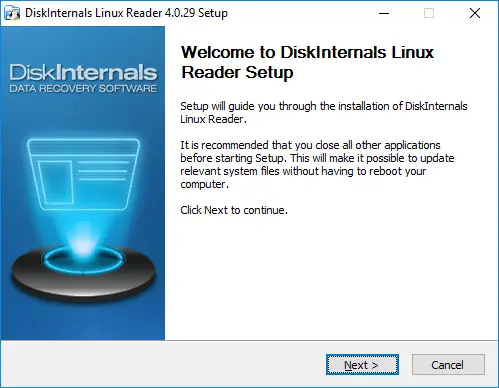
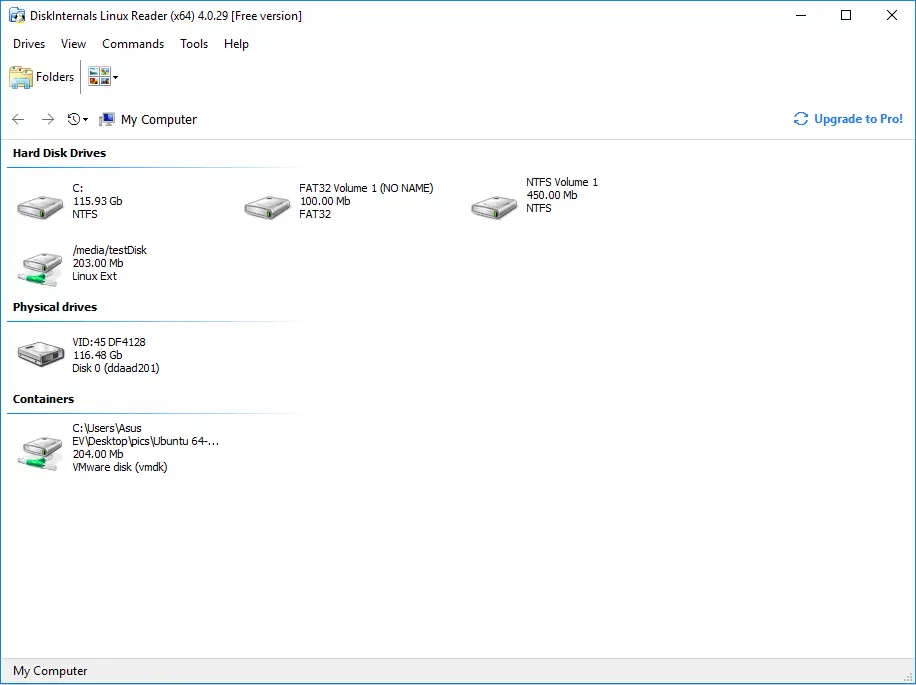
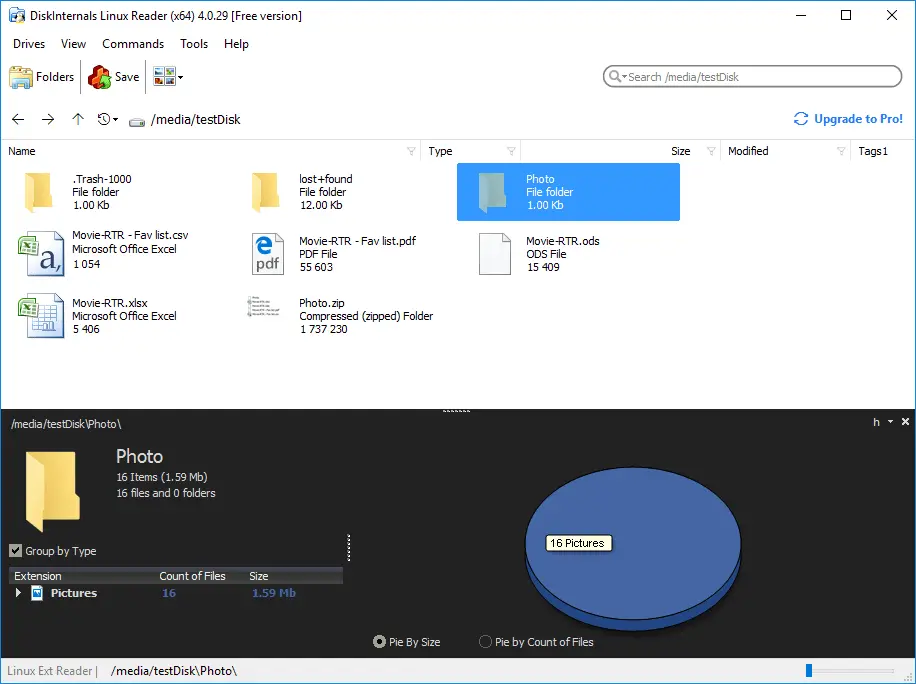
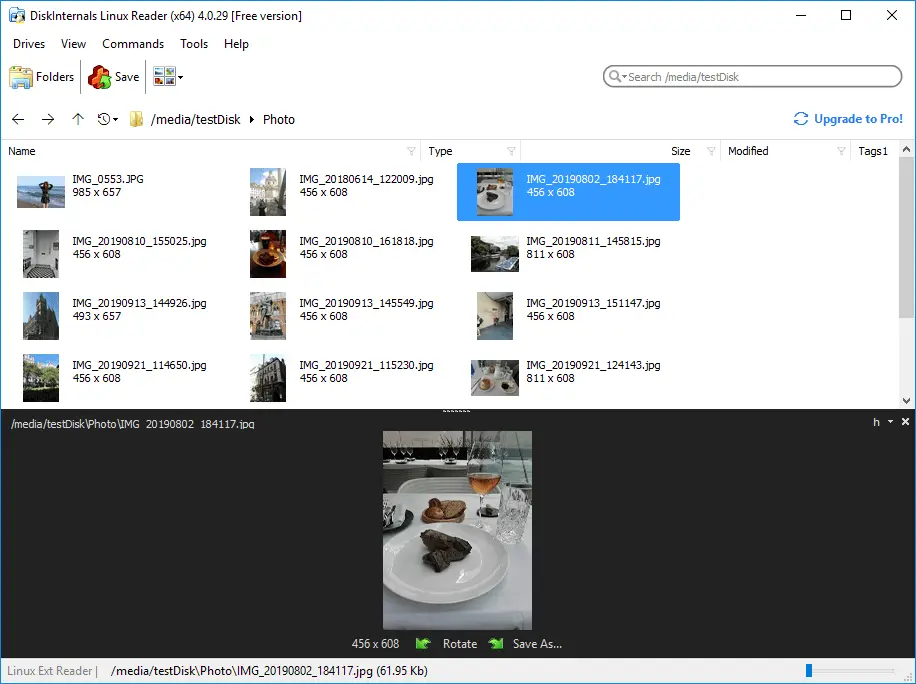
It loads all the Linux partitions available on your hard disk and removable drives. DiskInternals Linux Reader supports the following file systems: Ext2/3/4, ReiserFS, Reiser4, HFS, HFS+, FAT, exFAT, NTFS, ReFS, UFS2, ZFS, XFS, Hikvision NAS and DVR.
This software is available for free and lets you preview the contents of the Ext4 file system on Windows.
How to access Ext4 data on Windows 7, 8, and 10
DiskInternals Linux Reader doesn't let you modify Ext4 files; it is simply an Ext4 file explorer for Windows.
You have to copy the files in the Ext4 partition to a Windows partition to make any changes to the file. To do this, open the Ext4 partition, right-click on the file you want to modify, then click on “save” to launch the “Export Wizard” box. Follow the prompts to export the files to a Windows partition, where you can now modify the contents.
DiskInternals Linux Reader works for Windows 10, 8, and 7.
Related articles
- How to Access Linux Ext2 or Ext3 on Windows
- How to Mount Ext4 on Windows for Free
- Mount Linux Drive on Windows for Free
- Bash Script: All You Need to Know
- An Algorithm: How to Create Bash While Loop
- Linux Shell: What You Need to Know at First
- How to Use Shell Script Sleep Command
- Bash: How to Check if the File Does Not Exist
- How to use bash get script directory in Linux
- 20 Examples of Bash Find Command
- Shell Script Cut: Basic You Need to Know
- Bash: How to Check if String Not Empty in Linux
- Linux: Sudo in Bash Scripts
- Linux: Bash Printf Examples
- Linux: Bash First Line
- Linux: A Bash Startup Script
- Linux: Write a Shell Script
- Shell Script: Replace String in File
- Bash and sh: is there any difference
- A Bash Dirname Command
- Linux: A Bash Source Command
- A Bash to Loop through Lines in File
- A Bash Nested Loop
- Use a Shell Script to Send an Email
- Using Bash to Write to a File
- About Bash Language
- Bash for Loop in One Line
- Learn about useful bash scripts
- About chaining bash commands
- About a bash export command
- Learn about a bash wait command
- Arch Linux install script
- About advanced bash scripting
- Learn about C shell script
- Learn about Korn shell scripting
- Using && in an IF statement in bash
- If you want to run shell script in background
- The disk you inserted was not readable by this computer error
- Learn about SFTP in bash scripting
- Copy command in shell scripts
- Install Oracle Database
- About a bash date command
- Guide in Pictures
- 5 Basic Shell Script Examples for Your First Script
- Bash Time Command on Linux
- How to Check Bash String Equality
- How to Use Linux Wait Command
- Bash: How to Loop Through Files in Directory
- Bash Cat Command in Examples
- Bash Script SSH: How to Use It
- Bash: A Script For User Input
- Linux ZSH: the basic you need to know
- Basic of Grep in Linux Shell Script
- Bash: how to split strings in Linux
- Hello World Script in Bash
- A Linux bin/bash Shell
- Linux: New Line in Shell Script
- Linux: Bash String Ends With
- Linux: $0 in a Shell Script
- A crontab service shell script
- A Bash Multiline Command
- Linux: A Bash Linter
- A Bash Test Command
- A Bash Status of Last Command
- Linux: A Bash Basename Command
- AWK in a Bash Script
- Learn about systemd startup script
- Learn about a bash error code
- Using a bash tee command
- To run a shell script in Dockerfile
- About a bash UNTIL loop
- Using /usr/bin/env command
- Whether bash waits for command to finish
- Using bash if 0
- Learn to run Perl script in Linux
- Examples of using the Expect
- Shell script usage
- Here is everything you need to know about Bash for Windows